Notice: تابع WP_Block_Type_Registry::register به طورنادرست فراخوانی شد. نامهای نوع بلوک نباید حروف بزرگ داشته باشند. لطفاً برای اطلاعات بیشتر، اشکال زدایی در وردپرس را مشاهده کنید. (این پیام در نگارش 5.0.0 افزوده شده است.) in /home/ethicsho/public_html/wp-includes/functions.php on line 5313
Warning: Use of undefined constant TDC_PATH_LEGACY - assumed 'TDC_PATH_LEGACY' (this will throw an Error in a future version of PHP) in /home/ethicsho/public_html/wp-content/plugins/td-composer/td-composer.php on line 109
Warning: Use of undefined constant TDSP_THEME_PATH - assumed 'TDSP_THEME_PATH' (this will throw an Error in a future version of PHP) in /home/ethicsho/public_html/wp-content/plugins/td-composer/td-composer.php on line 113 بایگانیهای 306.2 - خانه اخلاق پژوهان جوان Notice: Trying to access array offset on value of type bool in /home/ethicsho/public_html/wp-content/plugins/wp-ulike/inc/general-functions.php on line 807
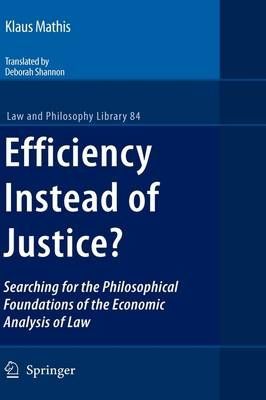
Economic analysis of law is an interesting and challenging attempt to employ the concepts and reasoning methods of modern economic theory so as to gain a deeper understanding of legal problems. According to Richard A. Posner it is the role of the law to encourage market competition and, where the market fails because transaction costs are too high, to simulate the result of competitive markets. This would maximize economic efficiency and social wealth.In this work, the lawyer and economist Klaus Mathis critically appraises Posner’s normative justification of the efficiency paradigm from the perspective of the philosophy of law. Posner acknowledges the influences of Adam Smith and Jeremy Bentham, whom he views as the founders of normative economics. He subscribes to Smith’s faith in the market as an ideal allocation model, and to Bentham’s ethical consequentialism. Finally, aligning himself with John Rawls’s contract theory, he seeks to legitimize his concept of wealth maximization with a consensus theory approach.In his interdisciplinary study, the author points out the possibilities as well as the limits of economic analysis of law. It provides a method of analysing the law which, while very helpful, is also rather specific. The efficiency arguments therefore need to be incorporated into a process for resolving value conflicts. In a democracy this must take place within the political decision-making process. In this clearly written work, Klaus Mathis succeeds in making even non-economists more aware of the economic aspects of the law.
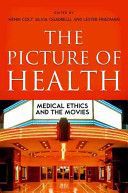
Film and literature have long been mined for interesting examples and case studies in order to teach biomedical ethics to students. This volume presents a collection of about 80 very brief, accessible essays written by international experts from medicine, social sciences, and the humanities, all of whom have experience using film in their teaching of medical ethics. Each essay focuses on a single scene and the ethical issues it raises, and the volume editors have provided strict guidelines for what each essay must do, while also allowing for some creative freedom. While some of the films are obvious candidates with medical themes — “Million Dollar Baby”, “The Diving Bell and the Butterfly” — some are novel choices, such as “Pan’s Labyrinth” or “As Good as it Gets”. The book will contain several general introductory chapters to major sections, and a complete filmography and cross-index at the end of the book where readers can look up individual films or ethical issues.
More Moral Than God takes a unique look at the psychological motivations behind religious violence. Drawing from psychology, philosophy, and theology, Charlene Burns illuminates the interplay between our images of God, our individual egos, and our collective selves, and brings to light the degree to which each of us can and must take responsibility for the religious landscape. In addition to her own analysis, Burns provides a brief history of religious violence and addresses other possible motivations, including politics, economics, globalization, family dynamics and more.
Each anthology in the new Global Viewpoints series (which does not duplicate any material in the Opposing Viewpoints series) delivers contemporary perspectives on the featured issue — with the majority of the material reflecting stances of countries other than the United States. Primary sources, including speeches and government documents, join essays from international magazines and news sources for a truly panoramic view. Helpful features include an annotated table of contents, a world map and country index, a bibliography and a subject index.
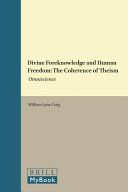
The ancient problem of fatalism, more particularly theological fatalism, has resurfaced with surprising vigour in the second half of the twentieth century. Two questions predominate in the debate: (1) Is divine foreknowledge compatible with human freedom and (2) How can God foreknow future free acts?Having surveyed the historical background of this debate in “The Problem of Divine Foreknowledge and “Future Contingents from Aristotle to Suarez (Brill: 1988), William Lane Craig now attempts to address these issues critically. His wide-ranging discussion brings together a thought- provoking array of related topics such as logical fatalism, multivalent logic, backward causation, precognition, time travel, counterfactual logic, temporal necessity, Newcomb’s Problem, middle knowledge, and relativity theory.The present work serves both as a useful survey of the extensive literature on theological fatalism and related fields and as a stimulating assessment of the possibility of divine foreknowledge of future free acts.
ما از اخلاق چه انتظاری داریم؟ این سوال شاید تاحدودی برای عموم مردم و یا متخصصان این رشته قابل پاسخ باشد؛ اینکه خوب بودن را به ما بیاموزد و در تنظیم روابط فردی م...

جشن کتاب تهران به ایستگاه سی و یکم رسیده است. حال و احوال نشر کتاب خوب نیست و باید فرهنگدوستان را به خرید و هدیه دادن کتاب ترغیب نمود. خانه اخلاقپژوهان جوان ب...

بنیاد کتابهای اخلاق اسلامی عمدتا پالایش جان از آلودگیها و آراستن آن به زیباییها است. اندیشه محوری این قبیل کتابها آن است که انسان فعلی آنی نیست که باید باشد...

-
0 Comments