
Notice: تابع WP_Block_Type_Registry::register به طورنادرست فراخوانی شد. نامهای نوع بلوک نباید حروف بزرگ داشته باشند. لطفاً برای اطلاعات بیشتر، اشکال زدایی در وردپرس را مشاهده کنید. (این پیام در نگارش 5.0.0 افزوده شده است.) in /home/ethicsho/public_html/wp-includes/functions.php on line 5313
Warning: Use of undefined constant TDC_PATH_LEGACY - assumed 'TDC_PATH_LEGACY' (this will throw an Error in a future version of PHP) in /home/ethicsho/public_html/wp-content/plugins/td-composer/td-composer.php on line 109
Warning: Use of undefined constant TDSP_THEME_PATH - assumed 'TDSP_THEME_PATH' (this will throw an Error in a future version of PHP) in /home/ethicsho/public_html/wp-content/plugins/td-composer/td-composer.php on line 113 بایگانیهای 303.483 - خانه اخلاق پژوهان جوان Notice: Trying to access array offset on value of type bool in /home/ethicsho/public_html/wp-content/plugins/wp-ulike/inc/general-functions.php on line 807
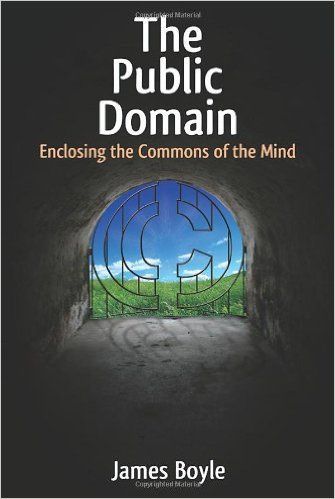
“In this enlightening book, James Boyle describes what he calls the range wars of the information age – today’s heated battles over intellectual property. Boyle argues that just as every informed citizen needs to know at least something about the environment and civil rights, every citizen should also understand intellectual property law. Why? Because intellectual property rights mark out the ground rules of the information society, and today’s policies are unbalanced, unsupported by evidence, and often detrimental to cultural access, free speech, digital creativity, and scientific innovation.” “Boyle identifies as a major problem the widespread failure to understand the importance of the public domain – the realm of material that everyone is free to use and share without permission or fee. The public domain is as vital to innovation and culture as the material protected by intellectual property rights, he asserts, and he calls for a movement akin to the environmental movement to preserve it. With a clear analysis of issues ranging from Jefferson’s philosophy of innovation to musical sampling, synthetic biology, and Internet file sharing, this timely book brings a positive new perspective to important cultural and legal debates. If we continue to enclose the “commons of the mind,” Boyle argues, we will all be the poorer.”–BOOK JACKET.
R.M. Hare is one of the foremost moral philosophers of this century and this volume contains 13 essays by well-known philosophers which discuss Hare’s thinking. The essays cover a wide range of issues including universalizability, moral psychology, and the role of common-sense moral principles. A special feature of the book is Professor Hare’s responses to his critics with both an essay and detailed, point-by-point criticism. In 1981, Oxford University Press published Hare’s “Moral thinking”, which built on his earlier metaethical work to develop a utilitarian normative position which differed from other formulations of utilitarianism .
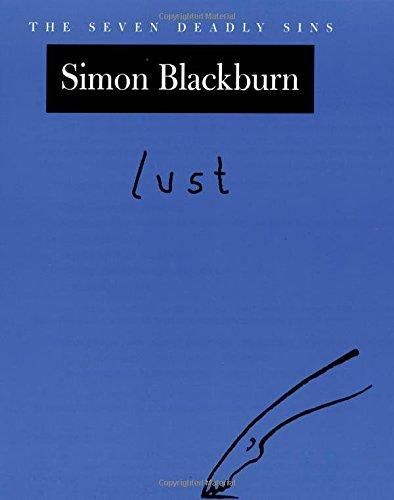
Lust, says Simon Blackburn, is furtive, headlong, always sizing up opportunities. It is a trail of clothing in the hallway, the trashy cousin of love. But be that as it may, the aim of this delightful book is to rescue lust “from the denunciations of old men of the deserts, to deliver it from the pallid and envious confessor and the stocks and pillories of the Puritans, to drag it from the category of sin to that of virtue.” Blackburn, author of such popular philosophy books as Think and Being Good, here offers a sharp-edged probe into the heart of lust, blending together insight from some of the world’s greatest thinkers on sex, human nature, and our common cultural foibles. Blackburn takes a wide ranging, historical approach, discussing lust as viewed by Aristophanes and Plato, lust in the light of the Stoic mistrust of emotion, and the Christian fear of the flesh that catapulted lust to the level of deadly sin. He describes how philosophical pessimists like Schopenhauer and Sartre contributed to our thinking about lust and explores the false starts in understanding lust represented by Freud, Kinsey, and modern “evolutionary psychology.” But most important, Blackburn reminds us that lust is also life-affirming, invigorating, fun. He points to the work of David Hume (Blackburn’s favorite philosopher) who saw lust not only as a sensual delight but also “a joy of the mind.” Written by one of the most eminent living philosophers, attractively illustrated and colorfully packaged, Lust is a book that anyone would lust over.
ما از اخلاق چه انتظاری داریم؟ این سوال شاید تاحدودی برای عموم مردم و یا متخصصان این رشته قابل پاسخ باشد؛ اینکه خوب بودن را به ما بیاموزد و در تنظیم روابط فردی م...

جشن کتاب تهران به ایستگاه سی و یکم رسیده است. حال و احوال نشر کتاب خوب نیست و باید فرهنگدوستان را به خرید و هدیه دادن کتاب ترغیب نمود. خانه اخلاقپژوهان جوان ب...

بنیاد کتابهای اخلاق اسلامی عمدتا پالایش جان از آلودگیها و آراستن آن به زیباییها است. اندیشه محوری این قبیل کتابها آن است که انسان فعلی آنی نیست که باید باشد...

-
0 Comments