Notice: تابع WP_Block_Type_Registry::register به طورنادرست فراخوانی شد. نامهای نوع بلوک نباید حروف بزرگ داشته باشند. لطفاً برای اطلاعات بیشتر، اشکال زدایی در وردپرس را مشاهده کنید. (این پیام در نگارش 5.0.0 افزوده شده است.) in /home/ethicsho/public_html/wp-includes/functions.php on line 5313
Warning: Use of undefined constant TDC_PATH_LEGACY - assumed 'TDC_PATH_LEGACY' (this will throw an Error in a future version of PHP) in /home/ethicsho/public_html/wp-content/plugins/td-composer/td-composer.php on line 109
Warning: Use of undefined constant TDSP_THEME_PATH - assumed 'TDSP_THEME_PATH' (this will throw an Error in a future version of PHP) in /home/ethicsho/public_html/wp-content/plugins/td-composer/td-composer.php on line 113 بایگانیهای 296.36 - خانه اخلاق پژوهان جوان Notice: Trying to access array offset on value of type bool in /home/ethicsho/public_html/wp-content/plugins/wp-ulike/inc/general-functions.php on line 807
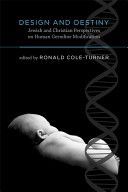
We are approaching the day when advances in biotechnology will allow parents to “design” a baby with the traits they want. The continuing debate over the possibilities of genetic engineering has been spirited, but so far largely confined to the realms of bioethics and public policy. Design and Destiny approaches the question in religious terms, discussing human germline modification (the genetic modification of the embryonic cells that become the eggs or sperm of a developing organism) from the viewpoints of traditional Christian and Jewish teaching. The contributors, leading religious scholars and writers, call our attention not to technology but to humanity, reflecting upon the meaning and destiny of human life in a technological age.Many of these scholars argue that religious teaching can support human germline modification implemented for therapeutic reasons, although they offer certain moral conditions that must be met. The essays offer a surprising variety of opinions, including a discussion of Judaism’s traditional presumption in favor of medicine, an argument that Catholic doctrine could accept germline modification if it is therapeutic for the embryo, an argument implying that “traditional” Christian teaching permits germline modification whether for therapy or enhancement, and a “classical” Protestant view that germline modification should be categorically opposed.Contributors:Lisa Sowle Cahill, Nigel M. de S. Cameron, Ronald Cole-Turner, Amy Michelle DeBaets, Celia Deane-Drummond, Elliot Dorff, H. Tristram Engelhardt, Jr., Thomas A. Shannon, James J. Walter.
What makes an event count as an action? Typical answers appeal to the way in which the event was produced: e.g., perhaps an arm movement is an action when caused by mental states (in particular ways), but not when caused in other ways. Andrew Sneddon argues that this type of answer, which he calls “productionism”, is methodologically and substantially mistaken. In particular, productionist answers to this question tend to be either individualistic or foundationalist, or both, without explicit defence. Instead, Sneddon offers an externalist, anti-foundationalist account of what makes an event count as an action, which he calls neo-ascriptivism, after the work of H.L.A. Hart. Specifically, Sneddon argues that our practices of attributing moral responsibility to each other are at least partly constitutive of events as actions.
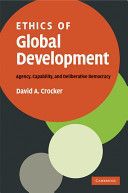
Poverty, inequality, violence, environmental degradation, and tyranny continue to afflict the world. Ethics of Global Development offers a moral reflection on the ends and means of local, national, and global efforts to overcome these five scourges. After emphasizing the role of ethics in development studies, policy-making, and practice, David A. Crocker analyzes and evaluates Amartya Sen’s philosophy of development in relation to alternative ethical outlooks. He argues that Sen’s turn to robust ideals of human agency and democracy improves on both Sen’s earlier emphasis on ‘capabilities and functionings’ and Martha Nussbaum’s version of the capability orientation. This agency-focused capability approach is then extended and strengthened by applying it to the challenges of consumerism and hunger, the development responsibilities of affluent individuals and nations, and the dilemmas of globalization. Throughout the book the author argues for the importance of more inclusive and deliberative democratic institutions.
Metaethics occupies a central place in analytical philosophy, and the last forty years has seen an upsurge of interest in questions about the nature and practice of morality. This collection presents original and ground-breaking research on metaethical issues from some of the very best of a new generation of philosophers working in this field.
ما از اخلاق چه انتظاری داریم؟ این سوال شاید تاحدودی برای عموم مردم و یا متخصصان این رشته قابل پاسخ باشد؛ اینکه خوب بودن را به ما بیاموزد و در تنظیم روابط فردی م...

جشن کتاب تهران به ایستگاه سی و یکم رسیده است. حال و احوال نشر کتاب خوب نیست و باید فرهنگدوستان را به خرید و هدیه دادن کتاب ترغیب نمود. خانه اخلاقپژوهان جوان ب...

بنیاد کتابهای اخلاق اسلامی عمدتا پالایش جان از آلودگیها و آراستن آن به زیباییها است. اندیشه محوری این قبیل کتابها آن است که انسان فعلی آنی نیست که باید باشد...

-
0 Comments