Notice: تابع WP_Block_Type_Registry::register به طورنادرست فراخوانی شد. نامهای نوع بلوک نباید حروف بزرگ داشته باشند. لطفاً برای اطلاعات بیشتر، اشکال زدایی در وردپرس را مشاهده کنید. (این پیام در نگارش 5.0.0 افزوده شده است.) in /home/ethicsho/public_html/wp-includes/functions.php on line 5313
Warning: Use of undefined constant TDC_PATH_LEGACY - assumed 'TDC_PATH_LEGACY' (this will throw an Error in a future version of PHP) in /home/ethicsho/public_html/wp-content/plugins/td-composer/td-composer.php on line 109
Warning: Use of undefined constant TDSP_THEME_PATH - assumed 'TDSP_THEME_PATH' (this will throw an Error in a future version of PHP) in /home/ethicsho/public_html/wp-content/plugins/td-composer/td-composer.php on line 113 بایگانیهای 277.71/3081 - خانه اخلاق پژوهان جوان Notice: Trying to access array offset on value of type bool in /home/ethicsho/public_html/wp-content/plugins/wp-ulike/inc/general-functions.php on line 807
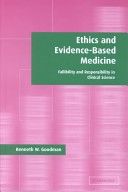
The growth of evidence-based medicine has occurred against a backdrop of health care reform, managed care, cost containment, and quality improvement. Clinicians have been urged to adopt the rigors of science while remaining true to their ‘clinical judgment’. This incisive book reviews the history and conceptual origins of evidence-based practice and discusses key ethical issues that arise in clinical practice, public health, and health policy. It is essential reading for all physicians, and practitioners in epidemiology and public health.
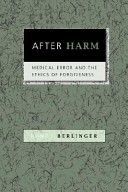
Medical error is a leading problem of health care in the United States. Each year, more patients die as a result of medical mistakes than are killed by motor vehicle accidents, breast cancer, or AIDS. While most government and regulatory efforts are directed toward reducing and preventing errors, the actions that should follow the injury or death of a patient are still hotly debated. According to Nancy Berlinger, conversations on patient safety are missing several important components: religious voices, traditions, and models. In After Harm, Berlinger draws on sources in theology, ethics, religion, and culture to create a practical and comprehensive approach to addressing the needs of patients, families, and clinicians affected by medical error. She emphasizes the importance of acknowledging fallibility, telling the truth, confronting feelings of guilt and shame, and providing just compensation. After Harm adds important human dimensions to an issue that has profound consequences for patients and health care providers.
David Hume’s revolutionary philosophies took an empirical approach to the study of human nature. Controversial in his time, he was accused of everything from atheism to moral corruption; he has since been recognized as one of the foremost thinkers of the late modern period, influencing the thought of nearly every philosopher in his wake. The arguments presented in his writings have survived three centuries of varying perspectives, and have had a lasting influence on the philosophy of mind, knowledge, religion, action, morality, economics, and politics.”A Companion to Hume” is the ideal resource for the study of one of history’s most remarkable thinkers, demonstrating the range of Hume’s work and illuminating the ongoing debates that they have generated. Comprised of twenty-nine expertly commissioned essays addressing such expansive topics of knowledge, passion, morality, religion, economics, and politics, this collection examines the paradoxes of Hume’s thought and his legacy, covering the methods, themes, and consequences of his contributions to philosophy.
If globalization is to be a benefit and not a burden to humankind, it must be governed by global institutions that are perceived by all people to be democratic and just. But before we can create such institutions, we must imagine them, and that requires a rethinking and extension of normative political theory. Global Justice and Transnational Politics encourages and advances that work.The book’s first part, “Weak Universalism,” contains essays by Amartya Sen and Leif Wenar that offer constructive developments of John Rawls’s statement of the principles a liberal polity might reasonably propose to govern its relations with other peoples. The second part, “Strong Universalism and Transnational Commitments,” contains essays by Jurgen Habermas, David Luban, Martha Nussbaum, and Thomas Pogge examining the normative sources and possible types of cross-border commitments. In the third part, “Transnational Politics and National Identities,” Habermas discusses the possibility of a democratic political order developing within the institutional framework of the European Union; Thomas McCarthy draws on Kant to show how cosmopolitanism might be reconciled with the legacy of nationalism; and Craig Calhoun tries to retrieve a positive aspect of the tradition of nationalism, namely that it provides large populations with a powerful way of imagining political community across space and time.
ما از اخلاق چه انتظاری داریم؟ این سوال شاید تاحدودی برای عموم مردم و یا متخصصان این رشته قابل پاسخ باشد؛ اینکه خوب بودن را به ما بیاموزد و در تنظیم روابط فردی م...

جشن کتاب تهران به ایستگاه سی و یکم رسیده است. حال و احوال نشر کتاب خوب نیست و باید فرهنگدوستان را به خرید و هدیه دادن کتاب ترغیب نمود. خانه اخلاقپژوهان جوان ب...

بنیاد کتابهای اخلاق اسلامی عمدتا پالایش جان از آلودگیها و آراستن آن به زیباییها است. اندیشه محوری این قبیل کتابها آن است که انسان فعلی آنی نیست که باید باشد...

-
0 Comments