Notice: تابع WP_Block_Type_Registry::register به طورنادرست فراخوانی شد. نامهای نوع بلوک نباید حروف بزرگ داشته باشند. لطفاً برای اطلاعات بیشتر، اشکال زدایی در وردپرس را مشاهده کنید. (این پیام در نگارش 5.0.0 افزوده شده است.) in /home/ethicsho/public_html/wp-includes/functions.php on line 5313
Warning: Use of undefined constant TDC_PATH_LEGACY - assumed 'TDC_PATH_LEGACY' (this will throw an Error in a future version of PHP) in /home/ethicsho/public_html/wp-content/plugins/td-composer/td-composer.php on line 109
Warning: Use of undefined constant TDSP_THEME_PATH - assumed 'TDSP_THEME_PATH' (this will throw an Error in a future version of PHP) in /home/ethicsho/public_html/wp-content/plugins/td-composer/td-composer.php on line 113 بایگانیهای 261.835766 - خانه اخلاق پژوهان جوان Notice: Trying to access array offset on value of type bool in /home/ethicsho/public_html/wp-content/plugins/wp-ulike/inc/general-functions.php on line 807
Programs of ethical relativism notoriously face two great difficulties: 1) how can they account for our need to make ethical judgements about other groups and individuals with whom we come into conflict? and 2) how can they allow for us to criticize the group, set of desires, etc. to which our ethical norms are said to be relative? “Integrity and Moral Relativism develops a moderate version of cultural relativism that can answer these questions. After examining and defending the notion of a “world-picture,” and of incommensurable differences across world-pictures, the book brings its theoretical framework together with the history of anthropology to argue that a culture is indeed the appropriate expression of a world picture. It then draws on literary, philosophical and historical resources to illustrate the way in which Western society, specifically, contains traditions distinguishing legitimate cross-cultural judgment, and legitimate from illegitimate cultural self-criticism. As long as there is a language for these possibilities, an individual can see ethics as culturally based without compromising his or her integrity.
From Plato and Leibniz to externalism and the frame problem, from Husserl to neural Darwinism, from mental causation to the problem of consciousness, this guide outlines the main positions, key figures, important terms, and longstanding debates of the philosophy of mind.
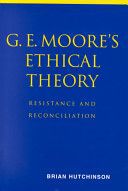
This is a comprehensive study of the ethics of G. E. Moore, the most important English-speaking ethicist of the twentieth century. Mooreās ethical project, set out in his seminal text Principia Ethica, is to preserve common moral insight from scepticism and, in effect, persuade his readers to accept the objective character of goodness. Brian Hutchinson explores Mooreās arguments in detail and in the process relates the ethical thought to Mooreās anti-sceptical epistemology. Moore was, without perhaps fully realizing it, sceptical about the very enterprise of philosophy itself, and in this regard, as Brian Hutchinson reveals, was much closer in his thinking to Wittgenstein than has been previously realized. This book shows Mooreās ethical work to be much richer and more sophisticated than his critics have acknowledged.
“One of the world’s most influential philosophers here considers the ethical issues surrounding globalization, showing how a global ethic rather than a nationalistic approach can provide illuminating answers to important problems. In a new preface, Peter Singer discusses the prospects for the ethical approach he advocates.”–BOOK JACKET.
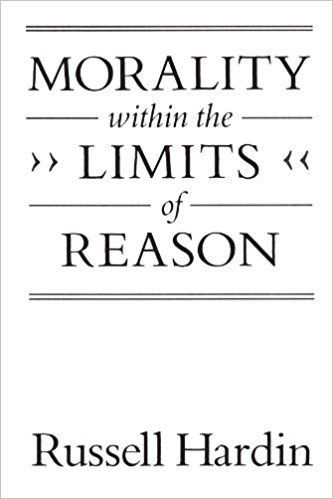
This provocative, lucidly written reconstruction of utilitarianism focuses on the practical constraints involved in ethical choice: information may be inadequate, and understanding of causes and effects may be limited. Good decision making may be especially constrained if other people are closely involved in determining an outcome. Hardin demonstrates that many of these structural issues can and should be distinguished from the thornier problems of utilitarian value theory, and he is able to show what kinds of moral conclusions we can reach within the limits of reason.
ما از اخلاق چه انتظاری داریم؟ این سوال شاید تاحدودی برای عموم مردم و یا متخصصان این رشته قابل پاسخ باشد؛ اینکه خوب بودن را به ما بیاموزد و در تنظیم روابط فردی م...

جشن کتاب تهران به ایستگاه سی و یکم رسیده است. حال و احوال نشر کتاب خوب نیست و باید فرهنگدوستان را به خرید و هدیه دادن کتاب ترغیب نمود. خانه اخلاقپژوهان جوان ب...

بنیاد کتابهای اخلاق اسلامی عمدتا پالایش جان از آلودگیها و آراستن آن به زیباییها است. اندیشه محوری این قبیل کتابها آن است که انسان فعلی آنی نیست که باید باشد...

-
0 Comments