Notice: تابع WP_Block_Type_Registry::register به طورنادرست فراخوانی شد. نامهای نوع بلوک نباید حروف بزرگ داشته باشند. لطفاً برای اطلاعات بیشتر، اشکال زدایی در وردپرس را مشاهده کنید. (این پیام در نگارش 5.0.0 افزوده شده است.) in /home/ethicsho/public_html/wp-includes/functions.php on line 5313
Warning: Use of undefined constant TDC_PATH_LEGACY - assumed 'TDC_PATH_LEGACY' (this will throw an Error in a future version of PHP) in /home/ethicsho/public_html/wp-content/plugins/td-composer/td-composer.php on line 109
Warning: Use of undefined constant TDSP_THEME_PATH - assumed 'TDSP_THEME_PATH' (this will throw an Error in a future version of PHP) in /home/ethicsho/public_html/wp-content/plugins/td-composer/td-composer.php on line 113 بایگانیهای 211.8 - خانه اخلاق پژوهان جوان Notice: Trying to access array offset on value of type bool in /home/ethicsho/public_html/wp-content/plugins/wp-ulike/inc/general-functions.php on line 807
This text not only provides an introduction to the main traditions in ethical thought–such as virtue ethics, utilitarianism, and deontology–but also offers a conceptual framework of ethical pluralism for understanding the relationship among these various theories. This new edition has been significantly affected by the events of September 11, 2001.
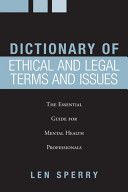
This book is a resource guide that includes all of the key terms, all of the key ethics codes and statues, and all case law relevant to everyday counseling and mental health practice. Ethics in Professional Practice would provide an easily accessible and referenced resource guide in four parts. Part I provides a lexicon of ethical and legal terms relevant to mental health practice. Part II consist a survey of key ethical issue often faced by mental health professionals, including competency, confidentiality, and cultural and ethnic factors. Part III highlights key legal issues, such as billing, testimony and court behavior, and would provide a guide to relevant legal cases and case laws. Part IV would provide a brief guide to professional licensure boards and certification agencies. An Appendix provides an annotated list of key case law and legislation relvant to mental health practice.
Over more than two millennia, the world’s leading religious traditions have provided the guidance in questions of when war can be justified, and of what methods and targets are permissible in war. Linking deep historical analysis to contemporary issues, this volume provides insight to the understanding of the role and influence of religion in the state politics. The book examines the norms of war in Hinduism, in Theravada Buddhism, in Japanese religion, in Judaism, in Roman Catholic Christianity, in Eastern Orthodox Christianity, in Protestant Christianity, in Shia Islam and in Sunni Islam, and discusses norms of war in cross-religious perspective.–Publisher’s description.
This book is about the gap between the moral demand on us and our natural capacities to meet it. John Hare starts with Kants statement of the moral demand and his acknowledgement of this gap. Hare then analyses Kants use of the resources of the Christian tradition to make sense of this gap,especially the notions of revelation, providence, and Gods grace. Kant reflects the traditional way of making sense of this gap, which is to invoke Gods assistance in bridging it. Hare goes on to examine various contemporary philosophers who do not use these resources. He considers three mainstrategies: exaggerating our natural capacities, diminishing the moral demand, and finding some naturalistic substitute for Gods assistance. He argues that these strategies do not work, and that we are therefore left with the gap and with the problem that it is unreasonable to demand of ourselves astandard which we cannot reach. In the final section of the book, Hare looks in more detail at the Christian doctrines of atonement, justification, and sanctification. He discusses Kierkegaards account of the relation between the ethical life and the Christian life, and ends by considering humanforgiveness, and the ways in which Gods forgiveness is both like and unlike our forgiveness of each other. The book is intended for those interested in both ethical theory and Christian theology.
Every day, people face tough choices in which their basic moral principles seem to be in conflict. Now, the Director of the Institute for Global Ethics offers a clear strategy for solving ethical dilemmas. Rushworth Kidder explains ends-based, rule-based, and care-based decision making–and uses real-life examples to show how these principles can applied to thorny problems.
ما از اخلاق چه انتظاری داریم؟ این سوال شاید تاحدودی برای عموم مردم و یا متخصصان این رشته قابل پاسخ باشد؛ اینکه خوب بودن را به ما بیاموزد و در تنظیم روابط فردی م...

جشن کتاب تهران به ایستگاه سی و یکم رسیده است. حال و احوال نشر کتاب خوب نیست و باید فرهنگدوستان را به خرید و هدیه دادن کتاب ترغیب نمود. خانه اخلاقپژوهان جوان ب...

بنیاد کتابهای اخلاق اسلامی عمدتا پالایش جان از آلودگیها و آراستن آن به زیباییها است. اندیشه محوری این قبیل کتابها آن است که انسان فعلی آنی نیست که باید باشد...

-
0 Comments