
Notice: تابع WP_Block_Type_Registry::register به طورنادرست فراخوانی شد. نامهای نوع بلوک نباید حروف بزرگ داشته باشند. لطفاً برای اطلاعات بیشتر، اشکال زدایی در وردپرس را مشاهده کنید. (این پیام در نگارش 5.0.0 افزوده شده است.) in /home/ethicsho/public_html/wp-includes/functions.php on line 5313
Warning: Use of undefined constant TDC_PATH_LEGACY - assumed 'TDC_PATH_LEGACY' (this will throw an Error in a future version of PHP) in /home/ethicsho/public_html/wp-content/plugins/td-composer/td-composer.php on line 109
Warning: Use of undefined constant TDSP_THEME_PATH - assumed 'TDSP_THEME_PATH' (this will throw an Error in a future version of PHP) in /home/ethicsho/public_html/wp-content/plugins/td-composer/td-composer.php on line 113 بایگانیهای 194 - خانه اخلاق پژوهان جوان Notice: Trying to access array offset on value of type bool in /home/ethicsho/public_html/wp-content/plugins/wp-ulike/inc/general-functions.php on line 807
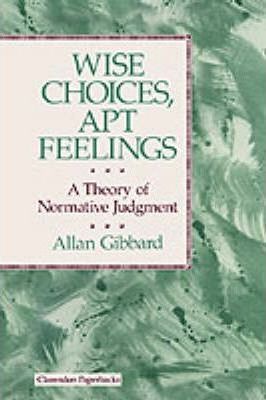
‘Choices can be wise or foolish, and feelings can be apt or off the mark.’ Since this is how we judge, it would be good to know what content these normative judgements carry. Gibbard offers an answer, and elaborates it. His theory explores what is at issue in narrowly moral questions, and in questions of rational thought and conduct in general. It helps to explain why normative thought and talk so pervade human life, and why our highly social species might have evolved to be gripped by these questions. Gibbard asks how, if his theory is right, we can interpret our normative puzzles, and thus proceed toward finding answers to them. Not available from OUP in the USA, Canada, Japan or the Phillippines.
The Golden Rule: treat others as you would like to be treated. This ethical dictum is a part of most of the world’s religions and has been considered by numerous religious figures and philosophers over the centuries. This new collection contains specially
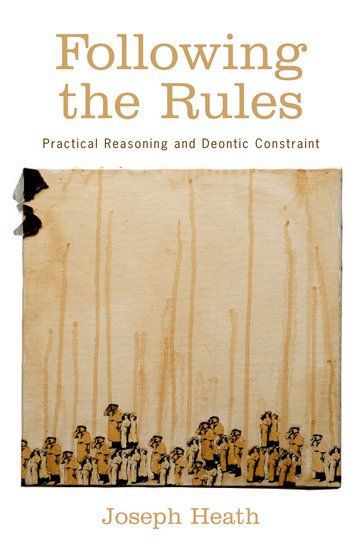
For centuries, philosophers have been puzzled by the fact that people often respect moral obligations as a matter of principle, setting aside considerations of self-interest. In more recent years, social scientists have been puzzled by the more general phenomenon of rule-following, the fact that people often abide by social norms even when doing so produces undesirable consequences. Experimental game theorists have demonstrated conclusively that the old-fashioned picture of “economic man,” constantly reoptimizing in order to maximize utility in all circumstances, cannot provide adequate foundations for a general theory of rational action. The dominant response, however, has been a slide toward irrationalism. If people are ignoring the consequences of their actions, it is claimed, it must be because they are making some sort of a mistake. In Following the Rules, Joseph Heath attempts to reverse this trend, by showing how rule-following can be understood as an essential element of rational action. The first step involves showing how rational choice theory can be modified to incorporate deontic constraint as a feature of rational deliberation. The second involves disarming the suspicion that there is something mysterious or irrational about the psychological states underlying rule-following. According to Heath, human rationality is a by-product of the so-called “language upgrade” that we receive as a consequence of the development of specific social practices. As a result, certain constitutive features of our social environment-such as the rule-governed structure of social life-migrate inwards, and become constitutive features of our psychological faculties. This in turn explains why there is an indissoluble bond between practical rationality and deontic constraint. In the end, what Heath offers is a naturalistic, evolutionary argument in favor of the traditional Kantian view that there is an internal connection between being a rational agent and feeling the force of one’s moral obligations.
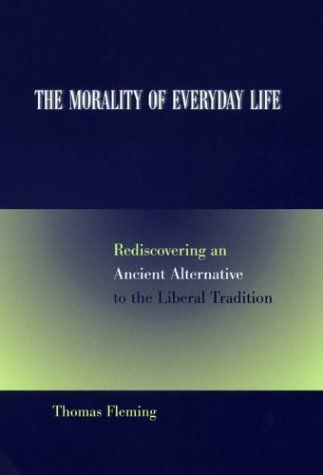
In The Morality of Everyday Life, Thomas Fleming offers an alternative to the enlightened liberalism espoused by thinkers as different as Kant, Mill, Rand, and Rawls. These thinkers maintain that a problem should be looked at from an objective point of view and a decision made from a distant perspective that is both rational and universally applied to all comparable cases. Fleming instead places importance on the particular, the local, and moral complexity. For Fleming, postmodernism, which began with Nietzsche, is not the answer to moral dilemmas either. Fleming advocates a return to premodern traditions, such as those exemplified in the texts of Aristotle, the Talmud, and the folk wisdom in ancient Greek literature, for a solution to ethical predicaments. In his view, liberalism and postmodernism ignore the fact that human beings by their very nature refuse to live in a world of universal abstractions wherein the attachments of friends, neighbors, family, and country make no difference. Premodern thinkers, unlike those since the seventeenth century, recognized that particular obligations arise from specific circumstances and experiences. While such modern philosophers as Kant and Kohlberg have regarded a mother’s self-sacrificing love for her children as beneath their level of morality, folk wisdom tells us it is nearly the highest morality, taking precedence over the duties of citizenship or the claims of humanity. Fleming believes that a modern type of “casuistry” should be applied to these hard cases–moral conflicts in which thee is no clear right or wrong. Casuistry, as it was practiced in the Middle Ages, was a case-by-case analysis of each dilemma. Genuine casuistry is based ontwo principles: that there are general and universally applicable moral laws governing human conduct, and that these laws may not be applied simplistically and uniformly to the great variety of human circumstances and situa
ما از اخلاق چه انتظاری داریم؟ این سوال شاید تاحدودی برای عموم مردم و یا متخصصان این رشته قابل پاسخ باشد؛ اینکه خوب بودن را به ما بیاموزد و در تنظیم روابط فردی م...

جشن کتاب تهران به ایستگاه سی و یکم رسیده است. حال و احوال نشر کتاب خوب نیست و باید فرهنگدوستان را به خرید و هدیه دادن کتاب ترغیب نمود. خانه اخلاقپژوهان جوان ب...

بنیاد کتابهای اخلاق اسلامی عمدتا پالایش جان از آلودگیها و آراستن آن به زیباییها است. اندیشه محوری این قبیل کتابها آن است که انسان فعلی آنی نیست که باید باشد...

-
0 Comments