Notice: تابع WP_Block_Type_Registry::register به طورنادرست فراخوانی شد. نامهای نوع بلوک نباید حروف بزرگ داشته باشند. لطفاً برای اطلاعات بیشتر، اشکال زدایی در وردپرس را مشاهده کنید. (این پیام در نگارش 5.0.0 افزوده شده است.) in /home/ethicsho/public_html/wp-includes/functions.php on line 5313
Warning: Use of undefined constant TDC_PATH_LEGACY - assumed 'TDC_PATH_LEGACY' (this will throw an Error in a future version of PHP) in /home/ethicsho/public_html/wp-content/plugins/td-composer/td-composer.php on line 109
Warning: Use of undefined constant TDSP_THEME_PATH - assumed 'TDSP_THEME_PATH' (this will throw an Error in a future version of PHP) in /home/ethicsho/public_html/wp-content/plugins/td-composer/td-composer.php on line 113 بایگانیهای 179.6092 - خانه اخلاق پژوهان جوان Notice: Trying to access array offset on value of type bool in /home/ethicsho/public_html/wp-content/plugins/wp-ulike/inc/general-functions.php on line 807
The process of turning the news into just another product has been going on since at least the nineteenth century. But this process of commodification has accelerated since a few, publicly owned conglomerates have come to dominate the global media market. The emphasis on the bottom line has resulted in newsroom budget cuts and other business strategies that seriously endanger good journalism. Meanwhile, the growing influence of the Internet and partisan commentary has led even journalists themselves to question their role. In this book, Sandra L. Borden analyzes the ethical bind of public-minded journalists using Alasdair MacIntyre’s account of a ‘practice’. She suggests that MacIntyre’s framework helps us to see how journalism is normatively defined by the pursuit of goods appropriate to its purpose – and how money and other ‘external’ goods threaten that pursuit. Borden argues that developing and promoting the kind of robust group identity implied by the idea of a practice can help journalism better withstand the moral challenges posed by commodification. This book applies MacIntyre’s virtue theory to journalism with philosophical rigor, and at the same time is informed by the most current thinking from communication and other disciplines, including organizational studies and sociology.
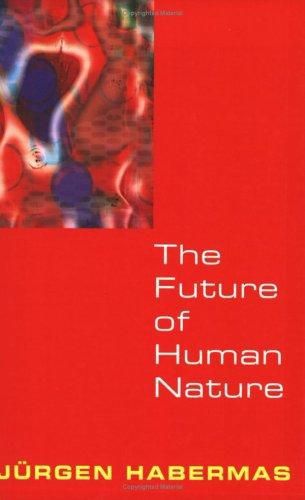
Recent developments in biotechnology and genetic research are raising complex ethical questions concerning the legitimate scope and limits of genetic intervention. As we begin to contemplate the possibility of intervening in the human genome to prevent diseases, we cannot help but feel that the human species might soon be able to take its biological evolution in its own hands. ‘Playing God’ is the metaphor commonly used for this self-transformation of the species, which, it seems, might soon be within our grasp. In this important new book, Jurgen Habermas – the most influential philosopher and social thinker in Germany today – takes up the question of genetic engineering and its ethical implications and subjects it to careful philosophical scrutiny. His analysis is guided by the view that genetic manipulation is bound up with the identity and self-understanding of the species. We cannot rule out the possibility that knowledge of one’s own hereditary factors may prove to be restrictive for the choice of an individual’s way of life and may undermine the symmetrical relations between free and equal human beings. In the concluding chapter – which was delivered as a lecture on receiving the Peace Prize of the German Book Trade for 2001 – Habermas broadens the discussion to examine the tension between science and religion in the modern world, a tension which exploded, with such tragic violence, on September 11th.
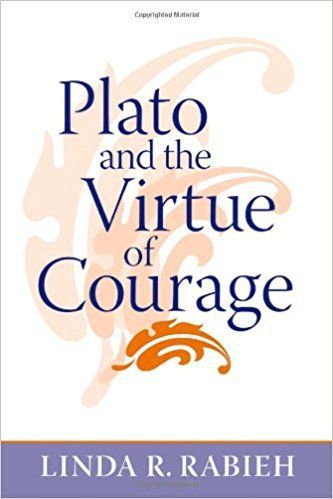
Philosophy and religion are often seen as opposed, but this book aims to show how they can be reconciled. It argues that religious belief cannot be evaluated as an isolated set of doctrines, but needs to be understood in relation to the spiritual praxis that gives it life. Accessibly written and wide-ranging in scope, it connects the spiritual search for self-awareness and moral growth with the philosophical quest to understand the cosmos and our relationship to it.
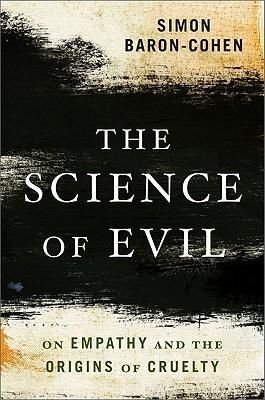
Borderline personality disorder, autism, narcissism, psychosis, Asperger’s: All of these syndromes have one thing in common–lack of empathy. In some cases, this absence can be dangerous, but in others it can simply mean a different way of seeing the world.In Cruel or Unusual Simon Baron-Cohen, an award-winning British researcher who has investigated psychology and autism for decades, develops a new brain-based theory of human cruelty. A true psychologist, however, he examines social and environmental factors that can erode empathy, including neglect and abuse. Based largely on Baron-Cohen’s own research, Cruel or Unusual will change the way we understand and treat human cruelty.
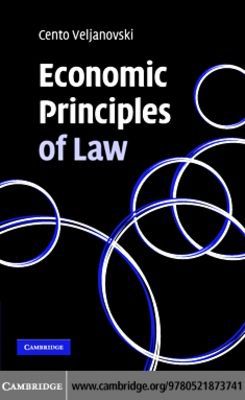
Economic Principles of Law applies economics to the doctrines, rules and remedies of the common law. In plain English and using non-technical analysis, it offers an introduction and exposition of the ‘economic approach’ to law – one of the most exciting and vibrant fields of legal scholarship and applied economics. Beginning with a brief history of the field, it sets out the basic economic concepts useful to lawyers, and applies these to assess the core areas of the common law – property, contract, tort and crime – with particular emphasis on their doctrinal structure and remedies. This is done using leading cases drawn from the birthplace of the common law (England & Wales) and other common law jurisdictions. The book serves as a primer to the wider use of economics which has become increasingly important for law students, lawyers, legislators, regulators and those concerned with our legal system generally.
ما از اخلاق چه انتظاری داریم؟ این سوال شاید تاحدودی برای عموم مردم و یا متخصصان این رشته قابل پاسخ باشد؛ اینکه خوب بودن را به ما بیاموزد و در تنظیم روابط فردی م...

جشن کتاب تهران به ایستگاه سی و یکم رسیده است. حال و احوال نشر کتاب خوب نیست و باید فرهنگدوستان را به خرید و هدیه دادن کتاب ترغیب نمود. خانه اخلاقپژوهان جوان ب...

بنیاد کتابهای اخلاق اسلامی عمدتا پالایش جان از آلودگیها و آراستن آن به زیباییها است. اندیشه محوری این قبیل کتابها آن است که انسان فعلی آنی نیست که باید باشد...

-
0 Comments