


Notice: تابع WP_Block_Type_Registry::register به طورنادرست فراخوانی شد. نامهای نوع بلوک نباید حروف بزرگ داشته باشند. لطفاً برای اطلاعات بیشتر، اشکال زدایی در وردپرس را مشاهده کنید. (این پیام در نگارش 5.0.0 افزوده شده است.) in /home/ethicsho/public_html/wp-includes/functions.php on line 5313
Warning: Use of undefined constant TDC_PATH_LEGACY - assumed 'TDC_PATH_LEGACY' (this will throw an Error in a future version of PHP) in /home/ethicsho/public_html/wp-content/plugins/td-composer/td-composer.php on line 109
Warning: Use of undefined constant TDSP_THEME_PATH - assumed 'TDSP_THEME_PATH' (this will throw an Error in a future version of PHP) in /home/ethicsho/public_html/wp-content/plugins/td-composer/td-composer.php on line 113 بایگانیهای 179.1 - خانه اخلاق پژوهان جوان Notice: Trying to access array offset on value of type bool in /home/ethicsho/public_html/wp-content/plugins/wp-ulike/inc/general-functions.php on line 807
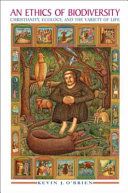
Life on earth is wildly diverse, but the future of that diversity is now in question. Through environmentally destructive farming practices, ever-expanding energy use, and the development and homogenization of land, human beings are responsible for unprecedented reductions in the variety of life forms around us. Estimates suggest that species extinctions caused by humans occur at up to 1,000 times the natural rate, and that one of every twenty species on the planet could be eradicated by 2060. An Ethics of Biodiversity argues that these facts should inspire careful reflection and action in Christian churches, which must learn from earth’s vast diversity in order to help conserve the natural and social diversity of our planet. Bringing scientific data into conversation with theological tradition, the book shows that biodiversity is a point of intersection between faith and ethics, social justice and environmentalism, science and politics, global problems and local solutions. An Ethics of Biodiversity offers a set of tools for students, environmentalists, and people of faith to think critically about how human beings can live with and as part of the variety of life in God’s creation.
At the core of Kant’s ethics lies the claim that if there is a supreme principle of morality, then it is not a utilitarian or Aristotelian perfectionist principle, or even a principle resembling the Ten Commandments. The only viable candidate for the supreme principle of morality is the Categorial Imperative. This book is the most detailed investigation of thie claim. It constructs a new, criterial reading of Kant’s derivation of one version of the Categorial Imperative: The Formula of Universal Law. This reading shows this derivation to be far more compelling than contemporary philosophers tend to believe. It also reveals a novel approach to deriving another version of the Categorial Imperative, the Formula of Humanity, a principle widely considered to be the most attractive Kantian candidate for the supreme principle of morality. Lucidly written and dealing with a foundational topic in the history of ethics, this book will be important not just for Kant scholars but for a broad swath of students of philosophy. Samuel Kerstein is Associate Professor of Philosophy at the University of Maryland, College Park
Alan Thomas presents an original study of the status of value and its relation to the contexts in which evaluative claims are justified. He articulates and defends the view that human beings do possess moral and political knowledge, but that it is historically and culturally contextual knowledge in ways that, say, mathematical or chemical knowledge is not. His exposition of a ‘cognitivist contextualism’ in ethics and politics builds upon contemporary work in epistemology, moral philosophy, and political theory to fashion an argument that is relevant to current debates about culture, modernity, and relativism.
For courses in Business Ethics or Business and Society. Scholarly and well-researched, this unique exploration of the values, ethics, and beliefs of American business begins with the history of the free market system; explains how the values of the organization can influence the values of the individual; and helps students discover their own personal values and goals. Drawing on insights from moral philosophy, economics, social history, psychology, and sociology, it presents both traditional business values and the contemporary challenges to these values, and offers comparisons from a global perspective.
ما از اخلاق چه انتظاری داریم؟ این سوال شاید تاحدودی برای عموم مردم و یا متخصصان این رشته قابل پاسخ باشد؛ اینکه خوب بودن را به ما بیاموزد و در تنظیم روابط فردی م...

جشن کتاب تهران به ایستگاه سی و یکم رسیده است. حال و احوال نشر کتاب خوب نیست و باید فرهنگدوستان را به خرید و هدیه دادن کتاب ترغیب نمود. خانه اخلاقپژوهان جوان ب...

بنیاد کتابهای اخلاق اسلامی عمدتا پالایش جان از آلودگیها و آراستن آن به زیباییها است. اندیشه محوری این قبیل کتابها آن است که انسان فعلی آنی نیست که باید باشد...

-
0 Comments