Notice: تابع WP_Block_Type_Registry::register به طورنادرست فراخوانی شد. نامهای نوع بلوک نباید حروف بزرگ داشته باشند. لطفاً برای اطلاعات بیشتر، اشکال زدایی در وردپرس را مشاهده کنید. (این پیام در نگارش 5.0.0 افزوده شده است.) in /home/ethicsho/public_html/wp-includes/functions.php on line 5313
Warning: Use of undefined constant TDC_PATH_LEGACY - assumed 'TDC_PATH_LEGACY' (this will throw an Error in a future version of PHP) in /home/ethicsho/public_html/wp-content/plugins/td-composer/td-composer.php on line 109
Warning: Use of undefined constant TDSP_THEME_PATH - assumed 'TDSP_THEME_PATH' (this will throw an Error in a future version of PHP) in /home/ethicsho/public_html/wp-content/plugins/td-composer/td-composer.php on line 113 بایگانیهای 174.4071 - خانه اخلاق پژوهان جوان Notice: Trying to access array offset on value of type bool in /home/ethicsho/public_html/wp-content/plugins/wp-ulike/inc/general-functions.php on line 807
Singer suggests that people who take an ethical approach to life often avoid the trap of meaninglessness, finding a deeper satisfaction in what they are doing than those people whose goals are narrower and more self-centered. He spells out what he means by an ethical approach to life and shows that it can bring about significant and far-reaching changes to one’s life. How Are We to Live? explores the way in which standard contemporary assumptions about human nature and self-interest have led to a world that is fraught with social and environmental problems. Singer asks whether selfishness is in our genes and concludes that we do not have to accept the bleak view of human nature sometimes believed to be inevitable, given our evolutionary origins.
By showing how and why human nature is what it is, evolutionary theory can help us see better what we need to do to improve the human condition. Following evolutionary theory to its logical conclusion, Death, Hope and Sex uses life history theory and attachment theory to construct a model of human nature in which critical features are understood in terms of the development of alternative reproductive strategies contingent on environmental risk and uncertainty. James Chisholm examines the implications of this model for perspectives on concerns associated with human reproduction, including teen pregnancy, and young male violence. He thus develops new approaches for thorny issues such as the nature-nurture and mind-body dichotomies. Bridging the gap between the social and biological sciences, this far-reaching volume will be a source of inspiration, debate and discussion for all those interested in the evolution of human nature and the potential for an evolutionary humanism.
Architectural Design and Ethics offers both professional architects and architecture students a theoretical base and numerous suggestions as to how we might rethink our responsibilities to the natural world and design a more sustainable future for ourselves. As we find ourselves on the steep slope of several exponential growth curves in global population, in heat-trapping atmospheric gases, in the gap between the rich and poor, and in the demand for finite resources, Fisher lays down a theory of architecture based on ethics and explores how buildings can and do provide both social and moral dimensions. The book also has practical goals, demonstrating how architects can make better and more beautiful buildings whilst nurturing more responsible, sustainable development. Architectural Design and Ethics will prove an invaluable text not only to those in the architecture field, but to anyone simply interested in the ethical issues surrounding our built environment. * Joins the dots between architectural form, ethics and professional practice * Uses the history of ethics to present relevant lessons for todays practitioners * A wake up call to architects, advocating a greater focus on ethics over aesthetics
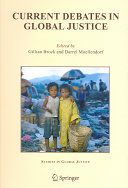
Issues of global justice dominate our contemporary world. Incre- ingly, philosophers are turning their attention to thinking about particular issues of global justice and the accounts that would best facilitate theorizing about these. This volume of papers on global justice derives from a mini-conference held in conjunction with the Paci?c Division meeting of the American Philosophical Association in Pasadena, California, in 2004. The idea of holding a mini-c- ference on global justice was inspired by the growth of interest in such questions, and it was hoped that organizing the mini-conference 1 would stimulate further good writing in this area. We believe that our mission has been accomplished! We received a number of thoughtful papers on both theoretical and more applied issues, showing excellent coverage of a range of topics in the domain of global justice. A selection of some of the very best papers is published in this special issue of The Journal of Ethics. In particular, we tried to include papers that would re?ect some of the range of topics that were covered at the conference, to give readers a sense of both the scope of the ?eld as it is currently emerging and the direction that the debates seem to be taking. As a result of increased attention to theorizing about global j- tice, cosmopolitanism has enjoyed a resurgence of interest as well.
ما از اخلاق چه انتظاری داریم؟ این سوال شاید تاحدودی برای عموم مردم و یا متخصصان این رشته قابل پاسخ باشد؛ اینکه خوب بودن را به ما بیاموزد و در تنظیم روابط فردی م...

جشن کتاب تهران به ایستگاه سی و یکم رسیده است. حال و احوال نشر کتاب خوب نیست و باید فرهنگدوستان را به خرید و هدیه دادن کتاب ترغیب نمود. خانه اخلاقپژوهان جوان ب...

بنیاد کتابهای اخلاق اسلامی عمدتا پالایش جان از آلودگیها و آراستن آن به زیباییها است. اندیشه محوری این قبیل کتابها آن است که انسان فعلی آنی نیست که باید باشد...

-
0 Comments