
Notice: تابع WP_Block_Type_Registry::register به طورنادرست فراخوانی شد. نامهای نوع بلوک نباید حروف بزرگ داشته باشند. لطفاً برای اطلاعات بیشتر، اشکال زدایی در وردپرس را مشاهده کنید. (این پیام در نگارش 5.0.0 افزوده شده است.) in /home/ethicsho/public_html/wp-includes/functions.php on line 5313
Warning: Use of undefined constant TDC_PATH_LEGACY - assumed 'TDC_PATH_LEGACY' (this will throw an Error in a future version of PHP) in /home/ethicsho/public_html/wp-content/plugins/td-composer/td-composer.php on line 109
Warning: Use of undefined constant TDSP_THEME_PATH - assumed 'TDSP_THEME_PATH' (this will throw an Error in a future version of PHP) in /home/ethicsho/public_html/wp-content/plugins/td-composer/td-composer.php on line 113 بایگانیهای 174.30973 - خانه اخلاق پژوهان جوان Notice: Trying to access array offset on value of type bool in /home/ethicsho/public_html/wp-content/plugins/wp-ulike/inc/general-functions.php on line 807
Nutrigenomics is the rapidly developing field of science that studies nutrient-gene interaction. This field has broad implications for understanding the interaction of human genomics and nutrition, but can also have very specific implications for individual dietary recommendations in light of personal genetics. Predicted applications for nutrigenomics include genomics-based dietary guidelines and personalized nutrition based on individual genetic tests. These developments have sweeping ethical, legal and regulatory implications for individuals, corporations and governments.This book brings together experts in ethics, law, regulatory analysis, and communication studies to identify and address relevant issues in the emerging field of nutritional genomics. Contributing authors are experts in the social aspects of biotechnology innovation, with expertise in nutrigenomics. From addressing the concern that nutrigenomics will transform food into medicine and undermine pleasures associated with eating to the latest in the science of nutrigenomics, this book provides a world-wide perspective on the potential impact of nutrigenomics on our association with food. *Explores the rapidly developing, yet not fully understood, impact of nutrigenomics on the relationship to food medicalization, genetic privacy, nutrition and health.*Provides ground for further exploration to identify issues and provide analysis to aid in policy and regulation development*Provides ethical and legal insights into this unfolding science, as well as serving as a model for thinking about issues arising in other fields of science and technology
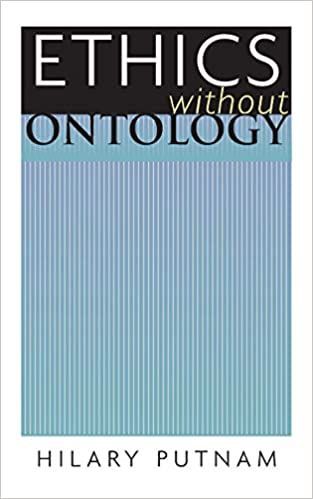
In this brief book one of the most distinguished living American philosophers takes up the question of whether ethical judgments can properly be considered objective–a question that has vexed philosophers over the past century. Looking at the efforts of philosophers from the Enlightenment through the twentieth century, Putnam traces the ways in which ethical problems arise in a historical context. Hilary Putnam’s central concern is ontology–indeed, the very idea of ontology as the division of philosophy concerned with what (ultimately) exists. Reviewing what he deems the disastrous consequences of ontology’s influence on analytic philosophy–in particular, the contortions it imposes upon debates about the objective of ethical judgments–Putnam proposes abandoning the very idea of ontology. He argues persuasively that the attempt to provide an ontological explanation of the objectivity of either mathematics or ethics is, in fact, an attempt to provide justifications that are extraneous to mathematics and ethics–and is thus deeply misguided.
Metaethics, understood as a distinct branch of ethics, is often traced to G. E. Moore’s 1903 classic, Principia Ethica. Whereas normative ethics is concerned to answer first-order moral questions about what is good and bad, right and wrong, metaethics is concerned to answer second-order non-moral questions about the semantics, metaphysics, and epistemology of moral thought and discourse. Moore has continued to exert a powerful influence, and the sixteen essays here (most of them specially written for the volume) represent the most up-to-date work in metaethics after, and in some cases directly inspired by, the work of Moore. Contributors include Robert Audi, Stephen Barker, Paul Bloomfield, Panayot Butchvarvov, Jonathan Dancy, Stephen Darwall, Jamie Dreier, Allan Gibbard, Brad Hooker, Terry Horgan, Connie Rosati, Russ Shafer-Landau, Walter Sinnott-Armstrong, Michael Smith, Philip Stratton-Lake, Sigrun Svavarsdottir, Mark Timmons, and Judith Jarvis Thomson.
ما از اخلاق چه انتظاری داریم؟ این سوال شاید تاحدودی برای عموم مردم و یا متخصصان این رشته قابل پاسخ باشد؛ اینکه خوب بودن را به ما بیاموزد و در تنظیم روابط فردی م...

جشن کتاب تهران به ایستگاه سی و یکم رسیده است. حال و احوال نشر کتاب خوب نیست و باید فرهنگدوستان را به خرید و هدیه دادن کتاب ترغیب نمود. خانه اخلاقپژوهان جوان ب...

بنیاد کتابهای اخلاق اسلامی عمدتا پالایش جان از آلودگیها و آراستن آن به زیباییها است. اندیشه محوری این قبیل کتابها آن است که انسان فعلی آنی نیست که باید باشد...

-
0 Comments