Notice: تابع WP_Block_Type_Registry::register به طورنادرست فراخوانی شد. نامهای نوع بلوک نباید حروف بزرگ داشته باشند. لطفاً برای اطلاعات بیشتر، اشکال زدایی در وردپرس را مشاهده کنید. (این پیام در نگارش 5.0.0 افزوده شده است.) in /home/ethicsho/public_html/wp-includes/functions.php on line 5313
Warning: Use of undefined constant TDC_PATH_LEGACY - assumed 'TDC_PATH_LEGACY' (this will throw an Error in a future version of PHP) in /home/ethicsho/public_html/wp-content/plugins/td-composer/td-composer.php on line 109
Warning: Use of undefined constant TDSP_THEME_PATH - assumed 'TDSP_THEME_PATH' (this will throw an Error in a future version of PHP) in /home/ethicsho/public_html/wp-content/plugins/td-composer/td-composer.php on line 113 بایگانیهای 174.25 - خانه اخلاق پژوهان جوان Notice: Trying to access array offset on value of type bool in /home/ethicsho/public_html/wp-content/plugins/wp-ulike/inc/general-functions.php on line 807
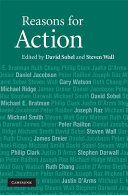
What are our reasons for acting? Morality purports to give us these reasons, and so do norms of prudence and the laws of society. The theory of practical reason assesses the authority of these potentially competing claims, and for this reason philosophers with a wide range of interests have converged on the topic of reasons for action. This volume contains eleven new essays on practical reason by leading and emerging philosophers. Topics include the differences between practical and theoretical rationality, practical conditionals and the wide-scope ought, the explanation of action, the sources of reasons, and the relationship between morality and reasons for action. The volume will be essential reading for all philosophers interested in ethics and practical reason.
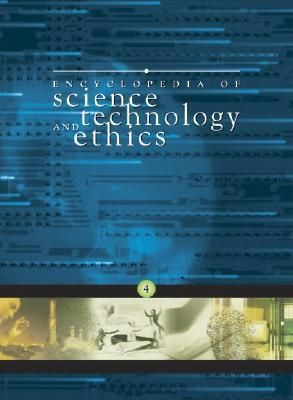
This Encyclopedia considers both the professional ethics of science and technology, and the ethical and political issues raised by science and technology in an increasingly complex and global society. This broad coverage supports the numerous courses in applied and professional ethics and policy related to the practice of science and technology in education.
What are the resources and needs, the strengths and the vulnerabilities of patients, of society, or of nature? How do we evaluate the societal potential of scientific discovery? It is fairly well assured that we are influencing the terms of existence of many inhabitants of this planet, from flora to fauna to humans. Moreover, history has shown that while technologies can be used neutrally, they can be (and have been) used to the great benefit – or the great detriment – of human life and the fate of the world as a whole. How various types of knowledge and technological ability will be deployed is up to us, individually and collectively. How such information and ability should be deployed, and for what reasons, are questions at the core of bioethical inquiry. These are the “expanding horizons in bioethics” to which this volume refers. This volume is comprised of fourteen essays. It is a rare gathering of scholarly opinion, featuring well-known experts from a diversity of disciplines. The topics addressed are of immediate concern to the public. The essays ask questions about human nature, genetic technologies, reproductive rights, human subjects research, and environmental issues – all in provocative and challenging new ways. Yet the themes that emerge throughout the volume are of enduring interest to anyone concerned about the interactions of scientific development, ethics, and society. This volume is of interest to students and teachers of bioethics and related topics, as well as to professionals working in these disciplines. “The collection of essays makes an original contribution through the generally very high standard of scholarship of the papers, and through the engagement by those authors with very contemporary issues in bioethics… It is rare that so many highly original views are collected in one volume.” Quote from a pre-publication review.
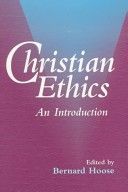
Currently, there is an upsurge of interest in the study of Christian ethics but much of what is written can appear confusing or beyond reach. In Christian Ethics, the first one-volume reference to include all the main themes in fundamental and applied moral theology, Bernard Hoose puts in understandable terms the state of moral theology today. At a time when many people fear that society has lost its way morally, he helps Christians make sense of the major issues that confront us all. Written by well-known ethicists in the English-speaking world, Christian Ethics is a comprehensive work of reference for students of moral theology. Scholars will value the excellent collection of essays and the range of scholarship they represent. The educated lay reader will also benefit from its highly readable text. Part one of the book deals with the fundamental themes in moral theology, including the role of the Bible, natural law, conscience, virtue, and the feminist contribution to Christian ethics. Part two is devoted to specific areas of applied or special ethics, under the headings of social ethics, interpersonal and sexual ethics, and medical ethics. Chapters in “Part 1: Basic Christian Ethics” are “The Bible and Christian Ethics,” by Tom Deidun; “Natural Law,” by Gerard J. Hughes; “Authority and Moral Teaching in a Catholic Christian Context,” by Joseph Selling; “Absolute Moral Norms,” by Charles E. Curran; “Virtue Ethics,” by James F. Keenan; “The Human Person,” by Joseph Selling; “Conscience,” by Richard M. Gula; “The Theory of the Fundamental Option and Moral Action,” by Thomas R. Kopfensteiner; “Feminist Ethics,” by Susan F. Parsons,” and “The Distinctiveness of Christian Morality,” by Vincent MacNamara. Chapters in “Part 2: Applied Ethics” are “Justice,” by Karen Lebacqz; “Property,” by Timothy J. Gorringe; “Morality and Law,” by Patrick Hannon; “The Punishment of Criminals,” by Bernard Hoose; “Peace, Violence and War,” by Richard G. Jones; “Sex, Sexuality, and Relationships,” by Gareth Moore; “Divorce and Remarriage,” by Kevin T. Kelly; “Truth and Lies,” by Bernard Hoose; “Euthanasia,” by Richard M. Gula; “Ethical Problems Arising from New Reproductive Techniques,” by Joyce Poole; “Organ Transplantation,” by David F. Kelly; and “Hypnosis and General Anaesthesia,” by Aureliano Pacciolla.
ما از اخلاق چه انتظاری داریم؟ این سوال شاید تاحدودی برای عموم مردم و یا متخصصان این رشته قابل پاسخ باشد؛ اینکه خوب بودن را به ما بیاموزد و در تنظیم روابط فردی م...

جشن کتاب تهران به ایستگاه سی و یکم رسیده است. حال و احوال نشر کتاب خوب نیست و باید فرهنگدوستان را به خرید و هدیه دادن کتاب ترغیب نمود. خانه اخلاقپژوهان جوان ب...

بنیاد کتابهای اخلاق اسلامی عمدتا پالایش جان از آلودگیها و آراستن آن به زیباییها است. اندیشه محوری این قبیل کتابها آن است که انسان فعلی آنی نیست که باید باشد...

-
0 Comments