

Notice: تابع WP_Block_Type_Registry::register به طورنادرست فراخوانی شد. نامهای نوع بلوک نباید حروف بزرگ داشته باشند. لطفاً برای اطلاعات بیشتر، اشکال زدایی در وردپرس را مشاهده کنید. (این پیام در نگارش 5.0.0 افزوده شده است.) in /home/ethicsho/public_html/wp-includes/functions.php on line 5313
Warning: Use of undefined constant TDC_PATH_LEGACY - assumed 'TDC_PATH_LEGACY' (this will throw an Error in a future version of PHP) in /home/ethicsho/public_html/wp-content/plugins/td-composer/td-composer.php on line 109
Warning: Use of undefined constant TDSP_THEME_PATH - assumed 'TDSP_THEME_PATH' (this will throw an Error in a future version of PHP) in /home/ethicsho/public_html/wp-content/plugins/td-composer/td-composer.php on line 113 بایگانیهای 174.2 - صفحه 3 از 5 - خانه اخلاق پژوهان جوان Notice: Trying to access array offset on value of type bool in /home/ethicsho/public_html/wp-content/plugins/wp-ulike/inc/general-functions.php on line 807
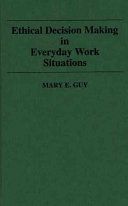
This book takes a new approach to ethics by focusing on the kinds of dilemmas that confront people almost daily on the job. The author’s unique contribution is to meld philosophy with everyday decisionmaking, offering the reader a common sense approach to making ethical decisions. Mary Guy introduces ten core values which surround ethical dilemmas, demonstrating the way in which personnel can sensitize themselves to the values involved in a problem and reach a solution which maximizes the important values. Real-life case examples illustrate ethical dilemmas that involve personnel practices, organizing strategies, reporting functions, supervisory practices, whistleblowing, and more. Throughout, the author emphasizes the kinds of concerns which confront the vast majority of employees–from ambitious entry-level personnel to top executives. Realistic in tone, the discussion acknowledges the inevitable need to make compromises, showing how to optimize ethical values situations that arise on the job and for which no formal rules exist. In her introductory chapter, Guy defines ethics, clarifies the relationship between ethical behavior and morality, and presents the ten guiding values that serve as the foundation for ethical decisions. Turning to a focus on decisionmaking, she explores such issues as the theoretical framework for rational decisionmaking, rational decisionmaking in real life, the application of ethical analysis to decisionmaking, and the definition of ethical decisionmaking. The four subsequent chapters present case studies of problems that personnel commonly encounter. In each case, Guy examines the ethical issues involved, applies various scenarios for reaching an ethical decision, and demonstrates the tension that exists among ethical decisionmaking, coping with daily exigencies, and accommodating the preferences of stakeholders. The concluding chapter summarizes the relationship between ethics and decisionmaking and offers a prescription for ensuring ethical decisionmaking throughout the organization. Must reading for managers in business, government, and not-for-profit organizations, this book is also an excellent supplemental text for advanced undergraduate and graduate level courses in business and public administration.
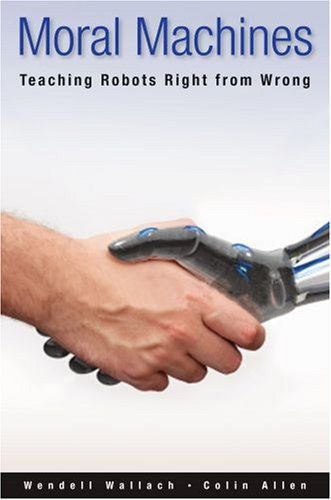
Computers are already approving financial transactions, controlling electrical supplies, and driving trains. Soon, service robots will be taking care of the elderly in their homes, and military robots will have their own targeting and firing protocols. Colin Allen and Wendell Wallach argue that as robots take on more and more responsibility, they must be programmed with moral decision-making abilities, for our own safety. Taking a fast paced tour through the latest thinking about philosophical ethics and artificial intelligence, the authors argue that even if full moral agency for machines is a long way off, it is already necessary to start building a kind of functional morality, in which artificial moral agents have some basic ethical sensitivity. But the standard ethical theories don’t seem adequate, and more socially engaged and engaging robots will be needed. As the authors show, the quest to build machines that are capable of telling right from wrong has begun. Moral Machines is the first book to examine the challenge of building artificial moral agents, probing deeply into the nature of human decision making and ethics.
ما از اخلاق چه انتظاری داریم؟ این سوال شاید تاحدودی برای عموم مردم و یا متخصصان این رشته قابل پاسخ باشد؛ اینکه خوب بودن را به ما بیاموزد و در تنظیم روابط فردی م...

جشن کتاب تهران به ایستگاه سی و یکم رسیده است. حال و احوال نشر کتاب خوب نیست و باید فرهنگدوستان را به خرید و هدیه دادن کتاب ترغیب نمود. خانه اخلاقپژوهان جوان ب...

بنیاد کتابهای اخلاق اسلامی عمدتا پالایش جان از آلودگیها و آراستن آن به زیباییها است. اندیشه محوری این قبیل کتابها آن است که انسان فعلی آنی نیست که باید باشد...

-
0 Comments