Notice: تابع WP_Block_Type_Registry::register به طورنادرست فراخوانی شد. نامهای نوع بلوک نباید حروف بزرگ داشته باشند. لطفاً برای اطلاعات بیشتر، اشکال زدایی در وردپرس را مشاهده کنید. (این پیام در نگارش 5.0.0 افزوده شده است.) in /home/ethicsho/public_html/wp-includes/functions.php on line 5313
Warning: Use of undefined constant TDC_PATH_LEGACY - assumed 'TDC_PATH_LEGACY' (this will throw an Error in a future version of PHP) in /home/ethicsho/public_html/wp-content/plugins/td-composer/td-composer.php on line 109
Warning: Use of undefined constant TDSP_THEME_PATH - assumed 'TDSP_THEME_PATH' (this will throw an Error in a future version of PHP) in /home/ethicsho/public_html/wp-content/plugins/td-composer/td-composer.php on line 113 بایگانیهای 171.4092 - خانه اخلاق پژوهان جوان Notice: Trying to access array offset on value of type bool in /home/ethicsho/public_html/wp-content/plugins/wp-ulike/inc/general-functions.php on line 807
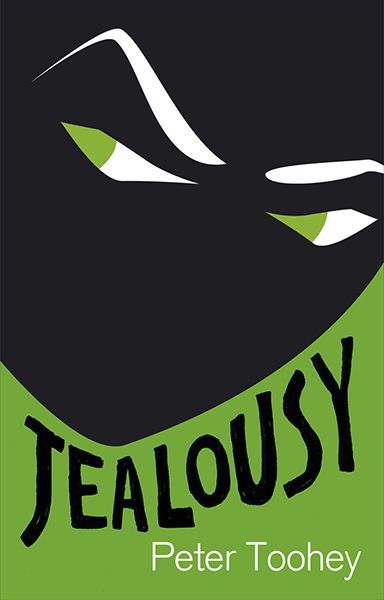
A witty and insightful investigation into the green-eyed monster’s role in our lives Compete, acquire, succeed, enjoy: the pressures of living in today’s materialistic world seem predicated upon jealousy–the feelings of rivalry and resentment for possession of whatever the other has. But while our newspapers abound with stories of the sometimes droll, sometimes deadly consequences of sexual jealousy, Peter Toohey argues in this charmingly provocative book that jealousy is much more than the destructive emotion it is commonly assumed to be. It helps as much as it harms. Examining the meaning, history, and value of jealousy, Toohey places the emotion at the core of modern culture, creativity, and civilization–not merely the sexual relationship. His eclectic approach weaves together psychology, art and literature, neuroscience, anthropology, and a host of other disciplines to offer fresh and intriguing contemporary perspectives on violence, the family, the workplace, animal behavior, and psychopathology. Ranging from the streets of London to Pacific islands, and from the classical world to today, this is an elegant, smart, and beautifully illustrated defense of a not-always-deadly sin.
Distributed networks such as the Internet have altered the fundamental way a record is created, captured, accessed and managed over time. Law and ethics provide the major sources of regulatory controls over participants in such networks. This book analyses the interrelationship of recordkeeping, ethics and law in terms of existing regulatory models and their application to the Internet environment. It proposes an Internet model based on the notion of a legal and social relationship as a means of identifying the legal and ethical rights and obligations of recordkeeping participants in networked transactions. Medical, business and governmental relationships within communities of common interest based on trust illustrate the practical application of the model. As legal relationships have their basis in the law of obligations found in common and civil law systems, as well as archival science, the model has a broad-based application. The relationship model also provides a unique ethical and legal approach to property, access, privacy and evidence. Most importantly, the book provides an interdisciplinary approach to Internet regulation, which contributes to closer ties between those who research, teach and work in fields of ethics, law and archival science.
In Oughts and Thoughts, Anandi Hattiangadi provides an innovative response to the argument for meaning skepticism set out by Saul Kripke in Wittgenstein on Rules and Private Language. Kripke asks what makes it the case that anybody ever means anything by any word, and argues that there are no facts of the matter as to what anybody ever means. Kripke’s argument has inspired a lively and extended debate in the philosophy of language, as it raises some of the most fundamental issues in the field: namely, the reality, privacy, and normativity of meaning. Hattiangadi argues that in order to achieve the radical conclusion that there are no facts as to what a person means by a word, the skeptic must rely on the thesis that meaning is normative, and that this thesis fails. Since any “skeptical solution” to the skeptical problem is irremediably incoherent, Hattiangadi concludes that there must be a fact of the matter about what we mean. In addition to providing an overview of the debate on meaning and content skepticism, Hattiangadi presents a detailed discussion of the contributions made by Simon Blackburn, Paul Boghossian, Robert Brandom, Fred Dretske, John McDowell, and Crispin Wright, among others, to the controversy surrounding Kripke’s argument. The issues considered include the normativity of meaning and its relation to the normativity of moral judgments, reductive and non-reductive theories of meaning, deflationism about truth and meaning, and the privacy of meaning.
ما از اخلاق چه انتظاری داریم؟ این سوال شاید تاحدودی برای عموم مردم و یا متخصصان این رشته قابل پاسخ باشد؛ اینکه خوب بودن را به ما بیاموزد و در تنظیم روابط فردی م...

جشن کتاب تهران به ایستگاه سی و یکم رسیده است. حال و احوال نشر کتاب خوب نیست و باید فرهنگدوستان را به خرید و هدیه دادن کتاب ترغیب نمود. خانه اخلاقپژوهان جوان ب...

بنیاد کتابهای اخلاق اسلامی عمدتا پالایش جان از آلودگیها و آراستن آن به زیباییها است. اندیشه محوری این قبیل کتابها آن است که انسان فعلی آنی نیست که باید باشد...

-
0 Comments