Notice: تابع WP_Block_Type_Registry::register به طورنادرست فراخوانی شد. نامهای نوع بلوک نباید حروف بزرگ داشته باشند. لطفاً برای اطلاعات بیشتر، اشکال زدایی در وردپرس را مشاهده کنید. (این پیام در نگارش 5.0.0 افزوده شده است.) in /home/ethicsho/public_html/wp-includes/functions.php on line 5313
Warning: Use of undefined constant TDC_PATH_LEGACY - assumed 'TDC_PATH_LEGACY' (this will throw an Error in a future version of PHP) in /home/ethicsho/public_html/wp-content/plugins/td-composer/td-composer.php on line 109
Warning: Use of undefined constant TDSP_THEME_PATH - assumed 'TDSP_THEME_PATH' (this will throw an Error in a future version of PHP) in /home/ethicsho/public_html/wp-content/plugins/td-composer/td-composer.php on line 113 بایگانیهای 171.3 - صفحه 2 از 3 - خانه اخلاق پژوهان جوان Notice: Trying to access array offset on value of type bool in /home/ethicsho/public_html/wp-content/plugins/wp-ulike/inc/general-functions.php on line 807
What is good? How can we know, and how important is it? In this book Richard Kraut, one of our most respected analytical philosophers, reorients these questions around the notion of what causes human beings to flourish–that is, what is good for us. Observing that we can sensibly talk about what is good for plants and animals no less than what is good for people, Kraut advocates a general principle that applies to the entire world of living things: what is good for complex organisms consists in the maturation and exercise of their natural powers.Drawing on the insights of ancient Greek philosophy, Kraut develops this thought into a good-centered moral philosophy, an “ethics of well-being” that requires all of our efforts to do some good. Even what is good of a kind–good poems no less than good people–must be good for someone. Pleasure plays a key role in this idea of flourishing life, but Kraut opposes the current philosophical orthodoxy of well-being, which views a person’s welfare as a construct of rational desires or plans, actual or ideal. The practical upshot of Kraut’s theory is that many common human pursuits–for riches, fame, domination–are in themselves worthless, while some of the familiar virtues–justice, honesty, and autonomy–are good for every human being.
This book takes a new approach to ethics by focusing on the kinds of dilemmas that confront people almost daily on the job. The author’s unique contribution is to meld philosophy with everyday decisionmaking, offering the reader a common sense approach to making ethical decisions. Mary Guy introduces ten core values which surround ethical dilemmas, demonstrating the way in which personnel can sensitize themselves to the values involved in a problem and reach a solution which maximizes the important values. Real-life case examples illustrate ethical dilemmas that involve personnel practices, organizing strategies, reporting functions, supervisory practices, whistleblowing, and more. Throughout, the author emphasizes the kinds of concerns which confront the vast majority of employees–from ambitious entry-level personnel to top executives. Realistic in tone, the discussion acknowledges the inevitable need to make compromises, showing how to optimize ethical values situations that arise on the job and for which no formal rules exist. In her introductory chapter, Guy defines ethics, clarifies the relationship between ethical behavior and morality, and presents the ten guiding values that serve as the foundation for ethical decisions. Turning to a focus on decisionmaking, she explores such issues as the theoretical framework for rational decisionmaking, rational decisionmaking in real life, the application of ethical analysis to decisionmaking, and the definition of ethical decisionmaking. The four subsequent chapters present case studies of problems that personnel commonly encounter. In each case, Guy examines the ethical issues involved, applies various scenarios for reaching an ethical decision, and demonstrates the tension that exists among ethical decisionmaking, coping with daily exigencies, and accommodating the preferences of stakeholders. The concluding chapter summarizes the relationship between ethics and decisionmaking and offers a prescription for ensuring ethical decisionmaking throughout the organization. Must reading for managers in business, government, and not-for-profit organizations, this book is also an excellent supplemental text for advanced undergraduate and graduate level courses in business and public administration.
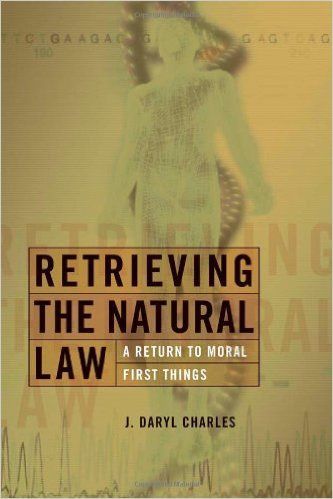
Restating what all people intuit and what this means in moral, specifically bioethical, discourse is the raison d’etre for this volume. J. Daryl Charles argues that a traditional metaphysics of natural law lies at the heart of the present reconstructive project, and that a revival in natural-law thinking is of the highest priority for the Christian community as we contend in, rather than abdicate, the public square. Nowhere is this more on display than in the realm of bioethics, where the most basic moral questions – human personhood, human rights versus responsibilities, the reality of moral evil, the basis of civil society – are being debated. With his timely application of natural-law thinking to the field of bioethics, Charles seeks to breathe new life back into this key debate.
ما از اخلاق چه انتظاری داریم؟ این سوال شاید تاحدودی برای عموم مردم و یا متخصصان این رشته قابل پاسخ باشد؛ اینکه خوب بودن را به ما بیاموزد و در تنظیم روابط فردی م...

جشن کتاب تهران به ایستگاه سی و یکم رسیده است. حال و احوال نشر کتاب خوب نیست و باید فرهنگدوستان را به خرید و هدیه دادن کتاب ترغیب نمود. خانه اخلاقپژوهان جوان ب...

بنیاد کتابهای اخلاق اسلامی عمدتا پالایش جان از آلودگیها و آراستن آن به زیباییها است. اندیشه محوری این قبیل کتابها آن است که انسان فعلی آنی نیست که باید باشد...

-
0 Comments