

Notice: تابع WP_Block_Type_Registry::register به طورنادرست فراخوانی شد. نامهای نوع بلوک نباید حروف بزرگ داشته باشند. لطفاً برای اطلاعات بیشتر، اشکال زدایی در وردپرس را مشاهده کنید. (این پیام در نگارش 5.0.0 افزوده شده است.) in /home/ethicsho/public_html/wp-includes/functions.php on line 5313
Warning: Use of undefined constant TDC_PATH_LEGACY - assumed 'TDC_PATH_LEGACY' (this will throw an Error in a future version of PHP) in /home/ethicsho/public_html/wp-content/plugins/td-composer/td-composer.php on line 109
Warning: Use of undefined constant TDSP_THEME_PATH - assumed 'TDSP_THEME_PATH' (this will throw an Error in a future version of PHP) in /home/ethicsho/public_html/wp-content/plugins/td-composer/td-composer.php on line 113 بایگانیهای 170.82 - خانه اخلاق پژوهان جوان Notice: Trying to access array offset on value of type bool in /home/ethicsho/public_html/wp-content/plugins/wp-ulike/inc/general-functions.php on line 807
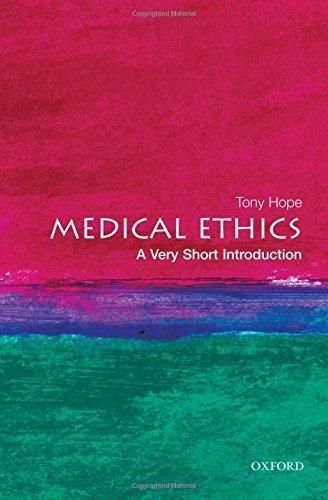
Medical ethics is an area that has particular interest for the general public as well as for the medical practitioner, and issues concerning medical ethics seem to be constantly in the headlines. This short and accessible introduction provides an invaluable tool with which to think about the ethical values that lie at the heart of medicine. Tony Hope deals with thorny moral issues, including euthanasia and the morality of killing. He also explores political questions, such as how we can make sure health care resources are distributed fairly. Each chapter in the book considers a different issue, for example, genetics, modern reproductive technologies, resource allocation, mental health, and medical research. Each section also discusses controversial questions such as: Who should have access to reproductive technology? Is it right to fund expensive drug treatment for individuals? Should treatment for mental illness be imposed on patients without their consent? Considering a wide range of questions of medical ethics, this Very Short Introduction will help to explain some of the confusing issues facing the field of medicine today.
This first book of its kind for the medical profession brings the real-world translation of ethics to the care of patients, conduct of protocols, and training of professionals. An interactive, case-oriented approach to mental health ethics, Professionalism and Ethics: Q & A Self-Study Guide for Mental Health Professionals consists of questions and answers developed by the authors and fourteen contributors from backgrounds as diverse as family medicine, research ethics, social psychology, and public health. They draw on personal experience in the care of people with mental illness, in mental health research, and in clinical training to generate scenarios that pose ethical questions. Some questions are narrow and to the point, such as responding to a suspicion of child abuse; others require a more nuanced approach, such as dealing with conflict of interest posed by a pharmaceutical company. They then resolve these questions in alignment with an understanding of ethical principles, the standards of their fields, the law, and the expectations of mental health professionals. The brief case descriptions that frame each ethical question echo the real-life complexities of clinical practice and are presented in single-answer, multiple-choice format modeled after key medical licensure and specialty certification organizations. Following an overview of ethics and professionalism, questions cover four broad areas: core concepts, clinical care, medical research, and interactions with colleagues and trainees. Explanations following the questions offer background information about relevant ethical concepts and related legal and clinical considerations. A subsequent section features another set of questions for self-assessment, followed by answers with citations to appropriate references. The book’s overall approach is geared to underscore the following areas of concern: • Essential ethical skills, such as understanding how personal values affect patient care, recognizing high-risk situations in which ethical problems arise, and building ethical safeguards• Core ethical principles, including nonmaleficence, beneficence, autonomy, respect, justice, veracity, fidelity, and privacy• Key clinical ethics issues, including maintaining therapeutic boundaries, patient non-abandonment, informed consent and treatment refusal, alternative decision making and advance directives, confidentiality, reporting colleague misconduct, and caring for difficult patients. Trainees and experienced clinicians alike will be richly rewarded by considering the dilemmas posed here. Developed with an extensive review process, reference verifications, and iterative crosschecks, this book facilitates professionalism as a core competency in medicine as it instills the need for ongoing consideration of ethical behaviors and principles in the daily practice of psychiatry.
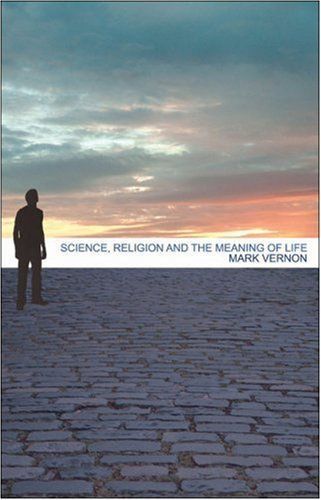
Have evolution, science and the trappings of the modern world killed off God irrevocably? And what do we lose if we choose not to believe in him? From Newton and Descartes to Darwin and the discovery of the genome, religion has been pushed back further and further while science has gained ground. But what fills the void that religion leaves behind? This book is an attempt to look at these questions and to suggest a third way between the easy consolations of religion and the persuasive force of science that the everyday modern reader can engage with.
Purchase of this book includes free trial access to www.million-books.com where you can read more than a million books for free. This is an OCR edition with typos. Excerpt from book: when completely formed. Many of our most important perceptions through the eye are universally acknowledged to be acquired. But they are as general as the original perceptions of that organ; they arise as independently of our will, and human nature would be quite as imperfect without them. An adult who did not immediately see the different distances of objects from his eye, would be thought by every one to be as great a deviation from the ordinary state of man as if he were incapable of distinguishing the brightest sunshine from the darkest midnight. Acquired perceptions and sentiments may therefore be termed natural, as much as those which are more com- monly so called, if they be as rarely found wanting. Ethical theories can never be satisfactorily discussed by those who do not constantly bear in mind, that the question concerning the existence of a moral faculty in man which immediately approves or disapproves without reference to any further object, is perfectly distinct, on the one hand, from that which inquires into the qualities thus approved or disapproved; and on the other, from an inquiry whether that faculty be derived from other parts of our mental frame, or be itself one of the ultimate constituent principles of human nature. SECTION II. Retrospect of Ancient Ethics. Inquiries concerning the nature of mind, the first principles of knowledge, the origin and government of the world, appear to have been among the earliest objects which employed the understanding of civilized men. Fragments of such speculation are handed down fromthe legendary age of Greek philosophy. In the remaining monuments of that more ancient form of civilization which sprung up in Asia, we see clearly that the Bra- minical philosophers, in times perhaps before the dawn of western history, …
ما از اخلاق چه انتظاری داریم؟ این سوال شاید تاحدودی برای عموم مردم و یا متخصصان این رشته قابل پاسخ باشد؛ اینکه خوب بودن را به ما بیاموزد و در تنظیم روابط فردی م...

جشن کتاب تهران به ایستگاه سی و یکم رسیده است. حال و احوال نشر کتاب خوب نیست و باید فرهنگدوستان را به خرید و هدیه دادن کتاب ترغیب نمود. خانه اخلاقپژوهان جوان ب...

بنیاد کتابهای اخلاق اسلامی عمدتا پالایش جان از آلودگیها و آراستن آن به زیباییها است. اندیشه محوری این قبیل کتابها آن است که انسان فعلی آنی نیست که باید باشد...

-
0 Comments