Notice: تابع WP_Block_Type_Registry::register به طورنادرست فراخوانی شد. نامهای نوع بلوک نباید حروف بزرگ داشته باشند. لطفاً برای اطلاعات بیشتر، اشکال زدایی در وردپرس را مشاهده کنید. (این پیام در نگارش 5.0.0 افزوده شده است.) in /home/ethicsho/public_html/wp-includes/functions.php on line 5313
Warning: Use of undefined constant TDC_PATH_LEGACY - assumed 'TDC_PATH_LEGACY' (this will throw an Error in a future version of PHP) in /home/ethicsho/public_html/wp-content/plugins/td-composer/td-composer.php on line 109
Warning: Use of undefined constant TDSP_THEME_PATH - assumed 'TDSP_THEME_PATH' (this will throw an Error in a future version of PHP) in /home/ethicsho/public_html/wp-content/plugins/td-composer/td-composer.php on line 113 بایگانیهای 107.6 - خانه اخلاق پژوهان جوان Notice: Trying to access array offset on value of type bool in /home/ethicsho/public_html/wp-content/plugins/wp-ulike/inc/general-functions.php on line 807
The works of Paul Grice collected in this volume present his metaphysical defense of value, and represent a modern attempt to provide a metaphysical foundation for value. Value judgments are viewed as objective; value is part of the world we live in, but nonetheless is constructed by us. We inherit, or seem to inherit, the Aristotelian world in which objects and creatures are characterized in terms of what they are supposed to do. We are thereby enabled to evaluate by reference to function and finality. The most striking part of Grice’s position, however, is his contention that the legitimacy of such evaluations rests ultimately on an argument for absolute value.
Copyright laws, along with other Intellectual Property Rights (IPRs), constitute the legal foundation for the “global knowledge-based economy” and copyright law now plays an increasingly important role in the creation of business fortunes, the access to and dissemination of knowledge, and human development in general. This book examines major problems in the current IPR regime, particularly the copyright regime, in the context of digitization, knowledge economy, and globalization. The book contends that the final goals of IP law and policy-making are to enhance the progress of science and economic development, and the use and even-distribution of intellectual resource at the global level. By referring to major international IP consensus, recent developments in regional IP forums and the successful experiences of various countries, YiJun Tian is able to provide specific theoretical, policy and legislative suggestions for addressing current copyright challenges. The book contends that each nation should strengthen the coordination of its IP protection and development strategies, adopt a more systematic and heterogeneous approach, and make IP theory, policy, specific legal mechanisms, marketing forces and all other available measures work collectively to deal with digital challenges and in a way that contributes to the establishment of a knowledge equilibrium international society.
This book evaluates the claim that in order to explore the changing social foundations of global power relations today, we need to include in our analysis an understanding of global civil society, particularly if we also wish to raise ethical questions about the changing political and institutional practices of transnational governance. The authors engage directly with the notion of global civil society in order to examines the ethical, social, and political conditions that make certain kinds of globalizing practices a reality today. They explore and utilize the normative dimensions of the civil discourse to further debate about the meaning of citizenship in a world of multi-level governance, as well as the changing characteristics of political community and democracy. Bridging the normative concerns of political theorists with the historical and institutional focus of scholars of international relations and international political economy, this book will be of broad interest to students andresearchers concerned with international relations, civil society, global governance and ethics.
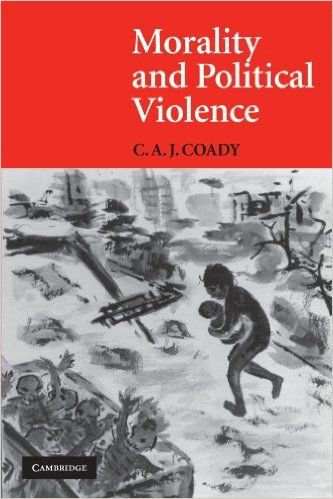
Political violence in the form of wars, insurgencies, terrorism, and violent rebellion constitutes a major human challenge today as it has so often in the past. It is not only a challenge to life and limb, but also to morality itself. In this book, C. A. J. Coady brings a philosophical and ethical perspective to the subject. He places the problems of war and political violence in the frame of reflective ethics. In clear and accessible language, Coady reexamines a range of urgent problems pertinent to political violence against the background of a contemporary approach to just war thinking.
ما از اخلاق چه انتظاری داریم؟ این سوال شاید تاحدودی برای عموم مردم و یا متخصصان این رشته قابل پاسخ باشد؛ اینکه خوب بودن را به ما بیاموزد و در تنظیم روابط فردی م...

جشن کتاب تهران به ایستگاه سی و یکم رسیده است. حال و احوال نشر کتاب خوب نیست و باید فرهنگدوستان را به خرید و هدیه دادن کتاب ترغیب نمود. خانه اخلاقپژوهان جوان ب...

بنیاد کتابهای اخلاق اسلامی عمدتا پالایش جان از آلودگیها و آراستن آن به زیباییها است. اندیشه محوری این قبیل کتابها آن است که انسان فعلی آنی نیست که باید باشد...

-
0 Comments