Notice: تابع WP_Block_Type_Registry::register به طورنادرست فراخوانی شد. نامهای نوع بلوک نباید حروف بزرگ داشته باشند. لطفاً برای اطلاعات بیشتر، اشکال زدایی در وردپرس را مشاهده کنید. (این پیام در نگارش 5.0.0 افزوده شده است.) in /home/ethicsho/public_html/wp-includes/functions.php on line 5313
Warning: Use of undefined constant TDC_PATH_LEGACY - assumed 'TDC_PATH_LEGACY' (this will throw an Error in a future version of PHP) in /home/ethicsho/public_html/wp-content/plugins/td-composer/td-composer.php on line 109
Warning: Use of undefined constant TDSP_THEME_PATH - assumed 'TDSP_THEME_PATH' (this will throw an Error in a future version of PHP) in /home/ethicsho/public_html/wp-content/plugins/td-composer/td-composer.php on line 113 بایگانیهای W. Doyle Gentry PhD - خانه اخلاق پژوهان جوان Notice: Trying to access array offset on value of type bool in /home/ethicsho/public_html/wp-content/plugins/wp-ulike/inc/general-functions.php on line 807
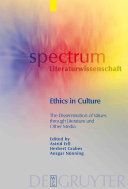
Alongside the recent cultural turn in the humanities, there has been a noticeable return to ethical considerations. With regard to literature as well as other media, this has rekindled awareness of a tension, antagonism, or even disparity between ethics and aesthetics. This volume of articles takes a more systematic and cross-disciplinary approach to the widely mooted ethical turn in literature and other media than has been pursued so far. It brings together a wide range of critical perspectives from literary studies, media and cultural memory studies, and philosophy, tracing the complex and sometimes conflicting relationship between ethics and aesthetics in theoretical contexts and individual case studies as diverse as colonial architecture, nineteenth-century literary histories, and postmodern writing and art.
Distributed networks such as the Internet have altered the fundamental way a record is created, captured, accessed and managed over time. Law and ethics provide the major sources of regulatory controls over participants in such networks. This book analyses the interrelationship of recordkeeping, ethics and law in terms of existing regulatory models and their application to the Internet environment. It proposes an Internet model based on the notion of a legal and social relationship as a means of identifying the legal and ethical rights and obligations of recordkeeping participants in networked transactions. Medical, business and governmental relationships within communities of common interest based on trust illustrate the practical application of the model. As legal relationships have their basis in the law of obligations found in common and civil law systems, as well as archival science, the model has a broad-based application. The relationship model also provides a unique ethical and legal approach to property, access, privacy and evidence. Most importantly, the book provides an interdisciplinary approach to Internet regulation, which contributes to closer ties between those who research, teach and work in fields of ethics, law and archival science.
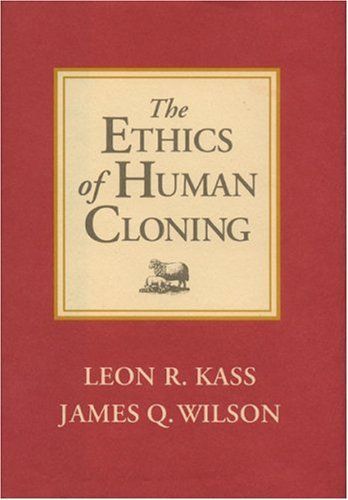
In this engaging book, Leon R. Kass, the noted teacher, scientist, and humanist, and James Q. Wilson, the preeminent political scientist to whom four U.S. presidents have turned for advice on crime, drug abuse, education, and other crises in American life, explore the ethics of human cloning, reproductive technology, and the teleology of human sexuality. Although in their lively dialogue both authors share a fundamental distrust of the notion of human cloning, they base their reticence on different views of the role of sexual reproduction and the role of the family. Professor Kass contends that in vitro fertilization and other assisted reproduction technologies that place the origin of human life in human hands have eroded the respect for the mystery of sexuality and human renewal. Professor Wilson, on the other hand, asserts that whether a human life is created naturally or artificially is immaterial as long as the child is raised by loving parents in a two-parent family and is not harmed by the means of its conception. This accessible volume promises to inform the public policy debate over the permissible conduct of genetic research and the permissible uses of its discoveries.
ما از اخلاق چه انتظاری داریم؟ این سوال شاید تاحدودی برای عموم مردم و یا متخصصان این رشته قابل پاسخ باشد؛ اینکه خوب بودن را به ما بیاموزد و در تنظیم روابط فردی م...

جشن کتاب تهران به ایستگاه سی و یکم رسیده است. حال و احوال نشر کتاب خوب نیست و باید فرهنگدوستان را به خرید و هدیه دادن کتاب ترغیب نمود. خانه اخلاقپژوهان جوان ب...

بنیاد کتابهای اخلاق اسلامی عمدتا پالایش جان از آلودگیها و آراستن آن به زیباییها است. اندیشه محوری این قبیل کتابها آن است که انسان فعلی آنی نیست که باید باشد...

-
0 Comments