Notice: تابع WP_Block_Type_Registry::register به طورنادرست فراخوانی شد. نامهای نوع بلوک نباید حروف بزرگ داشته باشند. لطفاً برای اطلاعات بیشتر، اشکال زدایی در وردپرس را مشاهده کنید. (این پیام در نگارش 5.0.0 افزوده شده است.) in /home/ethicsho/public_html/wp-includes/functions.php on line 5313
Warning: Use of undefined constant TDC_PATH_LEGACY - assumed 'TDC_PATH_LEGACY' (this will throw an Error in a future version of PHP) in /home/ethicsho/public_html/wp-content/plugins/td-composer/td-composer.php on line 109
Warning: Use of undefined constant TDSP_THEME_PATH - assumed 'TDSP_THEME_PATH' (this will throw an Error in a future version of PHP) in /home/ethicsho/public_html/wp-content/plugins/td-composer/td-composer.php on line 113 بایگانیهای Tom Angier - خانه اخلاق پژوهان جوان Notice: Trying to access array offset on value of type bool in /home/ethicsho/public_html/wp-content/plugins/wp-ulike/inc/general-functions.php on line 807
Legal Ethics employs a variety of techniques to breathe life into a topic that can be sometimes tedious to study. Readers will be attracted to current and classic case law, hypothetical situations, many real-life examples of lawyer and nonlawyer instances of misconduct and discussions of famous and infamous people as their situations relate to the topic. Examples of this material include a discussion of the disbarment proceedings against President Bill Clinton and F. Lee Bailey and news events involving Hillary Clinton, Bill Gates, Newt Gingrich, Patty Hearst and Timothy McVeigh. Supporting material features more than 70 legal ethics Web sites, a complete glossary and significant ethics codes designed for paralegal and legal assistants. The book also boasts an exceptional instructor’s manual featuring chapter outlines, teaching suggestions, full case briefs for all case law in the text, chapter review questions and complete test banks for each chapter. Benefits: • dozens of real-life examples and cases bring the topic of legal ethics to life • thorough explanations teach the reader the how’s and why’s of the material • fully supported citations enable readers to conduct their own research from the text • the many devices used to impart the material enhance the reader’s interest and retention
It’s been more than two decades since the first edition of this landmark book garnered public accolades for its sensitive yet honest and forthright approach to the many disquieting questions surrounding the emotional debate over animal rights. Is moral concern something owed by human beings only to human beings? Drawing upon his philosophical expertise, his extensive experience of working with animal issues all over the world, and his knowledge of biological science, Bernard E Rollin – now widely recognised as the father of veterinary ethics – develops a compelling analysis of animal rights as it is emerging in society.The result is a sound basis for rational discussion and social policy development in this area of rapidly growing concern. He believes that society must elevate the moral status of animals and protect their rights as determined by their natures. His public speaking and published works have contributed to passage of major federal legislation designed to increase the well-being of laboratory animals. This new Third Edition is greatly expanded and includes a new chapter on animal agriculture, plus additional discussions of animal law, companion animal issues, genetic engineering, animal pain, animal research, and many other topics.
Antirealist views about morality claim that moral facts or truths do not exist. Does this imply that other types of normative facts, such as epistemic facts, do not exist? The Normative Web develops a positive answer to this question. Terence Cuneo argues that moral and epistemic facts are sufficiently similar so that, if moral facts do not exist, then epistemic facts do not exist. But epistemic facts do exist: to deny their existence would commit us to an extreme version of epistemological scepticism. Therefore, Cuneo concludes, moral facts do exist. And if moral facts exist, then moral realism is true. It is sometimes said that moral realists rarely offer arguments for their position, settling instead for mere defenses of a view they find intuitively plausible. By contrast, The Normative Web provides not merely a defense of robust realism in ethics, but a positive argument for this position. In so doing, it engages with a range of antirealist positions in epistemology such as error theories, expressivist views, and reductionist views of epistemic reasons. These positions, Cuneo claims, come at a prohibitively high theoretical cost. Given this cost, it follows that realism about both epistemic and moral facts is a position that we should find highly attractive.
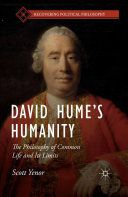
Scott Yenor argues that David Hume’s reputation as a skeptic is greatly exaggerated and that Hume’s skepticism is a moment leading Hume to defend common life philosophy and the humane commercial republic. Gentle, humane virtues reflect the proper reaction to the complex mixture of human faculties that define the human condition.
ما از اخلاق چه انتظاری داریم؟ این سوال شاید تاحدودی برای عموم مردم و یا متخصصان این رشته قابل پاسخ باشد؛ اینکه خوب بودن را به ما بیاموزد و در تنظیم روابط فردی م...

جشن کتاب تهران به ایستگاه سی و یکم رسیده است. حال و احوال نشر کتاب خوب نیست و باید فرهنگدوستان را به خرید و هدیه دادن کتاب ترغیب نمود. خانه اخلاقپژوهان جوان ب...

بنیاد کتابهای اخلاق اسلامی عمدتا پالایش جان از آلودگیها و آراستن آن به زیباییها است. اندیشه محوری این قبیل کتابها آن است که انسان فعلی آنی نیست که باید باشد...

-
0 Comments