Notice: تابع WP_Block_Type_Registry::register به طورنادرست فراخوانی شد. نامهای نوع بلوک نباید حروف بزرگ داشته باشند. لطفاً برای اطلاعات بیشتر، اشکال زدایی در وردپرس را مشاهده کنید. (این پیام در نگارش 5.0.0 افزوده شده است.) in /home/ethicsho/public_html/wp-includes/functions.php on line 5313
Warning: Use of undefined constant TDC_PATH_LEGACY - assumed 'TDC_PATH_LEGACY' (this will throw an Error in a future version of PHP) in /home/ethicsho/public_html/wp-content/plugins/td-composer/td-composer.php on line 109
Warning: Use of undefined constant TDSP_THEME_PATH - assumed 'TDSP_THEME_PATH' (this will throw an Error in a future version of PHP) in /home/ethicsho/public_html/wp-content/plugins/td-composer/td-composer.php on line 113 بایگانیهای Todd A. Salzman - خانه اخلاق پژوهان جوان Notice: Trying to access array offset on value of type bool in /home/ethicsho/public_html/wp-content/plugins/wp-ulike/inc/general-functions.php on line 807
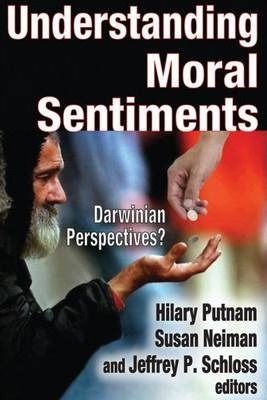
This volume brings together leading scholars to examine Darwinian perspectives on morality from widely ranging disciplines: evolutionary biology, anthropology, psychology, philosophy, and theology. They bring not only varied expertise, but also contrasting judgments about which, and to what extent, differing evolutionary accounts explain morality. They also consider the implications of these explanations for a range of religious and non-religious moral traditions. The book first surveys scientific understandings of morality. Chapters by Joan Silk and Christopher Boehm ask what primatology and anthropology tell us about moral origins. Daniel Batson and Stephen Pinker provide contrasting accounts of how evolution shapes moral psychology, and Jeffrey Schloss assesses a range of biological proposals for morality and altruism. Turning to philosophical issues, Martha Nussbaum argues that recognizing our animal nature does not threaten morality. Stephen Pope and Timothy Jackson explore how Darwinian accounts of moral goodness both enrich and require understandings outside the sciences. Hilary Putnam and Susan Neiman ask whether Darwin is truly useful for helping us to understand what morality actually is and how it functions. The book is a balanced effort to assess the scientific merits and philosophical significance of emerging Darwinian perspectives on morality. how Darwinian accounts of moral goodness both enrich and require understandings outside the sciences. Hilary Putnam and Susan Neiman ask whether Darwin is truly useful for helping us to understand what morality actually is and how it functions. The book is a balanced effort to assess the scientific merits and philosophical significance of emerging Darwinian perspectives on morality.
Understanding human beings and their distinctive rational and volitional capacities is one of the central tasks of philosophy. The task requires a clear account of such things as reasons, desires, emotions and motives, and of how they combine to produce and explain human behaviour. In Kinds of Reasons, Maria Alvarez offers a fresh and incisive treatment of these issues, focusing in particular on reasons as they feature in contexts of agency. Her account builds on some important recent work in the area; but she takes her main inspiration from the tradition that receives its seminal contemporary expression in the writings of G.E.M. Anscombe, a tradition that runs counter to the broadly Humean orthodoxy that has dominated the theory of action for the past forty years. Alvarez’s conclusions are therefore likely to be controversial; and her bold and painstaking arguments will be found provocative by participants on every side of the debates with which she engages. Clear and directly written, Kinds of Reasons aims to stake out a distinctive position within one of the most hotly contested areas of contemporary philosophy.
Currently accounting and controlling are little involved in responsible business. This book offers a responsible controlling framework and a 12-step roadmap how management accounting and controlling can be adapted to become a change agent towards responsible business. The main issue of this book is to be seen in the fact that controlling and management accounting departments are hardly involved in sustainability, responsibility and ethics (SRE) topics and thus do not contribute to responsible business. The book deals with the conviction that responsible controlling is indispensable to make an entire organization more responsible. The main content of this book is the conceptual development of a Responsible Controlling Framework towards decision-making based on an ethically sound fundamental in order to make a company a responsible business. The conceptual approach helps to ensure the book will appeal practitioners in organizations of all size and nature as well as for (MBA) students. This book recommends a thoroughly examined course of action regarding Responsible Controlling for practitioners based on a profound theoretical background. The book shows the current state of controlling in an organizational context and in which areas controllers are active.
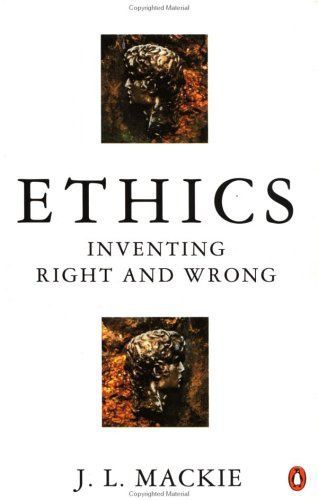
John Mackie’s stimulating book is a complete and clear treatise on moral theory. His writings on normative ethics-the moral principles he recommends-offer a fresh approach on a much neglected subject, and the work as a whole is undoubtedly a major contribution to modern philosophy.The author deals first with the status of ethics, arguing that there are not objective values, that morality cannot be discovered but must be made. He examines next the content of ethics, seeing morality as a functional device, basically the same at all times but changing significantly in response to changes in the human condition. He sketches a practical moral system, criticizing but also borrowing from both utilitarian and absolutist views. Thirdly, the frontiers of ethics, areas of contact with psychology, metaphysics, theology, law and politcs, are explored.Throughout, his aim is to discuss a wide range of questions that are both philosophical and practical, working within a distinctive version of subjectivism-an “error” theory of the apparent objectivity of values. John Mackie has drawn on the contributions of such classic thinkers as Plato, Aristotle, Hobbes, Hume, Kant and Sidgwick, and on more recent discussions, to produce a thought-provoking account that will inspire both the general reader and the student of philosophy.
Adam Smith is the best known among economists for his book, The Wealth of Nations, often viewed as the keystone of modern economic thought. Others, often heterodox economists and social philosophers, on the contrary, focus on Smith’s Theory of Moral Sentiments, and explore his moral theory. This work treats these dimensions of Smith’s work as elements in a seamless moral philosophical vision, demonstrating the integrated nature of these works and Smith’s other writings. Although many practitioners today see the study of Smith as an antiquarian exercise, this book weaves Smith into a constructive critique of modern ecnomic analysis (engaging along the way the work of Nobel Laureates Gary Becker, Amarty Sen, Douglass North, and James Buchanan) and builds bridges between that discourse and the other social sciences.
ما از اخلاق چه انتظاری داریم؟ این سوال شاید تاحدودی برای عموم مردم و یا متخصصان این رشته قابل پاسخ باشد؛ اینکه خوب بودن را به ما بیاموزد و در تنظیم روابط فردی م...

جشن کتاب تهران به ایستگاه سی و یکم رسیده است. حال و احوال نشر کتاب خوب نیست و باید فرهنگدوستان را به خرید و هدیه دادن کتاب ترغیب نمود. خانه اخلاقپژوهان جوان ب...

بنیاد کتابهای اخلاق اسلامی عمدتا پالایش جان از آلودگیها و آراستن آن به زیباییها است. اندیشه محوری این قبیل کتابها آن است که انسان فعلی آنی نیست که باید باشد...

-
0 Comments