Notice: تابع WP_Block_Type_Registry::register به طورنادرست فراخوانی شد. نامهای نوع بلوک نباید حروف بزرگ داشته باشند. لطفاً برای اطلاعات بیشتر، اشکال زدایی در وردپرس را مشاهده کنید. (این پیام در نگارش 5.0.0 افزوده شده است.) in /home/ethicsho/public_html/wp-includes/functions.php on line 5313
Warning: Use of undefined constant TDC_PATH_LEGACY - assumed 'TDC_PATH_LEGACY' (this will throw an Error in a future version of PHP) in /home/ethicsho/public_html/wp-content/plugins/td-composer/td-composer.php on line 109
Warning: Use of undefined constant TDSP_THEME_PATH - assumed 'TDSP_THEME_PATH' (this will throw an Error in a future version of PHP) in /home/ethicsho/public_html/wp-content/plugins/td-composer/td-composer.php on line 113 بایگانیهای Thomas Stephen Szasz - خانه اخلاق پژوهان جوان Notice: Trying to access array offset on value of type bool in /home/ethicsho/public_html/wp-content/plugins/wp-ulike/inc/general-functions.php on line 807
Psychology and Law shows how psychological research and theory can be used in a legal context. Written with advanced undergraduate students in mind, it focuses upon the pre-trial or investigative phase of the legal process. Obtaining and assessing witness evidence is a key part of any criminal investigation. Topics include witness accuracy and credibility, covering issues such as assessment of witness credibility, interviewing suspects and witnesses, eyewitness testimony, false beliefs and memory, the role of experts and juries. This second edition has been revised and updated to reflect the large amount of new research in the area, making it the essential guide for all courses with a legal component. Comment on the first edition: “This is an excellent appraisal of the psychology of evidence…it provides thorough, substantial and up-to-date accounts of modern developments.” Denniss Howitt, Loughborough University, UK * Written by well known and respected authors * Suitable as an introductory, undergraduate text
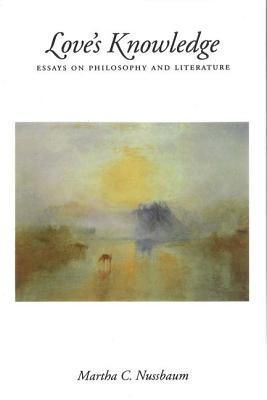
This volume brings together Nussbaum’s published papers on the relationship between literature and philosophy, especially moral philosophy. The papers, many of them previously inaccessible to non-specialist readers, deal with such fundamental issues as the relationship between style and content in the exploration of ethical issues; the nature of ethical attention and ethical knowledge and their relationship to written forms and styles; and the role of the emotions in deliberation and self-knowledge. Nussbaum investigates and defends a conception of ethical understanding which involves emotional as well as intellectual activity, and which gives a certain type of priority to the perception of particular people and situations rather than to abstract rules. She argues that this ethical conception cannot be completely and appropriately stated without turning to forms of writing usually considered literary rather than philosophical. It is consequently necessary to broaden our conception of moral philosophy in order to include these forms. Featuring two new essays and revised versions of several previously published essays, this collection attempts to articulate the relationship, within such a broader ethical inquiry, between literary and more abstractly theoretical elements.
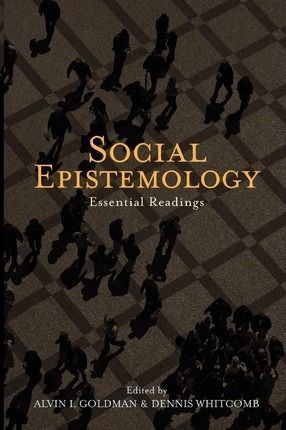
What if anything justifies us in believing the testimony of others? How should we react to disagreement between ourselves and our peers, and to disagreement among the experts when we ourselves are novices? Can beliefs be held by groups of people in addition to the people composing those groups? And if so, how should groups go about forming their beliefs? How should we design social systems, such as legal juries and scientific research-sharing schemes, to promote knowledge among the people who engage in them? When different groups of people judge different beliefs to be justified, how can we tell which groups are correct? These questions are at the heart of the vital discipline of social epistemology. The classic articles in this volume address these questions in ways that are both cutting-edge and easy to understand. This volume will be of great interest to scholars and students in epistemology.
ما از اخلاق چه انتظاری داریم؟ این سوال شاید تاحدودی برای عموم مردم و یا متخصصان این رشته قابل پاسخ باشد؛ اینکه خوب بودن را به ما بیاموزد و در تنظیم روابط فردی م...

جشن کتاب تهران به ایستگاه سی و یکم رسیده است. حال و احوال نشر کتاب خوب نیست و باید فرهنگدوستان را به خرید و هدیه دادن کتاب ترغیب نمود. خانه اخلاقپژوهان جوان ب...

بنیاد کتابهای اخلاق اسلامی عمدتا پالایش جان از آلودگیها و آراستن آن به زیباییها است. اندیشه محوری این قبیل کتابها آن است که انسان فعلی آنی نیست که باید باشد...

-
0 Comments