Notice: تابع WP_Block_Type_Registry::register به طورنادرست فراخوانی شد. نامهای نوع بلوک نباید حروف بزرگ داشته باشند. لطفاً برای اطلاعات بیشتر، اشکال زدایی در وردپرس را مشاهده کنید. (این پیام در نگارش 5.0.0 افزوده شده است.) in /home/ethicsho/public_html/wp-includes/functions.php on line 5313
Warning: Use of undefined constant TDC_PATH_LEGACY - assumed 'TDC_PATH_LEGACY' (this will throw an Error in a future version of PHP) in /home/ethicsho/public_html/wp-content/plugins/td-composer/td-composer.php on line 109
Warning: Use of undefined constant TDSP_THEME_PATH - assumed 'TDSP_THEME_PATH' (this will throw an Error in a future version of PHP) in /home/ethicsho/public_html/wp-content/plugins/td-composer/td-composer.php on line 113 بایگانیهای Sybol Cook Anderson - خانه اخلاق پژوهان جوان Notice: Trying to access array offset on value of type bool in /home/ethicsho/public_html/wp-content/plugins/wp-ulike/inc/general-functions.php on line 807
Metaethics, understood as a distinct branch of ethics, is often traced to G. E. Moore’s 1903 classic, Principia Ethica. Whereas normative ethics is concerned to answer first-order moral questions about what is good and bad, right and wrong, metaethics is concerned to answer second-order non-moral questions about the semantics, metaphysics, and epistemology of moral thought and discourse. Moore has continued to exert a powerful influence, and the sixteen essays here (most of them specially written for the volume) represent the most up-to-date work in metaethics after, and in some cases directly inspired by, the work of Moore. Contributors include Robert Audi, Stephen Barker, Paul Bloomfield, Panayot Butchvarvov, Jonathan Dancy, Stephen Darwall, Jamie Dreier, Allan Gibbard, Brad Hooker, Terry Horgan, Connie Rosati, Russ Shafer-Landau, Walter Sinnott-Armstrong, Michael Smith, Philip Stratton-Lake, Sigrun Svavarsdottir, Mark Timmons, and Judith Jarvis Thomson.
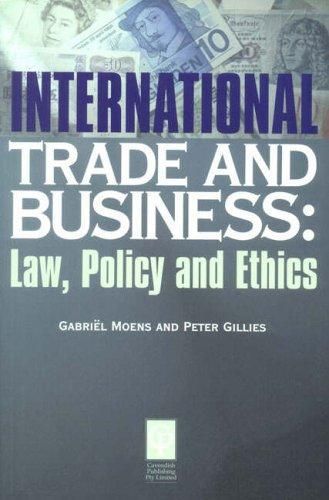
This book is an ideal sourcebook for students and practitioners who are interested in international business transactions and want to gain familiarity with the law and practice of international trade law,policies and ethics. Each chapter deals with an important aspect of international trade and business by describing and analysing the relevant law, policies and ethical issues; posing tutorial problems and providing sample examination questions and lists of references; and incorporating extracts from cases, conventions, articles and books.
This new volume of philosophical papers by Bernard Williams is divided into three sections: the first Action, Freedom, Responsibility, the second Philosophy, Evolution and the Human Sciences; in which appears the essay which gives the collection its title; and the third Ethics, which contains essays closely related to his 1983 book Ethics and the Limits of Philosophy. Like the two earlier volumes of Williams’s papers published by Cambridge University Press, Problems of the Self and Moral Luck, this volume will be welcomed by all readers with a serious interest in philosophy. It is published alongside a volume of essays on Williams’s work, World, Mind, and Ethics: Essays on the Ethical Philosophy of Bernard Williams, edited by J. E. J. Altham and Ross Harrison, which provides a reappraisal of his work by other distinguished thinkers in the field.
This textbook looks at the main ethical questions that confront the criminal justice system – legislature, law enforcement, courts, and corrections – and those who work within that system, especially police officers, prosecutors, defence lawyers, judges, juries, and prison officers. John Kleinig sets the issues in the context of a liberal democratic society and its ethical and legislative underpinnings, and illustrates them with a wide and international range of real-life case studies. Topics covered include discretion, capital punishment, terrorism, restorative justice, and re-entry. Kleinig’s discussion is both philosophically acute and grounded in institutional realities, and will enable students to engage productively with the ethical questions which they encounter both now and in the future – whether as criminal justice professionals or as reflective citizens.
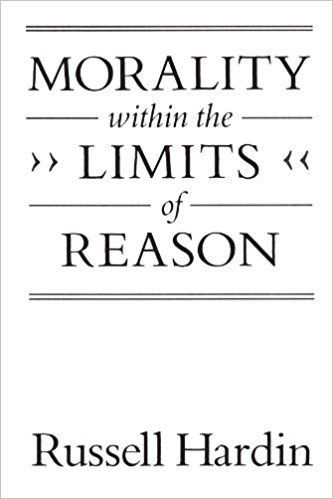
This provocative, lucidly written reconstruction of utilitarianism focuses on the practical constraints involved in ethical choice: information may be inadequate, and understanding of causes and effects may be limited. Good decision making may be especially constrained if other people are closely involved in determining an outcome. Hardin demonstrates that many of these structural issues can and should be distinguished from the thornier problems of utilitarian value theory, and he is able to show what kinds of moral conclusions we can reach within the limits of reason.
ما از اخلاق چه انتظاری داریم؟ این سوال شاید تاحدودی برای عموم مردم و یا متخصصان این رشته قابل پاسخ باشد؛ اینکه خوب بودن را به ما بیاموزد و در تنظیم روابط فردی م...

جشن کتاب تهران به ایستگاه سی و یکم رسیده است. حال و احوال نشر کتاب خوب نیست و باید فرهنگدوستان را به خرید و هدیه دادن کتاب ترغیب نمود. خانه اخلاقپژوهان جوان ب...

بنیاد کتابهای اخلاق اسلامی عمدتا پالایش جان از آلودگیها و آراستن آن به زیباییها است. اندیشه محوری این قبیل کتابها آن است که انسان فعلی آنی نیست که باید باشد...

-
0 Comments