Notice: تابع WP_Block_Type_Registry::register به طورنادرست فراخوانی شد. نامهای نوع بلوک نباید حروف بزرگ داشته باشند. لطفاً برای اطلاعات بیشتر، اشکال زدایی در وردپرس را مشاهده کنید. (این پیام در نگارش 5.0.0 افزوده شده است.) in /home/ethicsho/public_html/wp-includes/functions.php on line 5313
Warning: Use of undefined constant TDC_PATH_LEGACY - assumed 'TDC_PATH_LEGACY' (this will throw an Error in a future version of PHP) in /home/ethicsho/public_html/wp-content/plugins/td-composer/td-composer.php on line 109
Warning: Use of undefined constant TDSP_THEME_PATH - assumed 'TDSP_THEME_PATH' (this will throw an Error in a future version of PHP) in /home/ethicsho/public_html/wp-content/plugins/td-composer/td-composer.php on line 113 بایگانیهای Susan Jacob - خانه اخلاق پژوهان جوان Notice: Trying to access array offset on value of type bool in /home/ethicsho/public_html/wp-content/plugins/wp-ulike/inc/general-functions.php on line 807
Immanuel Kant (1724-1804) is arguably the most influential of the Enlightenment Philosophers. In this outstanding introduction, Paul Guyer introduces and assesses all the major aspects of Kant’s thought. Beginning with a helpful overview of Kant’s life and times, Guyer introduces the “Copernican revolution” Kant brought about in metaphysics and epistemology, carefully introducing his arguments about the nature of experience, space and time in his most influential but difficult work,The Critique of Pure Reason.He gives a much-needed explanation of Kant’s famous theory of transcendental idealism, a cornerstone of his philosophy as a whole. He then examines Kant’s moral philosophy, clearly explaining Kant’s celebrated “categorical imperative” and his theories of duty, freedom of the will, and rights. Finally, he covers Kant’s aesthetics, in particular his arguments about the nature of beauty and the sublime and their relation to human freedom and happiness. A concluding chapterconsiders Kant’s legacy and his influence on the shape of contemporary philosophy. Kant is an ideal starting point for anyone coming to the philosopher for the first time, as well as those studying Kant in related disciplines.
Hendrik Lorenz presents a comprehensive study of Plato’s and Aristotle’s conceptions of non-rational desire. They see this as something that humans share with animals, and which aims primarily at the pleasures of food, drink, and sex. Lorenz explores the cognitive resources that both philosophers make available for the explanation of such desires, and what they take rationality to add to the motivational structure of human beings. In doing so, he exposes a remarkable degree of continuity between Plato’s and Aristotle’s thought in this area. He also sheds fresh light, not only on both philosophers’ theories of motivation, but also on how they conceive of the mind, both in itself and in relation to the body.
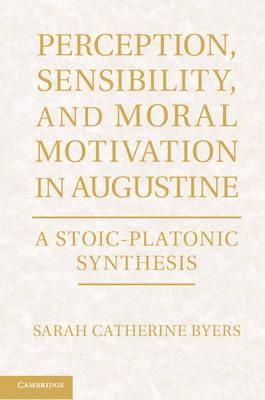
“This book argues that Augustine assimilated the Stoic theory of perception into his theories of motivation, affectivity, therapy for the passions, and moral progress. Using his sermons to elucidate his treatises, Sarah Catherine Byers demonstrates how Augustine enriched Stoic cognitivism with Platonism to develop a fuller and coherent theory of action. That theory underlies his account of moral development, including his account of the mind,Ŵs reception of grace. By analyzing Augustine,Ŵs engagement with Cicero, Seneca, Plotinus, Ambrose, Jerome, Origen, and Philo of Alexandria, Byers sheds new light on a major thinker of the early Christian world whose work is of critical importance for understanding key and recurring themes in Western philosophy”–
“Dimensions of Moral Theory “examines the key presuppositions and philosophical commitments that support and shape moral theories. Many of the topics discussed belong to “metaethics,” the study of moral concepts, language, and thought rather than a study of moral issues themselves. Other topics are under the heading of “moral psychology” and concern fundamental issues about the nature of moral agents, moral motivation, and the roles of reason, desire, and pleasure in moral action and experience. The book introduces metaethical and moral psychological positions and arguments and shows how they are generated and why they are important. It thereby brings to light some of the most important philosophical problems raised by moral theorizing.This volume formulates these issues of moral epistemology, the metaphysics of moral value, and moral motivation in a clear and rigorous but non-technical manner.
ما از اخلاق چه انتظاری داریم؟ این سوال شاید تاحدودی برای عموم مردم و یا متخصصان این رشته قابل پاسخ باشد؛ اینکه خوب بودن را به ما بیاموزد و در تنظیم روابط فردی م...

جشن کتاب تهران به ایستگاه سی و یکم رسیده است. حال و احوال نشر کتاب خوب نیست و باید فرهنگدوستان را به خرید و هدیه دادن کتاب ترغیب نمود. خانه اخلاقپژوهان جوان ب...

بنیاد کتابهای اخلاق اسلامی عمدتا پالایش جان از آلودگیها و آراستن آن به زیباییها است. اندیشه محوری این قبیل کتابها آن است که انسان فعلی آنی نیست که باید باشد...

-
0 Comments