Notice: تابع WP_Block_Type_Registry::register به طورنادرست فراخوانی شد. نامهای نوع بلوک نباید حروف بزرگ داشته باشند. لطفاً برای اطلاعات بیشتر، اشکال زدایی در وردپرس را مشاهده کنید. (این پیام در نگارش 5.0.0 افزوده شده است.) in /home/ethicsho/public_html/wp-includes/functions.php on line 5313
Warning: Use of undefined constant TDC_PATH_LEGACY - assumed 'TDC_PATH_LEGACY' (this will throw an Error in a future version of PHP) in /home/ethicsho/public_html/wp-content/plugins/td-composer/td-composer.php on line 109
Warning: Use of undefined constant TDSP_THEME_PATH - assumed 'TDSP_THEME_PATH' (this will throw an Error in a future version of PHP) in /home/ethicsho/public_html/wp-content/plugins/td-composer/td-composer.php on line 113 بایگانیهای Strandberg Hugo - خانه اخلاق پژوهان جوان Notice: Trying to access array offset on value of type bool in /home/ethicsho/public_html/wp-content/plugins/wp-ulike/inc/general-functions.php on line 807
Their haunting images appear on millions of television screens and in newspapers worldwide: Children huddled in refugee camps and exposed to violence in war zones. Children burdened by the emotional and physical scars of violent homes and communities. Children exploited by crass commercialism around the world and around the corner. Too many children are confronting life-threatening risks and experiencing trauma. Synthesizing insights from psychology and philosophy with his own wide-ranging, first-hand experiences around the world, Dr. James Garbarino takes readers on a personalized journey into the dark side of human experience as it is lived by children. In these highly readable pages, Dr. Garbarino intertwines a discussion of children’s material and spiritual needs with a detailed examination of the clinical knowledge and experiential wisdom required to understand and meet complex developmental needs. Fusing anecdotal observations, empirical evidence, and an ecological perspective, he reveals a path to ensuring the fundamental human rights of all children: the right to safety, to equality, to economic parity, and to a meaningful life. Dr. Garbarino’s challenge to his readers: If we are to succeed in making a lasting, positive change in the lives of children, we must be willing to rethink the concepts of development, trauma, and resilience. Children and the Dark Side of Human Experience is must-reading for all mental health professionals, educators, researchers, social workers, child advocates, and policymakers ‘ in fact, for anyone who takes an interest in the well-being and future of the world’s children.
Between the Civil War and the early decades of the eighteenth century, English poets of the first rank devoted more of their time and creative energies to translating than they had ever done before or have ever done since. Paul Davis’s Translation and the Poet’s Life is the first study to range across the entirety of this golden age of poetic translation in England, taking as its organizing principle and object of inquiry the significances of translating itself as a distinctive mode of imaginative conduct. Composed of case studies of the five leading poet-translators of the age – John Denham, Henry Vaughan, Abraham Cowley, John Dryden, and Alexander Pope – it explores the part translation played in their lives as poets and thence in modelling ‘the poet’s life’ during what was a period of transition between early-modern and modern constructions of it. The argumentative method of the book is metaphorical. Each chapter explores the impact on the theory and practice of the poet at issue of a metaphor or group of metaphors broadly current in contemporary translation discourse: in particular, figurations of the translator as an exile, as a child, as a code-breaker, and as a slave; and comparisons of translation to friendship, sexual congress, metamorphosis and trade. The majority of these metaphors were wholly or potentially pejorative: translation remained a controversial practice throughout this period, widely depreciated and stigmatized. Turning translator accordingly forced the five major poets considered in Translation and the Poet’s Life to undertake strenuous efforts of self-inquiry and self-presentation; to find new answers to questions integral to their understandings of themselves and their standing in their culture: questions about vocation and career, fame and happiness, responsibility and freedom. Translation and the Poet’s Life tells the stories of these personal and public remakings.
Few thinkers are more controversial in the history of philosophy than Hegel. He has been dismissed as a charlatan and obscurantist, but also praised as one of the greatest thinkers in modern philosophy. No one interested in philosophy can afford to ignore him. This volume considers all the major aspects of Hegel’s work: epistemology, logic, ethics, political philosophy, aesthetics, philosophy of history, philosophy of religion. Special attention is devoted to problems in the interpretation of Hegel: the unity of the Phenomenology of Spirit; the value of the dialectical method; the status of his logic; the nature of his politics. A final group of chapters treats Hegel’s complex historical legacy: the development of Hegelianism and its growth into a left and right wing school; the relation of Hegel and Marx; and the subtle connections between Hegel and contemporary analytic philosophy.
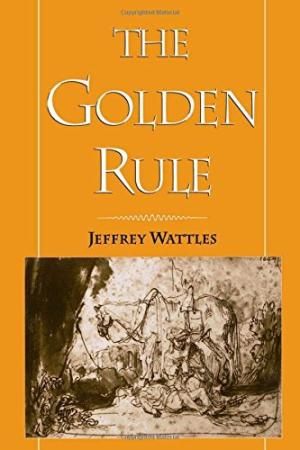
In an age plagued by selfishness, materialism, and violence, ethicists feel impelled to find a universal system of values. To arrive at such a “rule” requires that they struggle with a series of seemingly irreconcilable questions. First, are universal values possible in a pluralistic world, and how does one do justice to both human equality and to individual and cultural differences? How is one to understand the interface between religious moral teachings and the ethics of secular humanism? Finally, can such a system integrate moral intuition and moral reason? In the first scholarly book in English on the golden rule since the seventeenth century, Jeffrey Wattles demonstrates how a clear understanding of the psychological, philosophical, and religious ramifications of the rule can form the synthesis needed to solve these dilemas.The golden rule, “do to others as you would have others do to you,” is widely assumed to have a single meaning, shared by virtually all the world’s religions. It strikes the average person as intuitively true, though most modern philosophers reject it or recast it in more rational form. Wattles surveys the history of the golden rule and its spectrum of meanings in diverse contexts, ranging from Confusius to Plato and Aristotle, from classical Jewish literature to the New Testament. He also considers medieval, Reformation, and modern theological and philosophical responses and objections to the rule, as well as how some early twentieth-century American leaders have tried to use the rule. Wattles draws these diverse interpretation into a synthesis that responds, at the psychological, philosophical, and religious levels, to the challenges to moral living in any given culture. Emotionally, the rules counsels consideration for others feelings by asking that “you place yourself in their shoes.” Intellectually, it activates moral thinking about what is fair. At the same time, it retains a spiritual appeal as “the principle of the practice of the family of God.”Demonstrating how, despite its contentious history, this age-old ethical principle contiues to be relevant in dealing with contemporary issues, The Golden Rule should interest students and scholars working in religious studies, philosophy and ethics, and psychology, as well as anyone looking for an alternative to postmodern cynicism and alienation.
This Encyclopedia considers both the professional ethics of science and technology, and the ethical and political issues raised by science and technology in an increasingly complex and global society. This broad coverage supports the numerous courses in applied and professional ethics and policy related to the practice of science and technology in education.
ما از اخلاق چه انتظاری داریم؟ این سوال شاید تاحدودی برای عموم مردم و یا متخصصان این رشته قابل پاسخ باشد؛ اینکه خوب بودن را به ما بیاموزد و در تنظیم روابط فردی م...

جشن کتاب تهران به ایستگاه سی و یکم رسیده است. حال و احوال نشر کتاب خوب نیست و باید فرهنگدوستان را به خرید و هدیه دادن کتاب ترغیب نمود. خانه اخلاقپژوهان جوان ب...

بنیاد کتابهای اخلاق اسلامی عمدتا پالایش جان از آلودگیها و آراستن آن به زیباییها است. اندیشه محوری این قبیل کتابها آن است که انسان فعلی آنی نیست که باید باشد...

-
0 Comments