Notice: تابع WP_Block_Type_Registry::register به طورنادرست فراخوانی شد. نامهای نوع بلوک نباید حروف بزرگ داشته باشند. لطفاً برای اطلاعات بیشتر، اشکال زدایی در وردپرس را مشاهده کنید. (این پیام در نگارش 5.0.0 افزوده شده است.) in /home/ethicsho/public_html/wp-includes/functions.php on line 5313
Warning: Use of undefined constant TDC_PATH_LEGACY - assumed 'TDC_PATH_LEGACY' (this will throw an Error in a future version of PHP) in /home/ethicsho/public_html/wp-content/plugins/td-composer/td-composer.php on line 109
Warning: Use of undefined constant TDSP_THEME_PATH - assumed 'TDSP_THEME_PATH' (this will throw an Error in a future version of PHP) in /home/ethicsho/public_html/wp-content/plugins/td-composer/td-composer.php on line 113 بایگانیهای Sohail H. Hashmi - خانه اخلاق پژوهان جوان Notice: Trying to access array offset on value of type bool in /home/ethicsho/public_html/wp-content/plugins/wp-ulike/inc/general-functions.php on line 807
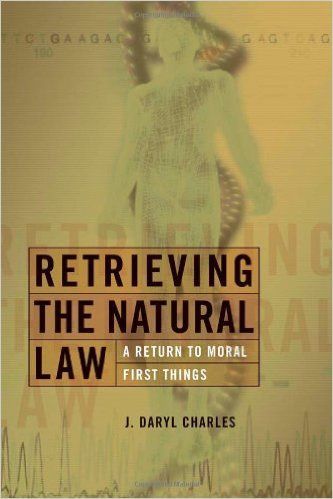
Restating what all people intuit and what this means in moral, specifically bioethical, discourse is the raison d’etre for this volume. J. Daryl Charles argues that a traditional metaphysics of natural law lies at the heart of the present reconstructive project, and that a revival in natural-law thinking is of the highest priority for the Christian community as we contend in, rather than abdicate, the public square. Nowhere is this more on display than in the realm of bioethics, where the most basic moral questions – human personhood, human rights versus responsibilities, the reality of moral evil, the basis of civil society – are being debated. With his timely application of natural-law thinking to the field of bioethics, Charles seeks to breathe new life back into this key debate.
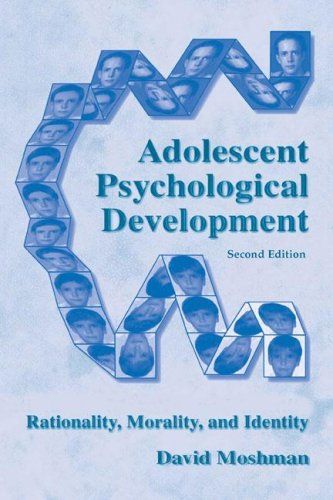
The huge and fractured literature on adolescence challenges both students and scholars. For students there is too much to learn and too little coherence across topics to enable deeper understanding. For scholars, there are few integrative visions to connect minitheories, research programs, and practical concerns. In the first edition of this advanced text, Moshman provided a constructivist synthesis of the literatures of cognitive, moral, and identity development, from the classic universalist theories of Piaget, Kohlberg, and Erikson through the more pluralist research and theorizing of the late 20th century. Without assuming any prior knowledge of psychology, he introduced and coordinated basic concepts to enable students to wrestle with the questions of concern to experts and help experts see those concerns from a larger perspective. In this thoroughly updated second edition, Moshman develops his conceptualization of advanced psychological development in adolescence and early adulthood and proposes–in a new chapter–a conception of rational moral identity as a developmental ideal. Unlike the prototypical changes of early childhood, advanced psychological development cannot be understood as progress through universal stages to a universally achieved state of maturity. Progress is possible, however, through rational processes of reflection, coordination, and social interaction.
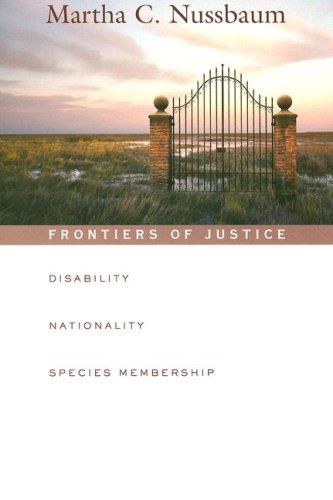
Theories of social justice are necessarily abstract, reaching beyond the particular and the immediate to the general and the timeless. Yet such theories, addressing the world and its problems, must respond to the real and changing dilemmas of the day. A brilliant work of practical philosophy, Frontiers of Justice is dedicated to this proposition. Taking up three urgent problems of social justice neglected by current theories and thus harder to tackle in practical terms and everyday life, Martha Nussbaum seeks a theory of social justice that can guide us to a richer, more responsive approach to social cooperation.The idea of the social contract–especially as developed in the work of John Rawls–is one of the most powerful approaches to social justice in the Western tradition. But as Nussbaum demonstrates, even Rawls’s theory, suggesting a contract for mutual advantage among approximate equals, cannot address questions of social justice posed by unequal parties. How, for instance, can we extend the equal rights of citizenship–education, health care, political rights and liberties–to those with physical and mental disabilities? How can we extend justice and dignified life conditions to all citizens of the world? And how, finally, can we bring our treatment of nonhuman animals into our notions of social justice? Exploring the limitations of the social contract in these three areas, Nussbaum devises an alternative theory based on the idea of “capabilities.” She helps us to think more clearly about the purposes of political cooperation and the nature of political principles–and to look to a future of greater justice for all.
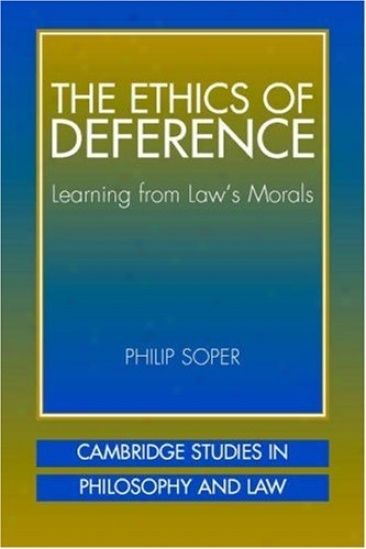
Do citizens have an obligation to obey the law? This book differs from standard approaches by shifting from the language of obedience (orders) to that of deference (normative judgments). The popular view that law claims authority but does not have it is here reversed on both counts: Law does not claim authority but has it. Though the focus is on political obligation, the author approaches that issue indirectly by first developing a more general account of when deference is due to the view of others. Two standard practices that political theorists often consider in exploring the question of political obligation – fair-play and promise-keeping – can themselves be seen as examples of a duty of deference. In this respect the book defends a more general theory of ethics whose scope extends beyond the question of political obligation to questions of duty in the case of law, promises, fair play and friendship.
ما از اخلاق چه انتظاری داریم؟ این سوال شاید تاحدودی برای عموم مردم و یا متخصصان این رشته قابل پاسخ باشد؛ اینکه خوب بودن را به ما بیاموزد و در تنظیم روابط فردی م...

جشن کتاب تهران به ایستگاه سی و یکم رسیده است. حال و احوال نشر کتاب خوب نیست و باید فرهنگدوستان را به خرید و هدیه دادن کتاب ترغیب نمود. خانه اخلاقپژوهان جوان ب...

بنیاد کتابهای اخلاق اسلامی عمدتا پالایش جان از آلودگیها و آراستن آن به زیباییها است. اندیشه محوری این قبیل کتابها آن است که انسان فعلی آنی نیست که باید باشد...

-
0 Comments