Notice: تابع WP_Block_Type_Registry::register به طورنادرست فراخوانی شد. نامهای نوع بلوک نباید حروف بزرگ داشته باشند. لطفاً برای اطلاعات بیشتر، اشکال زدایی در وردپرس را مشاهده کنید. (این پیام در نگارش 5.0.0 افزوده شده است.) in /home/ethicsho/public_html/wp-includes/functions.php on line 5313
Warning: Use of undefined constant TDC_PATH_LEGACY - assumed 'TDC_PATH_LEGACY' (this will throw an Error in a future version of PHP) in /home/ethicsho/public_html/wp-content/plugins/td-composer/td-composer.php on line 109
Warning: Use of undefined constant TDSP_THEME_PATH - assumed 'TDSP_THEME_PATH' (this will throw an Error in a future version of PHP) in /home/ethicsho/public_html/wp-content/plugins/td-composer/td-composer.php on line 113 بایگانیهای Shaoying Zhang - خانه اخلاق پژوهان جوان Notice: Trying to access array offset on value of type bool in /home/ethicsho/public_html/wp-content/plugins/wp-ulike/inc/general-functions.php on line 807
Volume 9 of the Routledge History of Philosophy surveys ten key topics in the Philosophy of Science, Logic and Mathematics in the Twentieth Century. Each article is written by one of the world’s leading experts in that field. The papers provide a comprehensive introduction to the subject in question, and are written in a way that is accessible to philosophy undergraduates and to those outside of philosophy who are interested in these subjects. Each chapter contains an extensive bibliography of the major writings in the field. Among the topics covered are the philosophy of logic; Ludwig Wittgenstein’s Tractatus; a survey of logical positivism; the philosophy of physics and of science; probability theory and cybernetics.
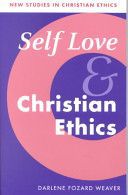
Self love is an inescapable problem for ethics, yet much of contemporary ethics is reluctant to offer any normative moral anthropologies. Instead, secular ethics and contemporary culture promote a norm of self-realization which is subjective and uncritical. Christian ethics also fails to address this problem directly, because it tends to investigate self love within the context of conflicts between the self’s interests and those of her neighbors. Self Love and Christian Ethics argues for right self love as the solution of proper self-relation that intersects with love for God and love for neighbor. Darlene Fozard Weaver explains that right self love entails a true self-understanding that is embodied in the person’s concrete acts and relations. In making this argument, she calls upon ethicists to revisit ontological accounts of the self and to devote more attention to particular moral acts.
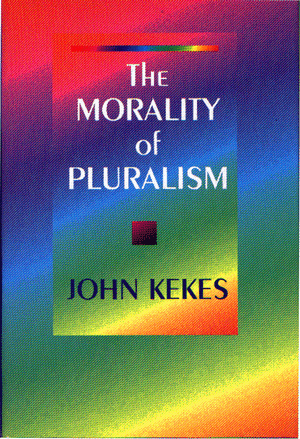
Current controversies about abortion, the environment, pornography, AIDS, capital punishment, and similar issues naturally lead to the question of whether there are any values that can be ultimately justified, or whether values are simply conventional. John Kekes argues that the present moral and political uncertainties are due to a deep change in our society from a dogmatic to a pluralistic view of values. Dogmatism is committed to there being only one justifiable system of values. Pluralism recognizes many such systems, and yet it avoids a chaotic relativism according to which all values are in the end arbitrary. Maintaining that good lives must be reasonable, but denying that they must conform to one true pattern, Kekes develops and justifies a pluralistic account of good lives and values, and works out its political, moral, and personal implications. The author defines values as possibilities whose realization would make lives good. He recognizes that their realization is difficult, especially since it involves choices among many, often conflicting, values. He argues, however, that living a good life requires a resolution of these conflicts, although reasonable resolutions are themselves plural in nature. His central claim is that pluralism is both reasonable and a preferable alternative to dogmatism and relativism.
A distinguished moral philosopher and a leading interpreter of Kant’s ethics, Barbara Herman draws on Kant to address timeless issues in ethical theory as well as ones arising from current moral problems, such as obligations to distant need, the history of slavery as it bears on affirmative action, and the moral costs of reparative justice. Challenging various Kantian orthodoxies, Herman offers a view of moral competency as a complex achievement, governed by rational norms and dependent on supportive social conditions. She argues that the objectivity of duties and obligations does not rule out the possibility of or need for moral invention. Her goal is not to revise Kant but to explore the issues and ask the questions that he did not consider. Some of the essays involve explicit interpretation of Kant, and others are prompted by ground-level questions. For example, how should we think about moral character given what we know about the fault lines in normal development? If ordinary moral life is saturated by the content of local institutions, how should our accounts of moral obligation and judgment accommodate this?
Technological developments have shaped copyright law’s development, and now the prospect of endless, effortless digital copying poses a significant challenge to modern copyright law. Many complain that copyright protection has burgeoned wildly, far beyond its original boundaries. Some have questioned whether copyright can survive the digital age. From a historical perspective, however, many of these ‘new’ challenges are simply fresh presentations of familiar dilemmas. This book explores the history of international copyright law, and looks at how this history is relevant today. It focuses on international copyright during the nineteenth century, as it affected Europe, the British colonies (particularly Canada), America, and the UK. As we consider the reform of modern copyright law, nineteenth-century experiences offer highly relevant empirical evidence. Copyright law has proved itself robust and flexible over several centuries. If directed with vision, Seville argues, it can negotiate cyberspace.
ما از اخلاق چه انتظاری داریم؟ این سوال شاید تاحدودی برای عموم مردم و یا متخصصان این رشته قابل پاسخ باشد؛ اینکه خوب بودن را به ما بیاموزد و در تنظیم روابط فردی م...

جشن کتاب تهران به ایستگاه سی و یکم رسیده است. حال و احوال نشر کتاب خوب نیست و باید فرهنگدوستان را به خرید و هدیه دادن کتاب ترغیب نمود. خانه اخلاقپژوهان جوان ب...

بنیاد کتابهای اخلاق اسلامی عمدتا پالایش جان از آلودگیها و آراستن آن به زیباییها است. اندیشه محوری این قبیل کتابها آن است که انسان فعلی آنی نیست که باید باشد...

-
0 Comments