Notice: تابع WP_Block_Type_Registry::register به طورنادرست فراخوانی شد. نامهای نوع بلوک نباید حروف بزرگ داشته باشند. لطفاً برای اطلاعات بیشتر، اشکال زدایی در وردپرس را مشاهده کنید. (این پیام در نگارش 5.0.0 افزوده شده است.) in /home/ethicsho/public_html/wp-includes/functions.php on line 5313
Warning: Use of undefined constant TDC_PATH_LEGACY - assumed 'TDC_PATH_LEGACY' (this will throw an Error in a future version of PHP) in /home/ethicsho/public_html/wp-content/plugins/td-composer/td-composer.php on line 109
Warning: Use of undefined constant TDSP_THEME_PATH - assumed 'TDSP_THEME_PATH' (this will throw an Error in a future version of PHP) in /home/ethicsho/public_html/wp-content/plugins/td-composer/td-composer.php on line 113 بایگانیهای Scott Gerwehr - خانه اخلاق پژوهان جوان Notice: Trying to access array offset on value of type bool in /home/ethicsho/public_html/wp-content/plugins/wp-ulike/inc/general-functions.php on line 807
Ronald F. Duska, who began his career as a philosopher, has, over the last 30 years, established himself as one of the leading scholars in the field of business ethics. In the past decade, he has concentrated on ethics in the financial services industry because of his affiliation with The American College in Bryn Mawr, Pennsylvania, an institution that specializes in educating financial services professionals. This affiliation gives Duska regular interaction with producers, managers, and top executives in the financial services industry. This book includes a selection of the articles Duska has written throughout the years on ethics, business ethics, teaching ethics, agency theory, postmodernism, employee rights, and ethics in accounting and the financial services industry. The articles reflect Duska’s underlying philosophical concerns and their application to the real-world challenges of practitioners–an overarching method that might be called an Aristotelian common-sense approach to ethical decision making.
What are the resources and needs, the strengths and the vulnerabilities of patients, of society, or of nature? How do we evaluate the societal potential of scientific discovery? It is fairly well assured that we are influencing the terms of existence of many inhabitants of this planet, from flora to fauna to humans. Moreover, history has shown that while technologies can be used neutrally, they can be (and have been) used to the great benefit – or the great detriment – of human life and the fate of the world as a whole. How various types of knowledge and technological ability will be deployed is up to us, individually and collectively. How such information and ability should be deployed, and for what reasons, are questions at the core of bioethical inquiry. These are the “expanding horizons in bioethics” to which this volume refers. This volume is comprised of fourteen essays. It is a rare gathering of scholarly opinion, featuring well-known experts from a diversity of disciplines. The topics addressed are of immediate concern to the public. The essays ask questions about human nature, genetic technologies, reproductive rights, human subjects research, and environmental issues – all in provocative and challenging new ways. Yet the themes that emerge throughout the volume are of enduring interest to anyone concerned about the interactions of scientific development, ethics, and society. This volume is of interest to students and teachers of bioethics and related topics, as well as to professionals working in these disciplines. “The collection of essays makes an original contribution through the generally very high standard of scholarship of the papers, and through the engagement by those authors with very contemporary issues in bioethics… It is rare that so many highly original views are collected in one volume.” Quote from a pre-publication review.
Explore central questions in moral philosophy with HOW SHOULD WE LIVE? With a focus on the question of why or how we should be moral in a time plagued by relativism, this philosophy text covers the three most seminal ethical theories: utilitarianism, deontology, and virtue-based ethics. End of chapter discussion questions and bibliography assist you in contemplating the most central issues encountered in the text and in pursuing additional research.
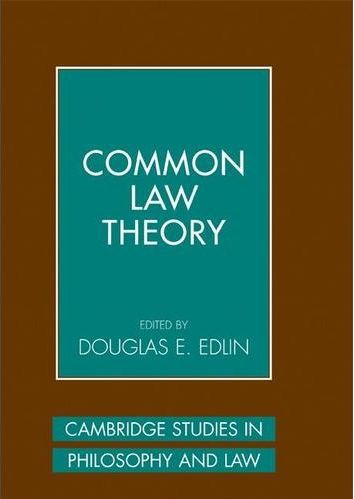
Legal scholars, philosophers, historians, and political scientists from Australia, Canada, New Zealand, the United Kingdom, and the United States analyze the common law through three of its classic themes: rules, reasoning, and constitutionalism. Their essays, specially commissioned for this volume, provide an opportunity for thinkers from different jurisdictions and disciplines to talk to each other and to their wider audience within and beyond the common law world. This book allows scholars and students to consider how these themes and concepts relate to one another. It will initiate and sustain a more inclusive and well-informed theoretical discussion of the common law’s method, process, and structure. It will be valuable to lawyers, philosophers, political scientists, and historians interested in constitutional law, comparative law, judicial process, legal theory, law and society, legal history, democratic theory, political philosophy, and the relationship of the common law tradition to other legal systems of the world.
ما از اخلاق چه انتظاری داریم؟ این سوال شاید تاحدودی برای عموم مردم و یا متخصصان این رشته قابل پاسخ باشد؛ اینکه خوب بودن را به ما بیاموزد و در تنظیم روابط فردی م...

جشن کتاب تهران به ایستگاه سی و یکم رسیده است. حال و احوال نشر کتاب خوب نیست و باید فرهنگدوستان را به خرید و هدیه دادن کتاب ترغیب نمود. خانه اخلاقپژوهان جوان ب...

بنیاد کتابهای اخلاق اسلامی عمدتا پالایش جان از آلودگیها و آراستن آن به زیباییها است. اندیشه محوری این قبیل کتابها آن است که انسان فعلی آنی نیست که باید باشد...

-
0 Comments