Notice: تابع WP_Block_Type_Registry::register به طورنادرست فراخوانی شد. نامهای نوع بلوک نباید حروف بزرگ داشته باشند. لطفاً برای اطلاعات بیشتر، اشکال زدایی در وردپرس را مشاهده کنید. (این پیام در نگارش 5.0.0 افزوده شده است.) in /home/ethicsho/public_html/wp-includes/functions.php on line 5313
Warning: Use of undefined constant TDC_PATH_LEGACY - assumed 'TDC_PATH_LEGACY' (this will throw an Error in a future version of PHP) in /home/ethicsho/public_html/wp-content/plugins/td-composer/td-composer.php on line 109
Warning: Use of undefined constant TDSP_THEME_PATH - assumed 'TDSP_THEME_PATH' (this will throw an Error in a future version of PHP) in /home/ethicsho/public_html/wp-content/plugins/td-composer/td-composer.php on line 113 بایگانیهای Samuel S. Franklin - خانه اخلاق پژوهان جوان Notice: Trying to access array offset on value of type bool in /home/ethicsho/public_html/wp-content/plugins/wp-ulike/inc/general-functions.php on line 807
Oxford Studies in Ancient Philosophy is a volume of original articles on all aspects of ancient philosophy. The articles may be of substantial length, and include critical notices of major books. OSAP is now published twice yearly, in both hardback and paperback. ‘The serial Oxford Studies in Ancient Philosophy (OSAP) is fairly regarded as the leading venue for publication in ancient philosophy. It is where one looks to find the state-of-the-art. That the serial, which presents itself more as an anthology than as a journal, has traditionally allowed space for lengthier studies, has tended only to add to its prestige; it is as if OSAP thus declares that, since it allows as much space as the merits of the subject require, it can be more entirely devoted to the best and most serious scholarship.’Michael Pakaluk, Bryn Mawr Classical Review
This book is an expanded and revised edition of the author’s critically acclaimed volume Nuts and Bolts for the Social Sciences. In twenty-six succinct chapters, Jon Elster provides an account of the nature of explanation in the social sciences. He offers an overview of key explanatory mechanisms in the social sciences, relying on hundreds of examples and drawing on a large variety of sources-psychology, behavioral economics, biology, political science, historical writings, philosophy and fiction. Written in accessible and jargon-free language, Elster aims at accuracy and clarity while eschewing formal models.
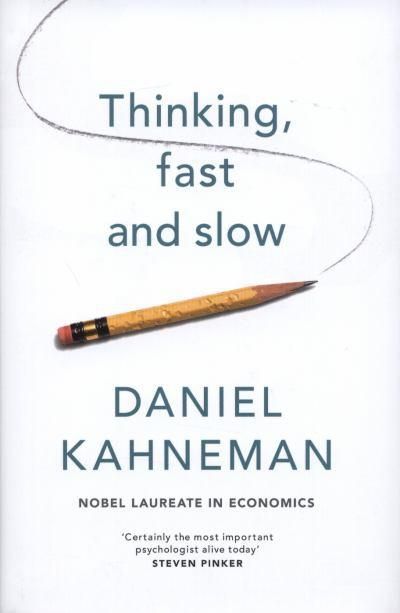
Daniel Kahneman, recipient of the Nobel Prize in Economic Sciences for his seminal work in psychology challenging the rational model of judgment and decision making, is one of the world’s most important thinkers. His ideas have had a profound impact on many fields-including business, medicine, and politics-but until now, he has never brought together his many years of research in one book.In Thinking, Fast and Slow, Kahneman takes us on a groundbreaking tour of the mind and explains the two systems that drive the way we think and make choices. One system is fast, intuitive, and emotional; the other is slower, more deliberative, and more logical. Kahneman exposes the extraordinary capabilities-and also the faults and biases-of fast thinking, and reveals the pervasive influence of intuitive impressions on our thoughts and behaviour. The importance of properly framing risks, the effects of cognitive biases on how we view others, the dangers of prediction, the right ways to develop skills, the pros and cons of fear and optimism, the difference between our experience and memory of events, the real components of happiness-each of these can be understood only by knowing how the two systems work together to shape our judgments and decisions.Drawing on a lifetime’s experimental experience, Kahneman reveals where we can and cannot trust our intuitions and how we can tap into the benefits of slow thinking. He offers practical and enlightening insights into how choices are made in both our professional and our personal lives-and how we can use different techniques to guard against the mental glitches that often get us into trouble. Thinking, Fast and Slow will transform the way you take decisions and experience the world.
Genocide in Rwanda, multiple murder in Denver or Dunblane, the gruesome activities of serial killers–what makes these great evils, and why do they occur? In addressing such questions this book interconnects contemporary moral philosophy with recent work in New Testament scholarship. The conclusions to emerge are surprising. Gordon Graham argues that the inability of modernist thought to account satisfactorily for evil and its occurrence should not lead us to embrace an eclectic postmodernism, but to take seriously some unfashionable premodern conceptions–Satan, demonic possession, spiritual powers, cosmic battles. The book makes a powerful case for the rejection of humanism and naturalism, and for explaining the moral obligation to struggle against evil by reference to the New Testament’s cosmic narrative.
Being a consumer is now integral to the human experience, something none of us can avoid. At the same time, many of the products that we buy come to us with histories steeped in highly unethical practices, such as worker exploitation, animal suffering, and environmental damage. Consuming Choices considers the ethical dimensions of consumer life by exploring several basic questions: Exactly what sorts of unethical practices are implicated in today’s consumer products? Does moral culpability for these practices fall solely on the companies that perform them, or does it also fall upon consumers who purchase the products made with such practices? And most importantly, do consumers ever have moral obligations to avoid particular products? To answer, David T. Schwartz provides the most detailed philosophical exploration to date on consumer ethics. He utilizes historical and fictional examples to illustrate the types of wrongdoing currently implicated by consumer products in this age of globalization, offers a clear description of the relevant moral theories and important ethical concepts, and provides concrete suggestions on how to be a more ethical consumer.
ما از اخلاق چه انتظاری داریم؟ این سوال شاید تاحدودی برای عموم مردم و یا متخصصان این رشته قابل پاسخ باشد؛ اینکه خوب بودن را به ما بیاموزد و در تنظیم روابط فردی م...

جشن کتاب تهران به ایستگاه سی و یکم رسیده است. حال و احوال نشر کتاب خوب نیست و باید فرهنگدوستان را به خرید و هدیه دادن کتاب ترغیب نمود. خانه اخلاقپژوهان جوان ب...

بنیاد کتابهای اخلاق اسلامی عمدتا پالایش جان از آلودگیها و آراستن آن به زیباییها است. اندیشه محوری این قبیل کتابها آن است که انسان فعلی آنی نیست که باید باشد...

-
0 Comments