Notice: تابع WP_Block_Type_Registry::register به طورنادرست فراخوانی شد. نامهای نوع بلوک نباید حروف بزرگ داشته باشند. لطفاً برای اطلاعات بیشتر، اشکال زدایی در وردپرس را مشاهده کنید. (این پیام در نگارش 5.0.0 افزوده شده است.) in /home/ethicsho/public_html/wp-includes/functions.php on line 5313
Warning: Use of undefined constant TDC_PATH_LEGACY - assumed 'TDC_PATH_LEGACY' (this will throw an Error in a future version of PHP) in /home/ethicsho/public_html/wp-content/plugins/td-composer/td-composer.php on line 109
Warning: Use of undefined constant TDSP_THEME_PATH - assumed 'TDSP_THEME_PATH' (this will throw an Error in a future version of PHP) in /home/ethicsho/public_html/wp-content/plugins/td-composer/td-composer.php on line 113 بایگانیهای Samuel Fleischacker - خانه اخلاق پژوهان جوان Notice: Trying to access array offset on value of type bool in /home/ethicsho/public_html/wp-content/plugins/wp-ulike/inc/general-functions.php on line 807
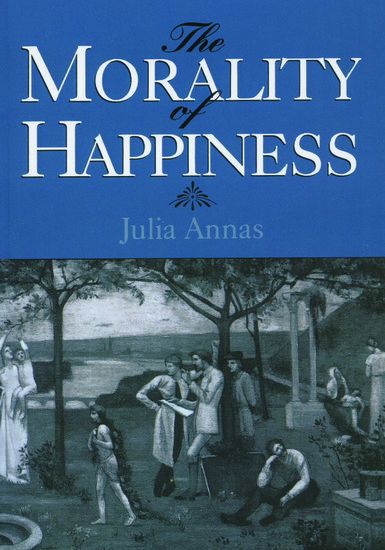
Ancient ethical theories, based on the notions of virtue and happiness, have struck many as an attractive alternative to modern theories. But we cannot find out whether this is true until we understand ancient ethics–and to do this we need to examine the basic structure of ancient ethical theory, not just the details of one or two theories. In this book, Annas brings together the results of a wide-ranging study of ancient ethical philosophy and presents it in a way that is easily accessible to anyone with an interest in ancient or modern ethics. She examines the fundamental notions of happiness and virtue, the role of nature in ethical justification and the relation between concern for self and concern for others. Her careful examination of the ancient debates and arguments shows that many widespread assumptions about ancient ethics are quite mistaken. Ancient ethical theories are not egoistic, and do not depend for their acceptance on metaphysical theories of a teleological kind. Most centrally, they are recognizably theories of morality, and the ancient disputes about the place of virtue in happiness can be seen as akin to modern disputes about the demands of morality.
A Companion to Environmental Philosophy is a pioneering work in the burgeoning field of environmental philosophy. This ground-breaking volume contains thirty-six original articles exemplifying the rich diversity of scholarship in this field. Contains thirty-six original articles, written by international scholars. Traces the roots of environmental philosophy through the exploration of cultural traditions from around the world. Brings environmental philosophy into conversation with other fields and disciplines such as literature, economics, ecology, and law. Discusses environmental problems that stimulate current debates.
Self-deception raises complex questions about the nature of belief and the structure of the human mind. In this book, Alfred Mele addresses four of the most critical of these questions: What is it to deceive oneself? How do we deceive ourselves? Why do we deceive ourselves? Is self-deception really possible?Drawing on cutting-edge empirical research on everyday reasoning and biases, Mele takes issue with commonplace attempts to equate the processes of self-deception with those of stereotypical interpersonal deception. Such attempts, he demonstrates, are fundamentally misguided, particularly in the assumption that self-deception is intentional. In their place, Mele proposes a compelling, empirically informed account of the motivational causes of biased beliefs. At the heart of this theory is an appreciation of how emotion and motivation may, without our knowing it, bias our assessment of evidence for beliefs. Highlighting motivation and emotion, Mele develops a pair of approaches for explaining the two forms of self-deception: the “straight” form, in which we believe what we want to be true, and the “twisted” form, in which we believe what we wish to be false.Underlying Mele’s work is an abiding interest in understanding and explaining the behavior of real human beings. The result is a comprehensive, elegant, empirically grounded theory of everyday self-deception that should engage philosophers and social scientists alike.
Must good deeds be rewarded and wrongdoers punished? Would God be unjust if He failed to punish and reward? And what is it about good or evil actions and moral identity that might generate such necessities? These were some of the vital religious and philosophical questions that eighth- and ninth-century Mu’tazilite theologians and their sophisticated successors attempted to answer, giving rise to a distinctive ethical position and one of the most prominent and controversial intellectual trends in medieval Islam. The Mu’tazilites developed a view of ethics whose distinguishing features were its austere moral objectivism and the crucial role it assigned to reason in the knowledge of moral truths. Central to this ethical vision was the notion of moral desert, and of the good and evil consequences–reward or punishment–deserved through a person’s acts. Moral Agents and Their Desertsis the first book-length study of this central theme in Mu’tazilite ethics, and an attempt to grapple with the philosophical questions it raises. At the same time, it is a bid to question the ways in which modern readers, coming to medieval Islamic thought with a philosophical interest, seek to read and converse with Mu’tazilite theology.Moral Agents and Their Desertstracks the challenges and rewards involved in the pursuit of the right conversation at the seams between modern and medieval concerns.
ما از اخلاق چه انتظاری داریم؟ این سوال شاید تاحدودی برای عموم مردم و یا متخصصان این رشته قابل پاسخ باشد؛ اینکه خوب بودن را به ما بیاموزد و در تنظیم روابط فردی م...

جشن کتاب تهران به ایستگاه سی و یکم رسیده است. حال و احوال نشر کتاب خوب نیست و باید فرهنگدوستان را به خرید و هدیه دادن کتاب ترغیب نمود. خانه اخلاقپژوهان جوان ب...

بنیاد کتابهای اخلاق اسلامی عمدتا پالایش جان از آلودگیها و آراستن آن به زیباییها است. اندیشه محوری این قبیل کتابها آن است که انسان فعلی آنی نیست که باید باشد...

-
0 Comments