Notice: تابع WP_Block_Type_Registry::register به طورنادرست فراخوانی شد. نامهای نوع بلوک نباید حروف بزرگ داشته باشند. لطفاً برای اطلاعات بیشتر، اشکال زدایی در وردپرس را مشاهده کنید. (این پیام در نگارش 5.0.0 افزوده شده است.) in /home/ethicsho/public_html/wp-includes/functions.php on line 5313
Warning: Use of undefined constant TDC_PATH_LEGACY - assumed 'TDC_PATH_LEGACY' (this will throw an Error in a future version of PHP) in /home/ethicsho/public_html/wp-content/plugins/td-composer/td-composer.php on line 109
Warning: Use of undefined constant TDSP_THEME_PATH - assumed 'TDSP_THEME_PATH' (this will throw an Error in a future version of PHP) in /home/ethicsho/public_html/wp-content/plugins/td-composer/td-composer.php on line 113 بایگانیهای S. Morris Eames Ph.D. - خانه اخلاق پژوهان جوان Notice: Trying to access array offset on value of type bool in /home/ethicsho/public_html/wp-content/plugins/wp-ulike/inc/general-functions.php on line 807
As new societies and relationships are formed in the virtual landscape of cyberspace, we are now having to consider the potential consequences this might have on our own community and societies, and reconsider how the concept of community is changing. Leading experts on the internet discuss such issues as race, gender, power, economics and ethics in cyberspace, focusing on four areas: identity, social order and control, community structure and dynamics, and collective action. Clearly written and covering all the main topics, this edited volume is an essential introduction to the internet.
David Ellison’s book is an investigation into the historical origins and textual practice of European literary Modernism. Ellison’s study traces the origins of Modernism to the emergence of early German Romanticism from the philosophy of Immanuel Kant, and emphasizes how the passage from Romanticism to Modernism can be followed in the gradual transition from the sublime to the uncanny. Arguing that what we call High Modernism cannot be reduced to a religion of beauty, an experimentation with narrative form, or even a reflection on time and consciousness, Ellison demonstrates that Modernist textuality is characterized by the intersection, overlapping, and crossing of aesthetic and ethical issues. Beauty and morality relate to each other as antagonists struggling for dominance within the related fields of philosophy and theory on the one hand (Kant, Kierkegaard, Nietzsche, Freud) and imaginative literature on the other (Baudelaire, Proust, Gide, Conrad, Woolf, Kafka).
This is an engaging and accessible introduction to Aristotle’s great masterpiece of moral philosophy. Michael Pakaluk gives original and compelling interpretations of the Function Argument, the Doctrine of the Mean, courage and other character virtues, Akrasia, and the two treatments of pleasure. There is also a useful section on how to read an Aristotelian text. This book will be invaluable for all student readers encountering one of the most important and influential works of Western philosophy.
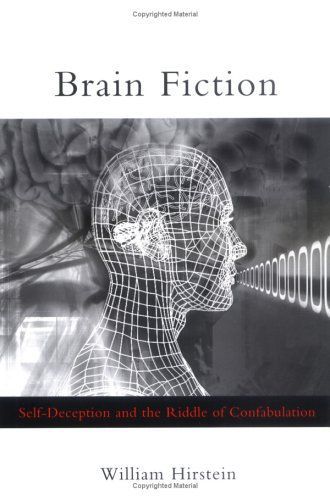
CHOICE Outstanding Academic Title for 2005Some neurological patients exhibit a striking tendency to confabulate—to construct false answers to a question while genuinely believing that they are telling the truth. A stroke victim, for example, will describe in detail a conference he attended over the weekend when in fact he has not left the hospital. Normal people, too, sometimes have a tendency to confabulate; rather than admitting “I don’t know,” some people will make up an answer or an explanation and express it with complete conviction. In Brain Fiction, William Hirstein examines confabulation and argues that its causes are not merely technical issues in neurology or cognitive science but deeply revealing about the structure of the human intellect.Hirstein describes confabulation as the failure of a normal checking or censoring process in the brain—the failure to recognize that a false answer is fantasy, not reality. Thus, he argues, the creative ability to construct a plausible-sounding response and some ability to check that response are separate in the human brain. Hirstein sees the dialectic between the creative and checking processes—”the inner dialogue”—as an important part of our mental life. In constructing a theory of confabulation, Hirstein integrates perspectives from different fields, including philosophy, neuroscience, and psychology to achieve a natural mix of conceptual issues usually treated by philosophers with purely empirical issues; information about the distribution of certain blood vessels in the prefrontal lobes of the brain, for example, or the behavior of split-brain patients can shed light on the classic questions of philosophy of mind, including questions about the function of consciousness. This first book-length study of confabulation breaks ground in both philosophy and cognitive science.
ما از اخلاق چه انتظاری داریم؟ این سوال شاید تاحدودی برای عموم مردم و یا متخصصان این رشته قابل پاسخ باشد؛ اینکه خوب بودن را به ما بیاموزد و در تنظیم روابط فردی م...

جشن کتاب تهران به ایستگاه سی و یکم رسیده است. حال و احوال نشر کتاب خوب نیست و باید فرهنگدوستان را به خرید و هدیه دادن کتاب ترغیب نمود. خانه اخلاقپژوهان جوان ب...

بنیاد کتابهای اخلاق اسلامی عمدتا پالایش جان از آلودگیها و آراستن آن به زیباییها است. اندیشه محوری این قبیل کتابها آن است که انسان فعلی آنی نیست که باید باشد...

-
0 Comments