Notice: تابع WP_Block_Type_Registry::register به طورنادرست فراخوانی شد. نامهای نوع بلوک نباید حروف بزرگ داشته باشند. لطفاً برای اطلاعات بیشتر، اشکال زدایی در وردپرس را مشاهده کنید. (این پیام در نگارش 5.0.0 افزوده شده است.) in /home/ethicsho/public_html/wp-includes/functions.php on line 5313
Warning: Use of undefined constant TDC_PATH_LEGACY - assumed 'TDC_PATH_LEGACY' (this will throw an Error in a future version of PHP) in /home/ethicsho/public_html/wp-content/plugins/td-composer/td-composer.php on line 109
Warning: Use of undefined constant TDSP_THEME_PATH - assumed 'TDSP_THEME_PATH' (this will throw an Error in a future version of PHP) in /home/ethicsho/public_html/wp-content/plugins/td-composer/td-composer.php on line 113 بایگانیهای Robert I. Berkman - خانه اخلاق پژوهان جوان Notice: Trying to access array offset on value of type bool in /home/ethicsho/public_html/wp-content/plugins/wp-ulike/inc/general-functions.php on line 807
In many areas of modern life rapid developments in science are overwhelming established norms. Brain biology, through DNA testing and advanced brain imaging techniques, has given medical scientists new insights into the functioning of the human mind. This erosion of long-standing beliefs has many implications for understanding and treating what society considers to be aberrant or immoral behavior. What medical science is indicating is that the focus of our emphasis on mental processes–particularly free will and intentionality–is shifting to recognition of the important role the physical brain plays on human thought and behavior. In Hardwired Behavior the author argues that social morality begins in the brain, for without the brain there would be no concept of morality. Individual responsibility, therefore, must be reconsidered in the light of biological brain processes. The question of whether new scientific findings destroy the relevance of free will, placing it in the context of biological forces that may operate outside the conscious control of the actor, is one of intense debate. Hardwired Behavior takes this question and moves it into the open by clearly detailing neuroscience discoveries and explaining how the ancient precepts of “morality” that have guided mankind throughout its history must now be seen through the new lens of brain biology.
Monte Johnson examines the most controversial aspects of Aristiotle’snatural philosophy: his teleology. Is teleology about causation or explanation?Does it exclude or obviate mechanism, determinism, or materialism? Is it focusedon the good of individual organisms, or is god or man the ultimate end of allprocesses and entities? Is teleology restricted to living things, or does itapply to the cosmos as a whole? Does it identify objectively existent causes inthe world, or is it merely a heuristic for our understanding of other causalprocesses? Johnson argues that Aristotle’s aporetic approach drives a middlecourse between these traditional oppositions, and avoids the dilemma, frequentlyurged against teleology, between backwards causation and anthropomorphism.Although these issues have been debated with extraordinary depth by Aristotlescholars, and touched upon by many in the wider philosophical and scientificcommunity as well, there is no comprehensive historical treatment of the issue. Aristotle is commonly considered the inventor of teleology, although the preciseterm originated in the eighteenth century. If teleology means the use of endsand goals in natural science, then Aristotle was rather a critical innovator ofteleological explanation. Teleological notions were widespread among hispredecessors, but Aristotle rejected their conception of extrinsic causes suchas mind or god as the primary causes for natural things. Aristotle’s radicalalternative was to assert nature itself as an internal principle of change andan end, and his teleological explanations focus on the intrinsic ends of naturalsubstances – those ends that benefit the natural thing itself. Aristotle’s use of ends was subsequently conflated with incompatible’teleological’ notions, including proofs for the existence of a providential ordesigner god, vitalism and animism, opposition to mechanism and non-teleologicalcausation, and anthropocentrism. Johnson addresses these misconceptions throughan elaboration of Aristotle’s methodological statements, as well as anexamination of the explanations actually offered in the scientific works.
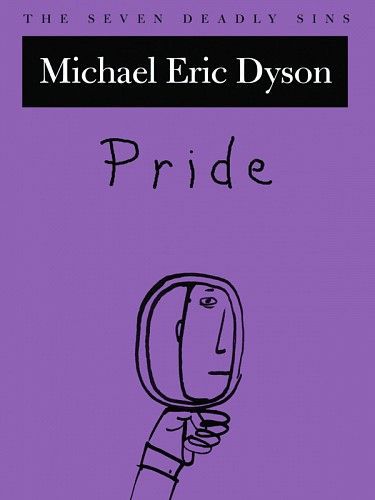
Of the seven deadly sins, pride is the only one with a virtuous side. It is certainly a good thing to have pride in one’s country, in one’s community, in oneself. But when taken too far, as Michael Eric Dyson shows in Pride, these virtues become deadly sins. Dyson, named by Ebony magazine as one of the 100 most influential African Americans, here looks at the many dimensions of pride. Ranging from Augustine and Aquinas, MacIntyre and Hauerwas, to Niebuhr and King, Dyson offers a thoughtful, multifaceted look at this “virtuous vice.” He probes the philosophical and theological roots of pride in examining its transformation in Western culture. Dyson discusses how black pride keeps blacks from being degraded and excluded by white pride, which can be invisible, unspoken, but nonetheless very powerful. Dyson also offers a moving glimpse into the teachers and books that shaped his personal pride and vocation. Dyson also looks at less savory aspects of national pride. Since 9/11, he notes, we have had to close ranks. But the collective embrace of all things American, to the exclusion of anything else, has taken the place of a much richer, much more enduring, much more profound version of love of country. This unchecked pride asserts the supremacy of America above all others–elevating our national beliefs above any moral court in the world–and attacking critics of American foreign policy as unpatriotic and even traitorous. Hubris, temerity, arrogance–the unquestioned presumption that one’s way of life defines how everyone else should live–pride has many destructive manifestations. In this engaging and energetic volume, Michael Eric Dyson, one of the nation’s foremost public intellectuals, illuminates this many-sided human emotion, one that can be an indispensable virtue or a deadly sin.
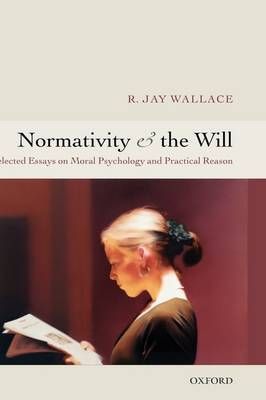
Normativity and the Will collects fourteen important papers on moral psychology and practical reason by R. Jay Wallace, one of the leading philosophers currently working in these areas. The papers explore the interpenetration of normative and psychological issues in a series of debates that lie at the heart of moral philosophy. Themes that are addressed include reason, desire, and the will; responsibility, identification, and emotion; and the relation between morality and other normative domains. Wallace’s treatments of these topics are at once sophisticated and engaging. Taken together, they constitute an advertisement for a distinctive way of pursuing issues in moral psychology and the theory of practical reason, and they articulate and defend a unified framework for thinking about those issues. The volume also features a helpful new introduction.
ما از اخلاق چه انتظاری داریم؟ این سوال شاید تاحدودی برای عموم مردم و یا متخصصان این رشته قابل پاسخ باشد؛ اینکه خوب بودن را به ما بیاموزد و در تنظیم روابط فردی م...

جشن کتاب تهران به ایستگاه سی و یکم رسیده است. حال و احوال نشر کتاب خوب نیست و باید فرهنگدوستان را به خرید و هدیه دادن کتاب ترغیب نمود. خانه اخلاقپژوهان جوان ب...

بنیاد کتابهای اخلاق اسلامی عمدتا پالایش جان از آلودگیها و آراستن آن به زیباییها است. اندیشه محوری این قبیل کتابها آن است که انسان فعلی آنی نیست که باید باشد...

-
0 Comments