Notice: تابع WP_Block_Type_Registry::register به طورنادرست فراخوانی شد. نامهای نوع بلوک نباید حروف بزرگ داشته باشند. لطفاً برای اطلاعات بیشتر، اشکال زدایی در وردپرس را مشاهده کنید. (این پیام در نگارش 5.0.0 افزوده شده است.) in /home/ethicsho/public_html/wp-includes/functions.php on line 5313
Warning: Use of undefined constant TDC_PATH_LEGACY - assumed 'TDC_PATH_LEGACY' (this will throw an Error in a future version of PHP) in /home/ethicsho/public_html/wp-content/plugins/td-composer/td-composer.php on line 109
Warning: Use of undefined constant TDSP_THEME_PATH - assumed 'TDSP_THEME_PATH' (this will throw an Error in a future version of PHP) in /home/ethicsho/public_html/wp-content/plugins/td-composer/td-composer.php on line 113 بایگانیهای Richard B. Day - خانه اخلاق پژوهان جوان Notice: Trying to access array offset on value of type bool in /home/ethicsho/public_html/wp-content/plugins/wp-ulike/inc/general-functions.php on line 807
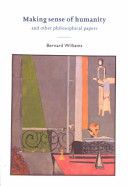
This new volume of philosophical papers by Bernard Williams is divided into three sections: the first Action, Freedom, Responsibility, the second Philosophy, Evolution and the Human Sciences; in which appears the essay which gives the collection its title; and the third Ethics, which contains essays closely related to his 1983 book Ethics and the Limits of Philosophy. Like the two earlier volumes of Williams’s papers published by Cambridge University Press, Problems of the Self and Moral Luck, this volume will be welcomed by all readers with a serious interest in philosophy. It is published alongside a volume of essays on Williams’s work, World, Mind, and Ethics: Essays on the Ethical Philosophy of Bernard Williams, edited by J. E. J. Altham and Ross Harrison, which provides a reappraisal of his work by other distinguished thinkers in the field.
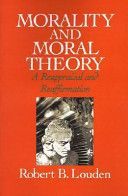
Contemporary philosophers have grown increasingly skeptical toward both morality and moral theory. Some argue that moral theory is a radically misguided enterprise that does not illuminate moral practice, while others simply deny the value of morality in human life. In this important new book, Louden responds to the arguments of both “anti-morality” and “anti-theory” skeptics. In Part One, he develops and defends an alternative conception of morality, which, he argues, captures more of the central features of both Aristotelian and Kantian ethics than do other contemporary models, and enables the central importance of morality to be convincingly reaffirmed. In Louden’s model, morality is primarily a matter of what one does to oneself, rather than what one does or does not do to others. This model eliminates the gulf that many anti-morality critics say exists between morality’s demands and the personal point of view. Louden further argues that morality’s primary focus should be on agents and their lives, rather than on right actions, and that it is always better to be morally better–i.e. it is impossible to be “too moral.” Part Two presents Louden’s alternative conception of moral theory. Here again he draws on the work of Aristotle and Kant, showing that their moral theories have far more in common than is usually thought, and that those features that they share can be the basis for a viable moral theory that is immune to the standard anti-theory objections. Louden reaffirms the necessity and importance of moral theory in human life, and shows that moral theories fulfill a variety of genuine and indispensable human needs.
When philosophers address personal identity, they usually explore numerical identity: what are the criteria for a person’s continuing existence? When non-philosophers address personal identity, they often have in mind narrative identity: Which characteristics of a particular person are salient to her self-conception? This book develops accounts of both senses of identity, arguing that both are normatively important, and is unique in its exploration of a range of issues in bioethics through the lens of identity. Defending a biological view of our numerical identity and a framework for understanding narrative identity, DeGrazia investigates various issues for which considerations of identity prove critical: the definition of death; the authority of advance directives in cases of severe dementia; the use of enhancement technologies; prenatal genetic interventions; and certain types of reproductive choices. He demonstrates the power of personal identity theory to illuminate issues in bioethics as they bring philosophical theory to life.
Legal ethics is often described as an oxymoron or contradiction in terms – lay people find the concept amusing and lawyers can find ethics impossible. The best lawyers are those who have come to grips with their own values and actively seek to improve their ethical practise. This book is designed to help law students and new lawyers understand and modify their own ethical priorities, not just because this knowledge makes it easier to practise law and earn an income, but because self-aware, ethical legal practice is right and feels better than anything else. Packed with case studies of ethical scandals and dilemmas from real life legal practice in Australia, each chapter delves into the most difficult issues lawyers face. From lawyers’ part in corporate fraud to the ethics of time-based billing, Parker and Evans expose the values that underlie current practice and set out the alternatives ethical lawyers might follow.
ما از اخلاق چه انتظاری داریم؟ این سوال شاید تاحدودی برای عموم مردم و یا متخصصان این رشته قابل پاسخ باشد؛ اینکه خوب بودن را به ما بیاموزد و در تنظیم روابط فردی م...

جشن کتاب تهران به ایستگاه سی و یکم رسیده است. حال و احوال نشر کتاب خوب نیست و باید فرهنگدوستان را به خرید و هدیه دادن کتاب ترغیب نمود. خانه اخلاقپژوهان جوان ب...

بنیاد کتابهای اخلاق اسلامی عمدتا پالایش جان از آلودگیها و آراستن آن به زیباییها است. اندیشه محوری این قبیل کتابها آن است که انسان فعلی آنی نیست که باید باشد...

-
0 Comments