Notice: تابع WP_Block_Type_Registry::register به طورنادرست فراخوانی شد. نامهای نوع بلوک نباید حروف بزرگ داشته باشند. لطفاً برای اطلاعات بیشتر، اشکال زدایی در وردپرس را مشاهده کنید. (این پیام در نگارش 5.0.0 افزوده شده است.) in /home/ethicsho/public_html/wp-includes/functions.php on line 5313
Warning: Use of undefined constant TDC_PATH_LEGACY - assumed 'TDC_PATH_LEGACY' (this will throw an Error in a future version of PHP) in /home/ethicsho/public_html/wp-content/plugins/td-composer/td-composer.php on line 109
Warning: Use of undefined constant TDSP_THEME_PATH - assumed 'TDSP_THEME_PATH' (this will throw an Error in a future version of PHP) in /home/ethicsho/public_html/wp-content/plugins/td-composer/td-composer.php on line 113 بایگانیهای Research Fellow in the Department of Cultural Studies Torkel Brekke - خانه اخلاق پژوهان جوان Notice: Trying to access array offset on value of type bool in /home/ethicsho/public_html/wp-content/plugins/wp-ulike/inc/general-functions.php on line 807
We tend to suppose that the ancient Greeks had primitive ideas of the self, of responsibility, freedom, and shame, and that now humanity has advanced from these to a more refined moral consciousness. Bernard Williams’s original and radical book questions this picture of Western history. While we are in many ways different from the Greeks, Williams claims that the differences are not to be traced to a shift in these basic conceptions of ethical life. We are more like the ancients than we are prepared to acknowledge, and only when this is understood can we properly grasp our most important differences from them, such as our rejection of slavery.The author is a philosopher, but much of his book is directed to writers such as Homer and the tragedians, whom he discusses as poets and not just as materials for philosophy. At the center of his study is the question of how we can understand Greek tragedy at all, when its world is so far from ours.Williams explains how it is that when the ancients speak, they do not merely tell us about themselves, but about ourselves. Shame and Necessity gives a new account of our relations to the Greeks, and helps us to see what ethical ideas we need in order to live in the modern world.
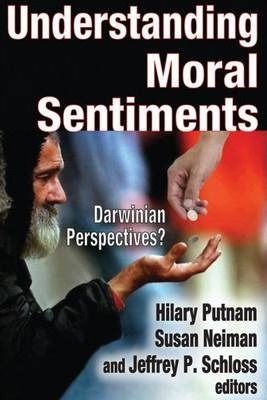
This volume brings together leading scholars to examine Darwinian perspectives on morality from widely ranging disciplines: evolutionary biology, anthropology, psychology, philosophy, and theology. They bring not only varied expertise, but also contrasting judgments about which, and to what extent, differing evolutionary accounts explain morality. They also consider the implications of these explanations for a range of religious and non-religious moral traditions. The book first surveys scientific understandings of morality. Chapters by Joan Silk and Christopher Boehm ask what primatology and anthropology tell us about moral origins. Daniel Batson and Stephen Pinker provide contrasting accounts of how evolution shapes moral psychology, and Jeffrey Schloss assesses a range of biological proposals for morality and altruism. Turning to philosophical issues, Martha Nussbaum argues that recognizing our animal nature does not threaten morality. Stephen Pope and Timothy Jackson explore how Darwinian accounts of moral goodness both enrich and require understandings outside the sciences. Hilary Putnam and Susan Neiman ask whether Darwin is truly useful for helping us to understand what morality actually is and how it functions. The book is a balanced effort to assess the scientific merits and philosophical significance of emerging Darwinian perspectives on morality. how Darwinian accounts of moral goodness both enrich and require understandings outside the sciences. Hilary Putnam and Susan Neiman ask whether Darwin is truly useful for helping us to understand what morality actually is and how it functions. The book is a balanced effort to assess the scientific merits and philosophical significance of emerging Darwinian perspectives on morality.
Philosophy: The Basicsisthebook for anyone coming to philosophy for the first time. Nigel Warburton’s popular book gently eases the reader into the world of philosophy. Each chapter considers a key area of philosophy, explaining and exploring the basic ideas and themes. The third edition updates and expands the main text, and is the perfect companion toPhilosophy: Basic Reading. These two books will together make for an ideal and straight forward introduction to philosophy.
“This compact book is intended as a practical guide for students involved in research, and it fulfils that goal well. …The chapter on ‘The funding and sponsorship of research’ is an excellent example of the author’s willingness and ability to include relevant, sensitive and practical content that is often left out of texts on ethics. …This is an easy book to read, it is concise and keeps to relevant content. …It would make an excellent text for a course in research ethics and/or research methods, and it will also provide an excellent planning and self-review guide for a practising researcher.” Higher Education Review”The book is aimed primarily at higher education students in education and the social sciences who are conducting a (typically small scale) research project. That is not to say that the publication is of little value to the supervisors of such projects or to experienced researchers as a resource. …the successful integration of a wide range of theoretical perspectives on ethics in the text is… one of the main accomplishments of this publication” RTI Resource CentreThis essential guide examines the ethical issues and questions which occur in university and professional research. The book helps both beginning and experienced researchers to identify ethical issues when they are conducting research, and attempt to resolve those issues.* Examines ethical issues which arise throughout research, from the design stage through to data collection and analysis * Investigates topical issues including consent, confidentiality, ethical questions in the dissemination of research* Discusses ethical theories and how these may be applied towards resolving ethical problems* Provides examples of ethical dilemmas and case studies throughout the textInsightful, wide-ranging and accessible, this guide is an invaluable tool for both undergraduate and postgraduate students and professionals who research as part of their jobs.
This is an EXACT reproduction of a book published before 1923. This IS NOT an OCR’d book with strange characters, introduced typographical errors, and jumbled words. This book may have occasional imperfections such as missing or blurred pages, poor pictures, errant marks, etc. that were either part of the original artifact, or were introduced by the scanning process. We believe this work is culturally important, and despite the imperfections, have elected to bring it back into print as part of our continuing commitment to the preservation of printed works worldwide. We appreciate your understanding of the imperfections in the preservation process, and hope you enjoy this valuable book.
ما از اخلاق چه انتظاری داریم؟ این سوال شاید تاحدودی برای عموم مردم و یا متخصصان این رشته قابل پاسخ باشد؛ اینکه خوب بودن را به ما بیاموزد و در تنظیم روابط فردی م...

جشن کتاب تهران به ایستگاه سی و یکم رسیده است. حال و احوال نشر کتاب خوب نیست و باید فرهنگدوستان را به خرید و هدیه دادن کتاب ترغیب نمود. خانه اخلاقپژوهان جوان ب...

بنیاد کتابهای اخلاق اسلامی عمدتا پالایش جان از آلودگیها و آراستن آن به زیباییها است. اندیشه محوری این قبیل کتابها آن است که انسان فعلی آنی نیست که باید باشد...

-
0 Comments