Notice: تابع WP_Block_Type_Registry::register به طورنادرست فراخوانی شد. نامهای نوع بلوک نباید حروف بزرگ داشته باشند. لطفاً برای اطلاعات بیشتر، اشکال زدایی در وردپرس را مشاهده کنید. (این پیام در نگارش 5.0.0 افزوده شده است.) in /home/ethicsho/public_html/wp-includes/functions.php on line 5313
Warning: Use of undefined constant TDC_PATH_LEGACY - assumed 'TDC_PATH_LEGACY' (this will throw an Error in a future version of PHP) in /home/ethicsho/public_html/wp-content/plugins/td-composer/td-composer.php on line 109
Warning: Use of undefined constant TDSP_THEME_PATH - assumed 'TDSP_THEME_PATH' (this will throw an Error in a future version of PHP) in /home/ethicsho/public_html/wp-content/plugins/td-composer/td-composer.php on line 113 بایگانیهای Rachel Cohon - خانه اخلاق پژوهان جوان Notice: Trying to access array offset on value of type bool in /home/ethicsho/public_html/wp-content/plugins/wp-ulike/inc/general-functions.php on line 807
‘Fiala’s Tolerance and the Ethical Life is a profound study of the sources and consequences of the effort to get along with others in peace. His view that philosophy and toleration are particularly closely related is novel and important; connecting forbearance with tragically diverse communities stresses a much-neglected aspect of the subject. Written in accessible language but displaying a mastery of the history of thought, this book makes a permanent contribution to our understanding of why we must learn to live together and how difficult that is’ John Lachs, Vanderbilt University In a fresh and exciting way, this book shows how tolerance connects with the practice of philosophy. Andrew Fiala examines the virtue of tolerance as it appears in several historical contexts: Socratic philosophy, Stoic philosophy, Pragmatism and Existentialism. The lesson derived is that tolerance is a virtue for what Fiala calls ‘tragic communities’. Such communities are developed when we come together across our differences, but they lack the robust sense of connection that we often seek with others – the complete sort of happiness that is offered by a more Utopian ideal of community. But rather than viewing this conclusion as a failure, Fiala maintains that tragic communities are the best communities possible for human beings who are aware of their own individuality and finitude. Indeed, they are typical of the sorts of communities created by philosophers engaged in dialogue with others.
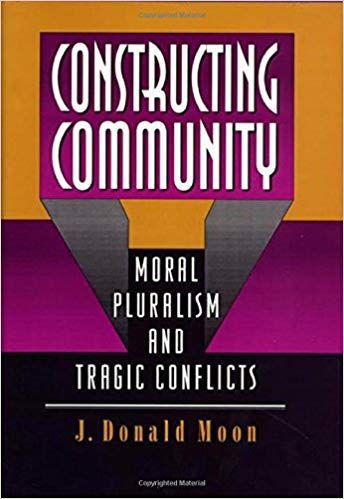
In developing a new theory of political and moral community, J. Donald Moon takes questions of cultural pluralism and difference more seriously than do many other liberal thinkers of our era: Moon is willing to confront the problem of how community can be created among those who have very different views about the proper ends of human life. Experiencing such profound disagreement, can we live together in a society under norms we all accept? In recent years, traditional ways of looking at this query have come under attack by post-modernists, feminists, and thinkers concerned with pluralism. Respectfully engaging their critiques, Moon proposes a reformulated liberalism that is intended to overcome the problems they have identified.In developing a new theory of political and moral community, J. Donald Moon takes questions of cultural pluralism and difference more seriously than do many other liberal thinkers of our era: Moon is willing to confront the problem of how community can be created among those who have very different views about the proper ends of human life. Experiencing such profound disagreement, can we live together in a society under norms we all accept? In recent years, traditional ways of looking at this query have come under attack by post-modernists, feminists, and thinkers concerned with pluralism. Respectfully engaging their critiques, Moon proposes a reformulated liberalism that is intended to overcome the problems they have identified.
It is certainly the case that morality governs the interactions that take place between individuals. But what if morality exists because of these interactions? This book argues for the claim that much of the behaviour we view as ‘moral’ exists because acting in that way benefits each of us to the greatest extent possible, given the socially structured nature of society. Drawing upon aspects of evolutionary game theory, the theory of bounded rationality, and computational models of social networks, it shows both how moral behaviour can emerge in socially structured environments, and how it can persist even when it is not typically viewed as ‘rational’ from a traditional economic perspective. Since morality consists of much more than mere behaviour, this book also provides a theory of how moral principles and the moral sentiments play an indispensable role in effective choice, acting as ‘fast and frugal heuristics’ in social decision contexts.
ما از اخلاق چه انتظاری داریم؟ این سوال شاید تاحدودی برای عموم مردم و یا متخصصان این رشته قابل پاسخ باشد؛ اینکه خوب بودن را به ما بیاموزد و در تنظیم روابط فردی م...

جشن کتاب تهران به ایستگاه سی و یکم رسیده است. حال و احوال نشر کتاب خوب نیست و باید فرهنگدوستان را به خرید و هدیه دادن کتاب ترغیب نمود. خانه اخلاقپژوهان جوان ب...

بنیاد کتابهای اخلاق اسلامی عمدتا پالایش جان از آلودگیها و آراستن آن به زیباییها است. اندیشه محوری این قبیل کتابها آن است که انسان فعلی آنی نیست که باید باشد...

-
0 Comments