Notice: تابع WP_Block_Type_Registry::register به طورنادرست فراخوانی شد. نامهای نوع بلوک نباید حروف بزرگ داشته باشند. لطفاً برای اطلاعات بیشتر، اشکال زدایی در وردپرس را مشاهده کنید. (این پیام در نگارش 5.0.0 افزوده شده است.) in /home/ethicsho/public_html/wp-includes/functions.php on line 5313
Warning: Use of undefined constant TDC_PATH_LEGACY - assumed 'TDC_PATH_LEGACY' (this will throw an Error in a future version of PHP) in /home/ethicsho/public_html/wp-content/plugins/td-composer/td-composer.php on line 109
Warning: Use of undefined constant TDSP_THEME_PATH - assumed 'TDSP_THEME_PATH' (this will throw an Error in a future version of PHP) in /home/ethicsho/public_html/wp-content/plugins/td-composer/td-composer.php on line 113 بایگانیهای Phyllis Stock-Morton - خانه اخلاق پژوهان جوان Notice: Trying to access array offset on value of type bool in /home/ethicsho/public_html/wp-content/plugins/wp-ulike/inc/general-functions.php on line 807
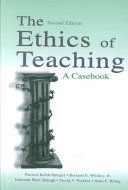
The Ethics of Teaching provides a frank discussion of the most frequently encountered ethical dilemmas that can arise in educational settings, as well as tips on how to avoid these predicaments and how to deal with them when they do occur. The goal is to stimulate discussion and raise faculties’ consciousness about ethical issues. Ethical dilemmas are presented as short, engaging case scenarios, most of which are based on actual situations, so as to furnish more realistic and interesting stimuli for individual reflection and group discussion. These scenarios offer the opportunity to consider the subtle complexities inherent in the social and psychological contexts in which educator-student interactions occur and the effects of those complexities on ethical decision making. Each case is followed by a detailed analysis and advice. The book’s 195 cases are grouped into 22 chapters representing topics, such as the controversial classroom presentations and assignments, debatable testing and grading practices, problematic student-faculty interactions, dual-role relationships with students, collegial conflicts, managing very difficult students, and confidentiality dilemmas. The Ethics of Teaching: A Casebook, Second Edition: *focuses on commonly encountered ethical “gray areas” that have no clear solution; *includes questions to stimulate discussion of related ethical issues; *concludes with a chapter on prevention, peer mentoring, and intervention; and *serves as excellent “assigned reading” to stimulate group discussion in teaching workshops and faculty development programs. The first edition of this book evolved by collecting a variety of teaching situations that commonly occur in college and university settings. The authors then created responses to the situations and circulated both the cases and the responses to reviewers from a number of departments across the country. As a result, the vast majority of the cases are “discipline free.” The second edition features many new cases to reflect recent trends and events related to academic ethics. Questions were added to stimulate discussion and to further elaborate the issues. The Ethics of Teaching: A Casebook is ideal for college and university faculty, graduate assistants, and administrators involved in workshops, graduate teaching assistant courses, and faculty development and new faculty orientation programs. As a result of the book’s cross-disciplinary development, it will be beneficial to faculty from a broad spectrum of disciplines.
In this book John Kekes examines the indispensable role enjoyment plays in a good life. The key to it is the development of a style of life that combines an attitude and a manner of living and acting that jointly express one’s deepest concerns. Since such styles vary with characters and circumstances, a reasonable understanding of them requires attending to the particular and concrete details of individual lives. Reflection on works of literature is a better guide to this kind of understanding than the futile search for general theories and principles that preoccupies much of contemporary moral thought. Enjoyment proceeds by the detailed examination of particular cases, shows how this kind of reflection can be reasonably conducted, and how the quest for universality and impartiality is misguided in this context. Central to the argument is a practical, particular, pluralistic, and yet objective conception of reason that rejects the pervasive contemporary tendency to regard reasons as good only if they are binding on all who aspire to live reasonably and morally. Reason in morality is neither theoretical nor general. Reasons for living and acting in particular ways are individually variable and none the worse for that. Kekes aims to reorient moral thought from deontological, contractarian, and consequentialist preoccupations toward a reasonable but pluralistic reflection on what individuals can do to make their lives better.
Ethics for Psychologists, 2nd Edition is a comprehensive handbook covering the full range of ethical challenges that confront psychologists in practice and research Written for all psychology practitioners and researchers Addresses new concerns such as ‘whistleblowing’, quantifying ethics, and Internet-related issues Features greatly expanded section of case studies, resolutions, and work exercises Suitable for all English-speaking countries beyond just North America Includes guidance on a variety of national ethics codes, including the European Meta-Code of Ethics and the UN Declaration of Human Rights
The idea of the quality of life is central to economic and social assessment and also to public policy, social legislation, and community programmes. However, the commonly used indicators of economic success such as per capita income are at best crude measures of the quality of life. There is a strong need for a systematic exploration of the content, reach, and relevance of the concept of the quality of life, and ways of making it concrete and usable.
ما از اخلاق چه انتظاری داریم؟ این سوال شاید تاحدودی برای عموم مردم و یا متخصصان این رشته قابل پاسخ باشد؛ اینکه خوب بودن را به ما بیاموزد و در تنظیم روابط فردی م...

جشن کتاب تهران به ایستگاه سی و یکم رسیده است. حال و احوال نشر کتاب خوب نیست و باید فرهنگدوستان را به خرید و هدیه دادن کتاب ترغیب نمود. خانه اخلاقپژوهان جوان ب...

بنیاد کتابهای اخلاق اسلامی عمدتا پالایش جان از آلودگیها و آراستن آن به زیباییها است. اندیشه محوری این قبیل کتابها آن است که انسان فعلی آنی نیست که باید باشد...

-
0 Comments