Notice: تابع WP_Block_Type_Registry::register به طورنادرست فراخوانی شد. نامهای نوع بلوک نباید حروف بزرگ داشته باشند. لطفاً برای اطلاعات بیشتر، اشکال زدایی در وردپرس را مشاهده کنید. (این پیام در نگارش 5.0.0 افزوده شده است.) in /home/ethicsho/public_html/wp-includes/functions.php on line 5313
Warning: Use of undefined constant TDC_PATH_LEGACY - assumed 'TDC_PATH_LEGACY' (this will throw an Error in a future version of PHP) in /home/ethicsho/public_html/wp-content/plugins/td-composer/td-composer.php on line 109
Warning: Use of undefined constant TDSP_THEME_PATH - assumed 'TDSP_THEME_PATH' (this will throw an Error in a future version of PHP) in /home/ethicsho/public_html/wp-content/plugins/td-composer/td-composer.php on line 113 بایگانیهای Phyllis A. Tickle - خانه اخلاق پژوهان جوان Notice: Trying to access array offset on value of type bool in /home/ethicsho/public_html/wp-content/plugins/wp-ulike/inc/general-functions.php on line 807
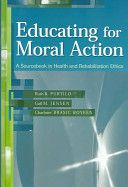
This new resource is written for physical therapy and occupational therapy administrators, curriculum coordinators and educators. Stemming from the summer 2003 “Dreamcatchers” Conference, Creighton University’s “Leadership in Ethics Education,” the authors have assembled a veritable “who’s who” of PT and OT academics to share their insights regarding contemporary issues in health and rehabilitation ethics. Going beyond the “nuts and bolts” of teaching ethics, the text aims to present pedagogical strategies that will ultimately change the face of how educators think, and consequently, how they teach ethics to the next generation of health professionals.
“A magisterial work (that) culminates twenty-five years of thinking about the problems of free will. For those who believe both that robust free will cannot survive in a deterministic climate and that a viable free will need be scientifically respectable, Kane’s work may prove salvific.” — Mark Bernstein, University of Texas at San Antonio. In the past quarter-century, there has been a resurgence of interest in philosophical questions about free will. After a clear and broad-reaching survey of these recent debates, Robert Kane presents his own controversial view. Arguing persuasively for a traditional incompatibilist or libertarian conception of free will, Kane demonstrates that such a conception can be made intelligible without appeals to obscure or mysterious forms of agency and thus can be reconciled with a contemporary scientific picture of the world.
How do modern Muslims adapt their traditions to engage with today’s world? Charles Tripp’s erudite and incisive book considers one of the most significant challenges faced by Muslims over the last sixty years: the challenge of capitalism. By reference to the works of noted Muslim scholars, the author shows how, faced by this challenge, these intellectuals devised a range of strategies which have enabled Muslims to remain true to their faith, whilst engaging effectively with a world not of their own making. The work is framed around the development of their ideas on Islamic socialism, economics and the rationale for Islamic banking. While some Muslims have resorted to confrontation or insularity to cope with the challenges of modernity, most have aspired to innovation and ingenuity in the search for compromise and interaction with global capitalism in the twenty-first century.
From the relative obscurity in which Levinas’s work languished until very recently, Emmanuel Levinas must now be judged as one of the most influential figures in contemporary Continental philosophy. There is no better guide than John Lewelyn to lead one through the thickets of Levinas’s prose. Bursting with questions, multiple references, cascading citations and multilingual puns and nuances, this book is the compelling record of intellectual obsession. Taking as its guiding thre the theme of genealogy, the book gives a broadly chronological and impressively manageable presentation of the whole sweep of the Levinas’s work. Balanced and finely grained, Llewelyn confronts questions of method, Heidegger, phenomenology, the theme of sensibility, religion, enjoyment, feminity, eros, justice and the political. The book reaches a stunning climax in a series of chapters that give a hestitant but tolerant discussion of the question of God in Levinas, the relation to Levinasian ethics to Nietzscheangenealogy, and an extraordinary discussion of metaphor that leads into a wholly original analysis of Levinas’s poetics and metaphorics. The book concludes with a sensitive reading of the autobiographical epigraphs to Levinas’sOtherwise than Being…and a consideration of the Holocaust.
ما از اخلاق چه انتظاری داریم؟ این سوال شاید تاحدودی برای عموم مردم و یا متخصصان این رشته قابل پاسخ باشد؛ اینکه خوب بودن را به ما بیاموزد و در تنظیم روابط فردی م...

جشن کتاب تهران به ایستگاه سی و یکم رسیده است. حال و احوال نشر کتاب خوب نیست و باید فرهنگدوستان را به خرید و هدیه دادن کتاب ترغیب نمود. خانه اخلاقپژوهان جوان ب...

بنیاد کتابهای اخلاق اسلامی عمدتا پالایش جان از آلودگیها و آراستن آن به زیباییها است. اندیشه محوری این قبیل کتابها آن است که انسان فعلی آنی نیست که باید باشد...

-
0 Comments