Notice: تابع WP_Block_Type_Registry::register به طورنادرست فراخوانی شد. نامهای نوع بلوک نباید حروف بزرگ داشته باشند. لطفاً برای اطلاعات بیشتر، اشکال زدایی در وردپرس را مشاهده کنید. (این پیام در نگارش 5.0.0 افزوده شده است.) in /home/ethicsho/public_html/wp-includes/functions.php on line 5313
Warning: Use of undefined constant TDC_PATH_LEGACY - assumed 'TDC_PATH_LEGACY' (this will throw an Error in a future version of PHP) in /home/ethicsho/public_html/wp-content/plugins/td-composer/td-composer.php on line 109
Warning: Use of undefined constant TDSP_THEME_PATH - assumed 'TDSP_THEME_PATH' (this will throw an Error in a future version of PHP) in /home/ethicsho/public_html/wp-content/plugins/td-composer/td-composer.php on line 113 بایگانیهای Philip Pettit - خانه اخلاق پژوهان جوان Notice: Trying to access array offset on value of type bool in /home/ethicsho/public_html/wp-content/plugins/wp-ulike/inc/general-functions.php on line 807
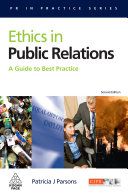
Ethical questions and dilemmas are inherent to public relations, and ensuring that practitioners operate ethically is fundamental to the professionalism and credibility of the field. This updated edition of “Ethics in Public Relations” gives readers the tools and knowledge to enable them to make defensible decisions and outlines the important ethical concerns in public relations and corporate communications. Written in a practical and approachable style, this book provides clear insights into the personal and professional issues that affect public relations practitioners. It examines how an individual’s sense of morality has an impact on decision-making and ethical business behavior. This new edition includes new material on virtue ethics, personal ethics, ethics in social media, ghost writing and deception in PR, and moral responsibilities of organizations.
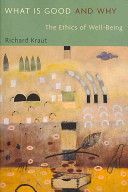
What is good? How can we know, and how important is it? In this book Richard Kraut, one of our most respected analytical philosophers, reorients these questions around the notion of what causes human beings to flourish–that is, what is good for us. Observing that we can sensibly talk about what is good for plants and animals no less than what is good for people, Kraut advocates a general principle that applies to the entire world of living things: what is good for complex organisms consists in the maturation and exercise of their natural powers.Drawing on the insights of ancient Greek philosophy, Kraut develops this thought into a good-centered moral philosophy, an “ethics of well-being” that requires all of our efforts to do some good. Even what is good of a kind–good poems no less than good people–must be good for someone. Pleasure plays a key role in this idea of flourishing life, but Kraut opposes the current philosophical orthodoxy of well-being, which views a person’s welfare as a construct of rational desires or plans, actual or ideal. The practical upshot of Kraut’s theory is that many common human pursuits–for riches, fame, domination–are in themselves worthless, while some of the familiar virtues–justice, honesty, and autonomy–are good for every human being.
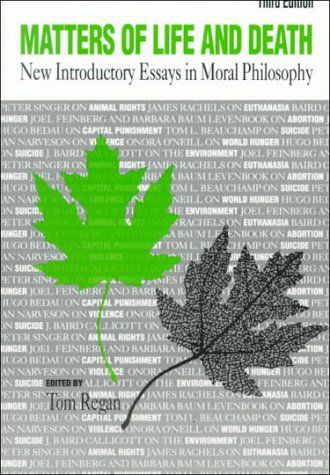
Matters of Life and Death, 3/e is a collection of original essays devoted to the major moral issues of the day, including abortion, euthanasia, the death penalty, famine, war, suicide, the environment, and animal rights. The essays are written by moral philosophers who are among the leading thinkers of the world. The previous two editions of this book have been heralded for the clarity and accessibility of the essays, and both editions have enjoyed strong options. The third edition is even better.
When does a person qualify for protected and continuing life? At a time when technology can sustain marginal life, it is ever more important to understand what constitutes a person. What are the medical, ethical, mental, legal, and philosophical criteria that determine protectable human life? By providing a much-needed religious/philosophical context for the discussion – examining contemporary thinking on just what constitutes valuable life – Walters broadens his inquiry beyond the human to include other animals and also deals with the phenomenon of anencephalic infants, those who are born without higher brains. Searching for a measurable and humane standard of personhood, Walters looks at its current definition and declares it inadequate. He offers instead the idea of proximate personhood, with criteria for helping to determine which individuals possess a unique claim to life.
In recent years, libertarian impulses have increasingly influenced national and economic debates, from welfare reform to efforts to curtail affirmative action. Murray N. Rothbard’s classic The Ethics of Liberty stands as one of the most rigorous and philosophically sophisticated expositions of the libertarian political position. What distinguishes Rothbard’s book is the manner in which it roots the case for freedom in the concept of natural rights and applies it to a host of practical problems. An economist by profession, Rothbard here proves himself equally at home with philosophy. And while his conclusions are radical–that a social order that strictly adheres to the rights of private property must exclude the institutionalized violence inherent in the state–his applications of libertarian principles prove surprisingly practical for a host of social dilemmas, solutions to which have eluded alternative traditions. The Ethics of Liberty authoritatively established the anarcho-capitalist economic system as the most viable and the only principled option for a social order based on freedom. This edition is newly indexed and includes a new introduction that takes special note of the Robert Nozick-Rothbard controversies.
ما از اخلاق چه انتظاری داریم؟ این سوال شاید تاحدودی برای عموم مردم و یا متخصصان این رشته قابل پاسخ باشد؛ اینکه خوب بودن را به ما بیاموزد و در تنظیم روابط فردی م...

جشن کتاب تهران به ایستگاه سی و یکم رسیده است. حال و احوال نشر کتاب خوب نیست و باید فرهنگدوستان را به خرید و هدیه دادن کتاب ترغیب نمود. خانه اخلاقپژوهان جوان ب...

بنیاد کتابهای اخلاق اسلامی عمدتا پالایش جان از آلودگیها و آراستن آن به زیباییها است. اندیشه محوری این قبیل کتابها آن است که انسان فعلی آنی نیست که باید باشد...

-
0 Comments