Notice: تابع WP_Block_Type_Registry::register به طورنادرست فراخوانی شد. نامهای نوع بلوک نباید حروف بزرگ داشته باشند. لطفاً برای اطلاعات بیشتر، اشکال زدایی در وردپرس را مشاهده کنید. (این پیام در نگارش 5.0.0 افزوده شده است.) in /home/ethicsho/public_html/wp-includes/functions.php on line 5313
Warning: Use of undefined constant TDC_PATH_LEGACY - assumed 'TDC_PATH_LEGACY' (this will throw an Error in a future version of PHP) in /home/ethicsho/public_html/wp-content/plugins/td-composer/td-composer.php on line 109
Warning: Use of undefined constant TDSP_THEME_PATH - assumed 'TDSP_THEME_PATH' (this will throw an Error in a future version of PHP) in /home/ethicsho/public_html/wp-content/plugins/td-composer/td-composer.php on line 113 بایگانیهای Philip J. Kain - خانه اخلاق پژوهان جوان Notice: Trying to access array offset on value of type bool in /home/ethicsho/public_html/wp-content/plugins/wp-ulike/inc/general-functions.php on line 807
Equality is the endangered species of political ideals. Even left-of-center politicians reject equality as an ideal: government must combat poverty, they say, but need not strive that its citizens be equal in any dimension. In his new book Ronald Dworkin insists, to the contrary, that equality is the indispensable virtue of democratic sovereignty. A legitimate government must treat all its citizens as equals, that is, with equal respect and concern, and, since the economic distribution that any society achieves is mainly the consequence of its system of law and policy, that requirement imposes serious egalitarian constraints on that distribution. What distribution of a nation’s wealth is demanded by equal concern for all? Dworkin draws upon two fundamental humanist principles–first, it is of equal objective importance that all human lives flourish, and second, each person is responsible for defining and achieving the flourishing of his or her own life–to ground his well-known thesis that true equality means equality in the value of the resources that each person commands, not in the success he or she achieves. Equality, freedom, and individual responsibility are therefore not in conflict, but flow from and into one another as facets of the same humanist conception of life and politics. Since no abstract political theory can be understood except in the context of actual and complex political issues, Dworkin develops his thesis by applying it to heated contemporary controversies about the distribution of health care, unemployment benefits, campaign finance reform, affirmative action, assisted suicide, and genetic engineering.
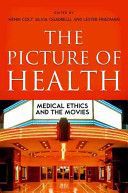
Film and literature have long been mined for interesting examples and case studies in order to teach biomedical ethics to students. This volume presents a collection of about 80 very brief, accessible essays written by international experts from medicine, social sciences, and the humanities, all of whom have experience using film in their teaching of medical ethics. Each essay focuses on a single scene and the ethical issues it raises, and the volume editors have provided strict guidelines for what each essay must do, while also allowing for some creative freedom. While some of the films are obvious candidates with medical themes — “Million Dollar Baby”, “The Diving Bell and the Butterfly” — some are novel choices, such as “Pan’s Labyrinth” or “As Good as it Gets”. The book will contain several general introductory chapters to major sections, and a complete filmography and cross-index at the end of the book where readers can look up individual films or ethical issues.
Peter Singer’s remarkably clear and comprehensive Practical Ethics has become a classic introduction to applied ethics since its publication in 1979 and has been translated into many languages. For this second edition the author has revised all the existing chapters, added two new ones, and updated the bibliography. He has also added an appendix describing some of the deep misunderstanding of, and consequent violent reaction to, the book in Germany, Austria, and Switzerland where the book has tested the limits of freedom of speech. The focus of the book is the application of ethics to difficult and controversial social questions: equality and discrimination by race, sex, ability, or species; abortion, euthanasia, and embryo experimentation; the moral status of animals; political violence and civil disobedience; overseas aid and the obligation to assist others; responsibility for the environment; the treatment of refugees. Singer explains and assesses relevant arguments in a perspicuous, non-doctrinaire way. He structures the book to show how contemporary controversies often have deep philosophical roots; and he presents an ethical theory of his own that can be applied consistently and convincingly to all the practical cases. The book’s primary readership remains teachers and students of ethics whether in philosophy or some other branch of the humanities or social sciences. However, such is the clarity of the book’s style and structure that it should interest any thinking person concerned with the most difficult social problems facing us as we approach the twenty-first century.
This Intellectual Property Practice Professional Guide is designed to give apprentice solicitors a clear and thorough understanding of the current intellectual property practice and procedure. In particular, it will delve more intensely into the many areas of IP, such as trade marks, passing off, patents, copyright, databases, computer programs, industrial designs, domain names, licensing, and confidential information. Intellectual Propertycomprehensively deals with the practice issues most frequently encountered by apprentices in this area and incorporates recent developments in law and practice. It explains the principles of Intellectual Property practice clearly and concisely by experts in the field and will prove to be an essential text for both apprentices and practitioners in this field.
ما از اخلاق چه انتظاری داریم؟ این سوال شاید تاحدودی برای عموم مردم و یا متخصصان این رشته قابل پاسخ باشد؛ اینکه خوب بودن را به ما بیاموزد و در تنظیم روابط فردی م...

جشن کتاب تهران به ایستگاه سی و یکم رسیده است. حال و احوال نشر کتاب خوب نیست و باید فرهنگدوستان را به خرید و هدیه دادن کتاب ترغیب نمود. خانه اخلاقپژوهان جوان ب...

بنیاد کتابهای اخلاق اسلامی عمدتا پالایش جان از آلودگیها و آراستن آن به زیباییها است. اندیشه محوری این قبیل کتابها آن است که انسان فعلی آنی نیست که باید باشد...

-
0 Comments