Notice: تابع WP_Block_Type_Registry::register به طورنادرست فراخوانی شد. نامهای نوع بلوک نباید حروف بزرگ داشته باشند. لطفاً برای اطلاعات بیشتر، اشکال زدایی در وردپرس را مشاهده کنید. (این پیام در نگارش 5.0.0 افزوده شده است.) in /home/ethicsho/public_html/wp-includes/functions.php on line 5313
Warning: Use of undefined constant TDC_PATH_LEGACY - assumed 'TDC_PATH_LEGACY' (this will throw an Error in a future version of PHP) in /home/ethicsho/public_html/wp-content/plugins/td-composer/td-composer.php on line 109
Warning: Use of undefined constant TDSP_THEME_PATH - assumed 'TDSP_THEME_PATH' (this will throw an Error in a future version of PHP) in /home/ethicsho/public_html/wp-content/plugins/td-composer/td-composer.php on line 113 بایگانیهای Peter R. Garber - خانه اخلاق پژوهان جوان Notice: Trying to access array offset on value of type bool in /home/ethicsho/public_html/wp-content/plugins/wp-ulike/inc/general-functions.php on line 807
One of this century’s most important philosophers here focuses on Plato’s PROTAGORAS, PHAEDO, REPUBLIC, and PHILEBUS and on Aristotle’s three moral treatises to show the essential continuity of Platonic and Aristotelian reflection on the nature of the good. In so doing Gadamer not only succeeds in giving us an incisive example of his interpretive art but also gives us a clearer picture of the ethical dimension of his own philosophy and the practical implications of hermeneutical theory.
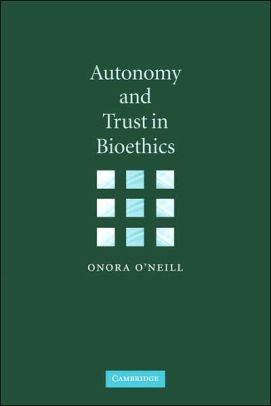
Why has autonomy been a leading idea in philosophical writing on bioethics, and why has trust been marginal? In this important book, Onora O’Neill suggests that the conceptions of individual autonomy so widely relied on in bioethics are philosophically and ethically inadequate, and that they undermine rather than support relations of trust. She shows how Kant’s non-individualistic view of autonomy provides a stronger basis for an approach to medicine, science and biotechnology, and does not marginalize untrustworthiness, while also explaining why trustworthy individuals and institutions are often undeservingly mistrusted. Her arguments are illustrated with issues raised by practices such as the use of genetic information by the police or insurers, research using human tissues, uses of new reproductive technologies, and media practices for reporting on medicine, science and technology. Autonomy and Trust in Bioethics will appeal to a wide range of readers in ethics, bioethics and related disciplines.
This volume explores Confucian views regarding the human body, health, virtue, suffering, suicide, euthanasia, `human drugs,’ human experimentation, and justice in health care distribution. These views are rooted in Confucian metaphysical, cosmological, and moral convictions, which stand in contrast to modern Western liberal perspectives in a number of important ways. In the contemporary world, a wide variety of different moral traditions flourish; there is real moral diversity. Given this circumstance, difficult and even painful ethical conflicts often occur between the East and the West with regard to the issues of life, birth, reproduction, and death. The essays in this volume analyze the ways in which Confucian bioethics can clarify important moral concepts, provide arguments, and offer ethical guidance. The volume should be of interest to both general readers coming afresh to the study of bioethics, ethics, and Confucianism, as well as for philosophers, ethicists, and other scholars already familiar with the subject.
The four main tenets of life are explored in this unique new book that examines the interface between psychology and management. Based on his own experiences as a clinician and psychoanalyst, the author provides insights into the issue of the life/work balance.
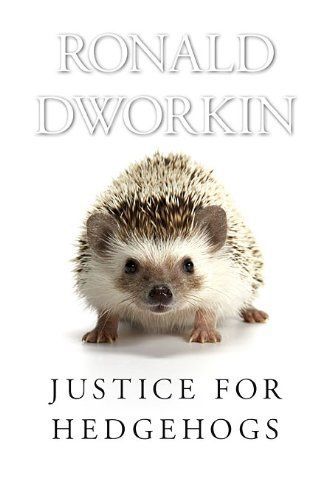
The fox knows many things, the Greeks said, but the hedgehog knows one big thing. In his most comprehensive work the author argues that value in all its forms is one big thing: that what truth is, life means, morality requires, and justice demands are different aspects of the same large question. He develops original theories on a great variety of issues very rarely considered in the same book: moral skepticism, literary, artistic, and historical interpretation, free will, ancient moral theory, being good and living well, liberty, equality, and law among many other topics. What we think about any one of these must stand up, eventually, to any argument we find compelling about the rest. Skepticism in all its forms, philosophical, cynical, or post-modern, threatens that unity. The Galilean revolution once made the theological world of value safe for science. But the new republic gradually became a new empire: the modern philosophers inflated the methods of physics into a totalitarian theory of everything. They invaded and occupied all the honorifics, reality, truth, fact, ground, meaning, knowledge, and being, and dictated the terms on which other bodies of thought might aspire to them, and skepticism has been the inevitable result. The author feels we need a new revolution, and that we must make the world of science safe for value.
ما از اخلاق چه انتظاری داریم؟ این سوال شاید تاحدودی برای عموم مردم و یا متخصصان این رشته قابل پاسخ باشد؛ اینکه خوب بودن را به ما بیاموزد و در تنظیم روابط فردی م...

جشن کتاب تهران به ایستگاه سی و یکم رسیده است. حال و احوال نشر کتاب خوب نیست و باید فرهنگدوستان را به خرید و هدیه دادن کتاب ترغیب نمود. خانه اخلاقپژوهان جوان ب...

بنیاد کتابهای اخلاق اسلامی عمدتا پالایش جان از آلودگیها و آراستن آن به زیباییها است. اندیشه محوری این قبیل کتابها آن است که انسان فعلی آنی نیست که باید باشد...

-
0 Comments