Notice: تابع WP_Block_Type_Registry::register به طورنادرست فراخوانی شد. نامهای نوع بلوک نباید حروف بزرگ داشته باشند. لطفاً برای اطلاعات بیشتر، اشکال زدایی در وردپرس را مشاهده کنید. (این پیام در نگارش 5.0.0 افزوده شده است.) in /home/ethicsho/public_html/wp-includes/functions.php on line 5313
Warning: Use of undefined constant TDC_PATH_LEGACY - assumed 'TDC_PATH_LEGACY' (this will throw an Error in a future version of PHP) in /home/ethicsho/public_html/wp-content/plugins/td-composer/td-composer.php on line 109
Warning: Use of undefined constant TDSP_THEME_PATH - assumed 'TDSP_THEME_PATH' (this will throw an Error in a future version of PHP) in /home/ethicsho/public_html/wp-content/plugins/td-composer/td-composer.php on line 113 بایگانیهای PETER BAUMANN - خانه اخلاق پژوهان جوان Notice: Trying to access array offset on value of type bool in /home/ethicsho/public_html/wp-content/plugins/wp-ulike/inc/general-functions.php on line 807
Human beings have the unique ability to consciously reflect on the nature of the self. But reflection has its costs. We can ask what the self is, but as David Hume pointed out, the self, once reflected upon, may be nowhere to be found. The favored view is that we are material beings living in the material world. But if so, a host of destabilizing questions surface. If persons are just a sophisticated sort of animal, then what sense is there to the idea that we are free agents who control our own destinies? What makes the life of any animal, even one as sophisticated as Homo sapiens, worth anything? What place is there in a material world for God? And if there is no place for a God, then what hold can morality possibly have on us–why isn’t everything allowed? Flanagan’s collection of essays takes on these questions and more. He continues the old philosophical project of reconciling a scientific view of ourselves with a view of ourselves as agents of free will and meaning-makers. But to this project he brings the latest insights of neuroscience, cognitive science, and psychiatry, exploring topics such as whether the conscious mind can be explained scientifically, whether dreams are self-expressive or just noise, the moral socialization of children, and the nature of psychological phenomena such as multiple personality disorder and false memory syndrome. What emerges from these explorations is a liberating vision which can make sense of the self, agency, character transformation, and the value and worth of human life. Flanagan concludes that nothing about a scientific view of persons must lead to nihilism.
Canadian Intellectual Property Law and Strategy provides a comprehensive overview of the Canadian law relating to trademarks, copyright and industrial designs, along with strategic, practice-oriented commentary regarding how such laws can best be used for business advantage. The first part of the book is devoted to trademarks. The material in this section, in addition to providing an overview of Canadian trademark law, will deal with how a foreign trademark owner can use the system most advantageously. The initial focus will be on acquisition of rights-for example, an application can be filed in Canada based on foreign registration and use and a registration can be obtained without having to show any use of the trade mark in Canada-while latter sections will emphasize the best strategies to maintain and protect trademark rights in Canada. The second part of the book is devoted to copyright, with less emphasis on the specific industries-e.g., movie production-that typically rely on the copyright system than a broad, business-oriented treatment that reflects the potentially far-reaching impact of the law. (For example, copyright can subsist in a design trade mark if sufficiently original.) The approach will thus be of a general commercial nature, emphasizing how legislation can be used to protect rights in Canada, with specific attention paid to understanding which rights are available and the steps that should be taken to protect those rights, whether by means of the appropriate assignments and registrations, or on enforcement actions in the Canadian courts. The third part of the book focuses on industrial designs, and will explain what needs to be done and when by manufacturers to protect their products. The emphasis will initially be on understanding the system and the potential benefits available by obtaining registrations, with the rest of the section focusing on the steps required to protect and assert those rights against infringers.
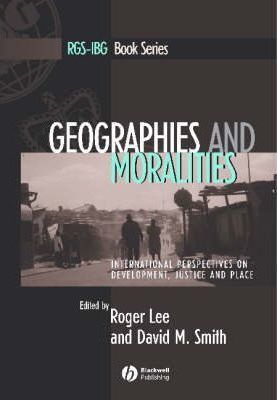
This topical book addresses contemporary concern with the interconnections between geography and morality. Covers both the geographical context of morality, and moralities in geographical methods and practices. Contains up-to-date case studies based on original research. Deals with controversial issues, such as problems of globalization, European integration, human rights in Nigeria, territorial conflict in Israel, and land reform in post-apartheid South Africa. The editors are well-published leading international authorities. The contributors are drawn from Australia, Eastern Europe, Israel, South Africa, the UK and the US.
ما از اخلاق چه انتظاری داریم؟ این سوال شاید تاحدودی برای عموم مردم و یا متخصصان این رشته قابل پاسخ باشد؛ اینکه خوب بودن را به ما بیاموزد و در تنظیم روابط فردی م...

جشن کتاب تهران به ایستگاه سی و یکم رسیده است. حال و احوال نشر کتاب خوب نیست و باید فرهنگدوستان را به خرید و هدیه دادن کتاب ترغیب نمود. خانه اخلاقپژوهان جوان ب...

بنیاد کتابهای اخلاق اسلامی عمدتا پالایش جان از آلودگیها و آراستن آن به زیباییها است. اندیشه محوری این قبیل کتابها آن است که انسان فعلی آنی نیست که باید باشد...

-
0 Comments