Notice: تابع WP_Block_Type_Registry::register به طورنادرست فراخوانی شد. نامهای نوع بلوک نباید حروف بزرگ داشته باشند. لطفاً برای اطلاعات بیشتر، اشکال زدایی در وردپرس را مشاهده کنید. (این پیام در نگارش 5.0.0 افزوده شده است.) in /home/ethicsho/public_html/wp-includes/functions.php on line 5313
Warning: Use of undefined constant TDC_PATH_LEGACY - assumed 'TDC_PATH_LEGACY' (this will throw an Error in a future version of PHP) in /home/ethicsho/public_html/wp-content/plugins/td-composer/td-composer.php on line 109
Warning: Use of undefined constant TDSP_THEME_PATH - assumed 'TDSP_THEME_PATH' (this will throw an Error in a future version of PHP) in /home/ethicsho/public_html/wp-content/plugins/td-composer/td-composer.php on line 113 بایگانیهای Peter A. Singer - خانه اخلاق پژوهان جوان Notice: Trying to access array offset on value of type bool in /home/ethicsho/public_html/wp-content/plugins/wp-ulike/inc/general-functions.php on line 807
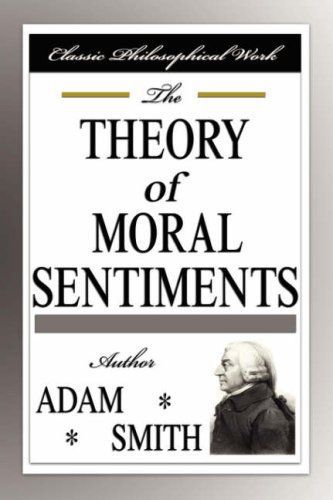
The Theory of Moral Sentiments is an important philosophical work by Scottish philosopher and political economist Adam Smith. Smith writes largely about moral rights, focusing on the nature of morality and the motive of morality. This key work is divided into four parts which are Ethics and Virtue, Private Rights and Natural Liberty, Familial Rights and State and Individual Rights. The Theory of Moral Sentiments is highly recommended for those who are interested in the writings of Adam Smith and also those who are discovering his works for the first time.
The growth of evidence-based medicine has occurred against a backdrop of health care reform, managed care, cost containment, and quality improvement. Clinicians have been urged to adopt the rigors of science while remaining true to their ‘clinical judgment’. This incisive book reviews the history and conceptual origins of evidence-based practice and discusses key ethical issues that arise in clinical practice, public health, and health policy. It is essential reading for all physicians, and practitioners in epidemiology and public health.
“The concept of autonomy is one of Kant’s central legacies for contemporary moral thought. We often invoke autonomy as both a moral ideal and a human right, especially a right to determine oneself independently of foreign determinants; indeed, to violate a person’s autonomy is considered to be a serious moral offence. Yet while contemporary philosophy claims Kant as the originator of its notion of autonomy, Kant’s own conception of the term seems to differ in important respects from our present-day interpretation. Kant on Moral Autonomy brings together a distinguished group of scholars who explore the following questions: what is Kant’s conception of autonomy? What is its history and its influence on contemporary conceptions? And what is its moral significance? Their essays will be of interest both to scholars and students working on Kantian moral philosophy and to anyone interested in the subject of autonomy”–
ما از اخلاق چه انتظاری داریم؟ این سوال شاید تاحدودی برای عموم مردم و یا متخصصان این رشته قابل پاسخ باشد؛ اینکه خوب بودن را به ما بیاموزد و در تنظیم روابط فردی م...

جشن کتاب تهران به ایستگاه سی و یکم رسیده است. حال و احوال نشر کتاب خوب نیست و باید فرهنگدوستان را به خرید و هدیه دادن کتاب ترغیب نمود. خانه اخلاقپژوهان جوان ب...

بنیاد کتابهای اخلاق اسلامی عمدتا پالایش جان از آلودگیها و آراستن آن به زیباییها است. اندیشه محوری این قبیل کتابها آن است که انسان فعلی آنی نیست که باید باشد...

-
0 Comments