Notice: تابع WP_Block_Type_Registry::register به طورنادرست فراخوانی شد. نامهای نوع بلوک نباید حروف بزرگ داشته باشند. لطفاً برای اطلاعات بیشتر، اشکال زدایی در وردپرس را مشاهده کنید. (این پیام در نگارش 5.0.0 افزوده شده است.) in /home/ethicsho/public_html/wp-includes/functions.php on line 5313
Warning: Use of undefined constant TDC_PATH_LEGACY - assumed 'TDC_PATH_LEGACY' (this will throw an Error in a future version of PHP) in /home/ethicsho/public_html/wp-content/plugins/td-composer/td-composer.php on line 109
Warning: Use of undefined constant TDSP_THEME_PATH - assumed 'TDSP_THEME_PATH' (this will throw an Error in a future version of PHP) in /home/ethicsho/public_html/wp-content/plugins/td-composer/td-composer.php on line 113 بایگانیهای Paul Blumberg - خانه اخلاق پژوهان جوان Notice: Trying to access array offset on value of type bool in /home/ethicsho/public_html/wp-content/plugins/wp-ulike/inc/general-functions.php on line 807
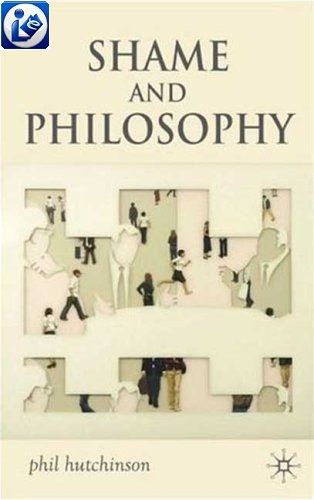
Engaging with current research in the philosophy of emotions, both analytic and continental, the author argues that reductionist accounts of emotions leave us in a state of poverty regarding our understanding of our world and of ourselves.
Amos Tversky (1937–1996), a towering figure in cognitive and mathematical psychology, devoted his professional life to the study of similarity, judgment, and decision making. He had a unique ability to master the technicalities of normative ideals and then to intuit and demonstrate experimentally their systematic violation due to the vagaries and consequences of human information processing. He created new areas of study and helped transform disciplines as varied as economics, law, medicine, political science, philosophy, and statistics.This book collects forty of Tversky’s articles, selected by him in collaboration with the editor during the last months of Tversky’s life. It is divided into three sections: Similarity, Judgment, and Preferences. The Preferences section is subdivided into Probabilistic Models of Choice, Choice under Risk and Uncertainty, and Contingent Preferences. Included are several articles written with his frequent collaborator, Nobel Prize-winning economist Daniel Kahneman.
We are pleased to annouce that God’s Companions by Samuel Wells has been shortlisted for the 2007 Michael Ramsey Prize for theological writing.www.michaelramseyprize.org.uk Grounded in Samuel Wells’ experience of ordinary lives in poorer neighborhoods, this book presents a striking and imaginative approach to Christian ethics. It argues that Christian ethics is founded on God, on the practices of human community, and on worship, and that ethics is fundamentally a reflection of God’s abundance.Wells synthesizes dogmatic, liturgical, ethical, scriptural, and pastoral approaches to theology in order to make a bold claim for the centrality of the local church in theological reflection. He considers the abundance of gifts God gives through the practices of the Church, particularly the Eucharist. His central thesis, which governs his argument throughout, is that God gives his people everything they need to worship him, be his friends, and eat with him. Wells engages with serious scholarly material, yet sets out the issues lucidly for a student audience.
In this book, Slote offers the first full-scale foundational account of virtue ethics to have appeared since the recent revival of interest in the ethics of virtue. Slote advocates a particular form of such ethics for its intuitive and structural advantages over Kantianism, utilitarianism, and common-sense morality, and he argues that the problems of other views can be avoided and a contemporary plausible version of virtue ethics achieved only by abandoning specifically moral concepts for general aretaic notions like admirability and virtue. Although this study is not bound by particular Aristotelian doctrines, it places an Aristotelian emphasis on both self-benefiting and other-benefiting virtues. Slote criticizes Kantian and common-sense morality for internal incoherencies and for downgrading the moral individual and her well-being in some previously unnoticed ways. By contrast, this book defends a distinctive, intuitive, and symmetric ethical principle according to which we should balance self-concern with concern for others, but it also concludes that there is, contrary to utilitarianism, no single basis for status as a virtue nor any simple relation between the virtues and human well-being.
ما از اخلاق چه انتظاری داریم؟ این سوال شاید تاحدودی برای عموم مردم و یا متخصصان این رشته قابل پاسخ باشد؛ اینکه خوب بودن را به ما بیاموزد و در تنظیم روابط فردی م...

جشن کتاب تهران به ایستگاه سی و یکم رسیده است. حال و احوال نشر کتاب خوب نیست و باید فرهنگدوستان را به خرید و هدیه دادن کتاب ترغیب نمود. خانه اخلاقپژوهان جوان ب...

بنیاد کتابهای اخلاق اسلامی عمدتا پالایش جان از آلودگیها و آراستن آن به زیباییها است. اندیشه محوری این قبیل کتابها آن است که انسان فعلی آنی نیست که باید باشد...

-
0 Comments