Notice: تابع WP_Block_Type_Registry::register به طورنادرست فراخوانی شد. نامهای نوع بلوک نباید حروف بزرگ داشته باشند. لطفاً برای اطلاعات بیشتر، اشکال زدایی در وردپرس را مشاهده کنید. (این پیام در نگارش 5.0.0 افزوده شده است.) in /home/ethicsho/public_html/wp-includes/functions.php on line 5313
Warning: Use of undefined constant TDC_PATH_LEGACY - assumed 'TDC_PATH_LEGACY' (this will throw an Error in a future version of PHP) in /home/ethicsho/public_html/wp-content/plugins/td-composer/td-composer.php on line 109
Warning: Use of undefined constant TDSP_THEME_PATH - assumed 'TDSP_THEME_PATH' (this will throw an Error in a future version of PHP) in /home/ethicsho/public_html/wp-content/plugins/td-composer/td-composer.php on line 113 بایگانیهای Nick Russell - خانه اخلاق پژوهان جوان Notice: Trying to access array offset on value of type bool in /home/ethicsho/public_html/wp-content/plugins/wp-ulike/inc/general-functions.php on line 807
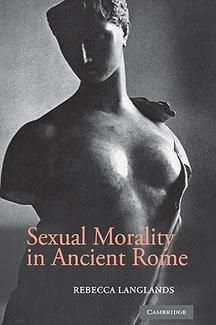
Traditionally, scholars have approached Roman sexuality using categories of sexual ethics drawn from contemporary, Western society. In this book Dr Langlands seeks to move away from these towards a deeper understanding of the issues that mattered to the Romans themselves, and the ways in which they negotiated them, by focusing on the untranslatable concept of pudicitia (broadly meaning ‘sexual virtue’). She offers a series of nuanced close readings of texts from a wide spectrum of Latin literature, including history, oratory, love poetry and Valerius Maximus’ work Memorable Deeds and Sayings. Pudicitia emerges as a controversial and unsettled topic, at the heart of Roman debates about the difference between men and women, the relation between mind and body, and the ethics of power and status differentiation within Roman culture. The book develops strategies for approaching the study of an ancient culture through sensitive critical readings of its literary productions.
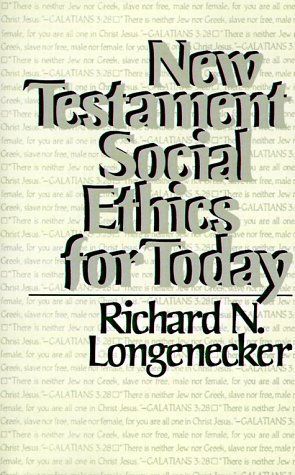
To Answer the Question of what role the New Testament should play in the formation and expression of Christian social morality today, Richard Longenecker here proposes a developmental hermeneutic, which distinguishes between “dedared principles” and “described practices” in the New Testament writings. With this distinction in mind; he focuses on the three couplets of Galatians 3:28 – “neither Jew nor Greek, slave nor free, male nor female” – showing how these matters were treated in early Christian thought and explaining their meaning for us today. In so doing, Longenecker lays a hermeneutical foundation for the much larger discussion of Christian social ethics. Book jacket.
Emmanuel Levinas was a significant contributor to the field of philosophy, phenomenology and religion. A key interpreter of Husserl, he stressed the importance of attitudes to other people in any philosophical system. For Levinas, to be a subject is to take responsibility for others as well as yourself. He regarded ethics as the foundation for all other philosophy, but later admitted it could also be the foundation for theology. Michael Purcell outlines the basic themes of Levinas’ thought and the ways in which they might be deployed in fundamental and practical theology, and the study of the phenomenon of religion.
Why does society allow, or even encourage, private appropriation of inventions? When do patents encourage competition, when do they hamper it? How should society design the compromise between the interest of the inventor and the interest of the users of patented inventions? How should the patent system adapt to new technological areas? These questions and many more are addressed by the authors in this groundbreaking analysis of the economics behind the European patent system. Beginning with the history and principles of the patent system, the book then examines the economic effects of patenting on innovation and the diffusion of technology and growth. Throughout the book the theory and the reality are discussed alongside real world examples and comparison between the European, USA, and Japanese patent systems.
ما از اخلاق چه انتظاری داریم؟ این سوال شاید تاحدودی برای عموم مردم و یا متخصصان این رشته قابل پاسخ باشد؛ اینکه خوب بودن را به ما بیاموزد و در تنظیم روابط فردی م...

جشن کتاب تهران به ایستگاه سی و یکم رسیده است. حال و احوال نشر کتاب خوب نیست و باید فرهنگدوستان را به خرید و هدیه دادن کتاب ترغیب نمود. خانه اخلاقپژوهان جوان ب...

بنیاد کتابهای اخلاق اسلامی عمدتا پالایش جان از آلودگیها و آراستن آن به زیباییها است. اندیشه محوری این قبیل کتابها آن است که انسان فعلی آنی نیست که باید باشد...

-
0 Comments