Notice: تابع WP_Block_Type_Registry::register به طورنادرست فراخوانی شد. نامهای نوع بلوک نباید حروف بزرگ داشته باشند. لطفاً برای اطلاعات بیشتر، اشکال زدایی در وردپرس را مشاهده کنید. (این پیام در نگارش 5.0.0 افزوده شده است.) in /home/ethicsho/public_html/wp-includes/functions.php on line 5313
Warning: Use of undefined constant TDC_PATH_LEGACY - assumed 'TDC_PATH_LEGACY' (this will throw an Error in a future version of PHP) in /home/ethicsho/public_html/wp-content/plugins/td-composer/td-composer.php on line 109
Warning: Use of undefined constant TDSP_THEME_PATH - assumed 'TDSP_THEME_PATH' (this will throw an Error in a future version of PHP) in /home/ethicsho/public_html/wp-content/plugins/td-composer/td-composer.php on line 113 بایگانیهای Melissa Jane Dark - خانه اخلاق پژوهان جوان Notice: Trying to access array offset on value of type bool in /home/ethicsho/public_html/wp-content/plugins/wp-ulike/inc/general-functions.php on line 807
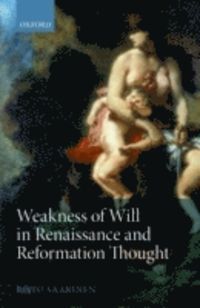
Weakness of will, the phenomenon of acting contrary to one’s own better judgment, has remained a prominent discussion topic of philosophy. The history of this discussion in ancient, medieval, and modern times has been outlined in many studies. Weakness of Will in Renaissance and Reformation Thought is, however, the first book to cover the fascinating source materials on weakness of will between 1350 and 1650. In addition to considering the work of a broad range of Renaissance authors (including Petrarch, Donato Acciaiuoli, John Mair, and Francesco Piccolomini), Risto Saarinen explores the theologically coloured debates of the Reformation period, such as those provided by Martin Luther, Philip Melanchthon, John Calvin, and Lambert Daneau. He goes on to discuss the impact of these authors on prominent figures of early modernity, including Shakespeare, Descartes, Spinoza, and Leibniz.While most of the historical research on weakness of will has focused on the reception history of Aristotle’s Nicomachean Ethics, Saarinen pays attention to the Platonic and Stoic discussions and their revival during the Renaissance and the Reformation. He also shows the ways in which Augustine’s discussion of the divided will is intertwined with the Christian reception of ancient Greek ethics, and argues that the theological underpinnings of early modern authors do not rule out weakness of will, but transform the philosophical discussion and lead it towards new solutions.
Hamlet tells Horatio that there are more things in heaven and earth than are dreamt of in his philosophy. InDouble Vision, philosopher and literary critic Tzachi Zamir argues that there are more things in Hamlet than are dreamt of–or at least conceded–by most philosophers. Making an original and persuasive case for the philosophical value of literature, Zamir suggests that certain important philosophical insights can be gained only through literature. But such insights cannot be reached if literature is deployed merely as an aesthetic sugaring of a conceptual pill. Philosophical knowledge is not opposed to, but is consonant with, the literariness of literature. By focusing on the experience of reading literature as literature and not philosophy, Zamir sets a theoretical framework for a philosophically oriented literary criticism that will appeal both to philosophers and literary critics. Double Visionis concerned with the philosophical understanding induced by the aesthetic experience of literature. Literary works can function as credible philosophical arguments–not ones in which claims are conclusively demonstrated, but in which claims are made plausible. Such claims, Zamir argues, are embedded within an experiential structure that is itself a crucial dimension of knowing. Developing an account of literature’s relation to knowledge, morality, and rhetoric, and advancing philosophical-literary readings ofRichard III, Macbeth, Romeo and Juliet, Othello, Antony and Cleopatra, Hamlet, andKing Lear, Zamir shows how his approach can open up familiar texts in surprising and rewarding ways.
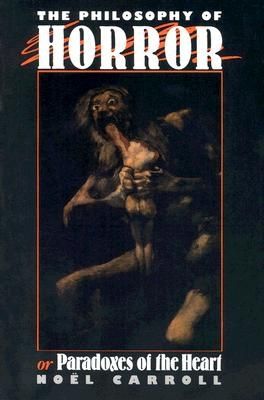
For decades, the horror genre has been a major popular entertainment and has dominated the publishing and film industries. Yet there exists no philosophical examination of the genre – the time for its aesthetic analysis is ripe. Noel Carroll, film scholar and philosopher, offers the first serious look at the aesthetics of horror. In this book he discusses the nature and narrative structures of the genre, dealing with horror as a “transmedia” phenomenon. A fan and serious student of the horror genre, Carroll brings to bear his comprehensive knowledge of obscure and forgotten works, as well as of the horror masterpieces. Working from a philosophical perspective, he tries to account for how people can find pleasure in having their wits scared out of them. What, after all, are those “paradoxes of the heart” that make us want to be horrified?
ما از اخلاق چه انتظاری داریم؟ این سوال شاید تاحدودی برای عموم مردم و یا متخصصان این رشته قابل پاسخ باشد؛ اینکه خوب بودن را به ما بیاموزد و در تنظیم روابط فردی م...

جشن کتاب تهران به ایستگاه سی و یکم رسیده است. حال و احوال نشر کتاب خوب نیست و باید فرهنگدوستان را به خرید و هدیه دادن کتاب ترغیب نمود. خانه اخلاقپژوهان جوان ب...

بنیاد کتابهای اخلاق اسلامی عمدتا پالایش جان از آلودگیها و آراستن آن به زیباییها است. اندیشه محوری این قبیل کتابها آن است که انسان فعلی آنی نیست که باید باشد...

-
0 Comments