Notice: تابع WP_Block_Type_Registry::register به طورنادرست فراخوانی شد. نامهای نوع بلوک نباید حروف بزرگ داشته باشند. لطفاً برای اطلاعات بیشتر، اشکال زدایی در وردپرس را مشاهده کنید. (این پیام در نگارش 5.0.0 افزوده شده است.) in /home/ethicsho/public_html/wp-includes/functions.php on line 5313
Warning: Use of undefined constant TDC_PATH_LEGACY - assumed 'TDC_PATH_LEGACY' (this will throw an Error in a future version of PHP) in /home/ethicsho/public_html/wp-content/plugins/td-composer/td-composer.php on line 109
Warning: Use of undefined constant TDSP_THEME_PATH - assumed 'TDSP_THEME_PATH' (this will throw an Error in a future version of PHP) in /home/ethicsho/public_html/wp-content/plugins/td-composer/td-composer.php on line 113 بایگانیهای Maxine Sheets-Johnston - خانه اخلاق پژوهان جوان Notice: Trying to access array offset on value of type bool in /home/ethicsho/public_html/wp-content/plugins/wp-ulike/inc/general-functions.php on line 807
Enlightenment philosophers are often credited with formulating many theories about humankind and society, and in our post-modern age, we still live with some of the very same compelling, contentious and often unresolved questions about ourselves and the world we live in. Author Aubrey Neal suggests that one of these issues that lingers with us today is scepticism, and in ‘How Skeptics do Ethics’, he unravels the thread of this philosophy from its origins in enlightenment thinking down to our present age. He contends that linguistics and language have not brought modern philosophy any closer to understanding the role and nature of ethics in our current science-based society. Going further, Neal suggests the contemporary reader meets traditional terms for ethical theory, plausible belief and moral action in a different world from the one in which they were coined. Instead, these considerations for modern thinkers require a coherent language practice suitable for the social context in which we live, and thus raise the question of the meaning of old philosophical debates and their value for our society today. Referencing such luminary thinkers as Hume, Kant, and Hegel, Neal seeks to re-ignite age old questions and awaken the reader to a sense that our contemporary modes of reference and understanding should be seen from a substantially different point of view. Challenging, bracing, and entirely unflinching, ‘How Skeptics do Ethics’ is a wake-up call for anyone who thinks seriously about our society, ourselves, and the world in which we live.
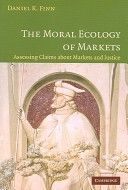
Disagreements about the morality of markets, and about self-interested behavior within markets, run deep. They arise from perspectives within economics and political philosophy that appear to have nothing in common. In this book, Daniel Finn provides a framework for understanding these conflicting points of view. Recounting the arguments for and against markets and self-interest, he argues that every economy must address four fundamental problems: allocation, distribution, scale, and the quality of relations. In addition, every perspective on the morality of markets addresses explicitly or implicitly the economic, political, and cultural contexts of markets, or what Finn terms ‘the moral ecology of markets’. His book enables a dialogue among the various participants in the debate over justice in markets. In this process, Finn engages with major figures in political philosophy, including John Rawls, Robert Nozick, and Michael Walzer, as well as in economics, notably Milton Friedman, Friedrich Hayek, and James Buchannan.
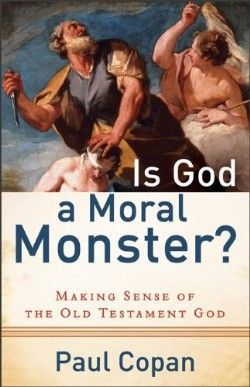
A recent string of popular-level books written by the New Atheists have leveled the accusation that the God of the Old Testament is nothing but a bully, a murderer, and a cosmic child abuser. This viewpoint is even making inroads into the church. How are Christians to respond to such accusations? And how are we to reconcile the seemingly disconnected natures of God portrayed in the two testaments?In this timely and readable book, apologist Paul Copan takes on some of the most vexing accusations of our time, including:God is arrogant and jealous God punishes people too harshly God is guilty of ethnic cleansing God oppresses women God endorses slavery Christianity causes violence and moreCopan not only answers God’s critics, he also shows how to read both the Old and New Testaments faithfully, seeing an unchanging, righteous, and loving God in both.
Presenting the background, development, and current state of affairs in EPISTEMOLOGY, this title-a volume in the Wadsworth Philosophy Topics Series–provides a concise introduction to this pertinent topic of contemporary philosophical interest. The Wadsworth Philosophy Topics Series presents readers with concise, timely, and insightful introductions to a variety of traditional and contemporary philosophical subjects. With this series, students of philosophy will be able to discover the richness of philosophical inquiry across a wide array of concepts, including hallmark philosophical themes and other themes typically underrepresented in mainstream philosophy publishing. Written by a distinguished list of scholars who have garnered particular recognition for their excellence in teaching, this series presents the vast sweep of today’s philosophical exploration in highly accessible and affordable volumes. These books will prove valuable to philosophy teachers and their students as well as to other readers who share a general interest in philosophy.
Nearly two centuries after declaring “the end of history,” Hegel remains a rich source of insights into our historical nature. The essays collected here interpret and develop those insights, while also challenging Hegel’s philosophical approach to comprehend present and future phenomena that he could neither experience nor imagine. They represent the very best in contemporary scholarship on Hegel and history, and collectively they address all of the important and disputed topics in the field: Hegel’s claim that history has an end, whether his philosophy of history is Eurocentric or racist, how elements of what he terms “subjective spirit” and “objective spirit” contribute to historical development, and the relationship between religion and his philosophy of history.
ما از اخلاق چه انتظاری داریم؟ این سوال شاید تاحدودی برای عموم مردم و یا متخصصان این رشته قابل پاسخ باشد؛ اینکه خوب بودن را به ما بیاموزد و در تنظیم روابط فردی م...

جشن کتاب تهران به ایستگاه سی و یکم رسیده است. حال و احوال نشر کتاب خوب نیست و باید فرهنگدوستان را به خرید و هدیه دادن کتاب ترغیب نمود. خانه اخلاقپژوهان جوان ب...

بنیاد کتابهای اخلاق اسلامی عمدتا پالایش جان از آلودگیها و آراستن آن به زیباییها است. اندیشه محوری این قبیل کتابها آن است که انسان فعلی آنی نیست که باید باشد...

-
0 Comments