Notice: تابع WP_Block_Type_Registry::register به طورنادرست فراخوانی شد. نامهای نوع بلوک نباید حروف بزرگ داشته باشند. لطفاً برای اطلاعات بیشتر، اشکال زدایی در وردپرس را مشاهده کنید. (این پیام در نگارش 5.0.0 افزوده شده است.) in /home/ethicsho/public_html/wp-includes/functions.php on line 5313
Warning: Use of undefined constant TDC_PATH_LEGACY - assumed 'TDC_PATH_LEGACY' (this will throw an Error in a future version of PHP) in /home/ethicsho/public_html/wp-content/plugins/td-composer/td-composer.php on line 109
Warning: Use of undefined constant TDSP_THEME_PATH - assumed 'TDSP_THEME_PATH' (this will throw an Error in a future version of PHP) in /home/ethicsho/public_html/wp-content/plugins/td-composer/td-composer.php on line 113 بایگانیهای Mary Midgley - خانه اخلاق پژوهان جوان Notice: Trying to access array offset on value of type bool in /home/ethicsho/public_html/wp-content/plugins/wp-ulike/inc/general-functions.php on line 807
Celadon, a poor nation on a poor planet, engaged in civil war and a haven for every type of villainy in space, is ripe for cleanup. The military could pacify it handily, but it would take a statesman to fix it.But some statesmen have ethics, which politicians and megacorps find inconvenient. President Bishwanath compounded the sin by being astute, ambitious and capable. Something had to be done, because a working nation isn’t much use for pork and graft.When the word comes down that he is dead, the politicians move on with a new plan, re-allocating resources, and finding a new, more pliable president to put in place.There are three problems with this solution. Bishwanath is not dead. His mercenary bodyguards are more loyal than the politicians. And if they’re not on contract, there are no rules.
Max Weber�2s The Protestant Ethic and the Spirit of Capitalism continues to be one of the most influential texts in the sociology of modern Western societies. Although Weber never produced the further essays with which he intended to extend the study, he did complete four lengthy Replies to reviews of the text by two German historians. Written between 1907 and 1910, the Replies offer a fascinating insight into Weber�2s intentions in the original study, and the present volume is the first complete translation of all four Replies in English.
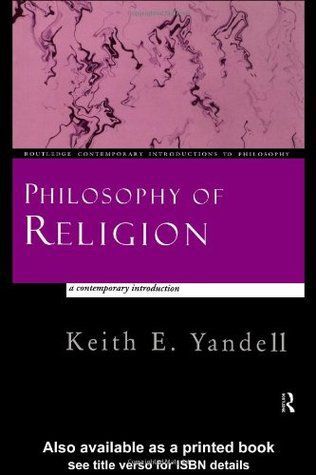
Philosophy of Religion provides an account of the central issues and viewpoints in the philosophy of religion but also shows how such issues can be rationally assessed and in what ways competing views can be rationally assessed. It includes major philosophical figures in religious traditions as well as discussions by important contemporary philosophers. Keith Yandell deals lucidly and constructively with representative views from Judaism, Christianity, Islam, Hinduism, Buddhism, and Jainism. This book will appeal to students of both philosophy and religion as well as to the general reader interested in the subject.Unique features of Philosophy of Religion: * key reading and new reading in the subject area* questions at the ends of chapters* a glossary of philosophical terms* annotated further reading
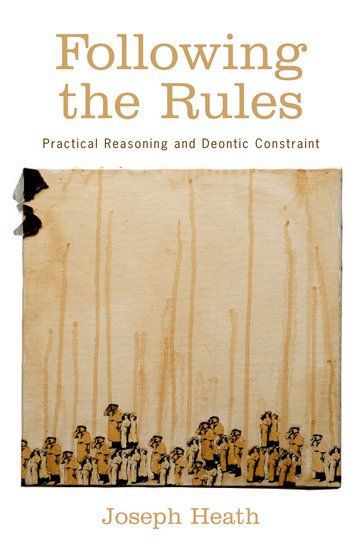
For centuries, philosophers have been puzzled by the fact that people often respect moral obligations as a matter of principle, setting aside considerations of self-interest. In more recent years, social scientists have been puzzled by the more general phenomenon of rule-following, the fact that people often abide by social norms even when doing so produces undesirable consequences. Experimental game theorists have demonstrated conclusively that the old-fashioned picture of “economic man,” constantly reoptimizing in order to maximize utility in all circumstances, cannot provide adequate foundations for a general theory of rational action. The dominant response, however, has been a slide toward irrationalism. If people are ignoring the consequences of their actions, it is claimed, it must be because they are making some sort of a mistake. In Following the Rules, Joseph Heath attempts to reverse this trend, by showing how rule-following can be understood as an essential element of rational action. The first step involves showing how rational choice theory can be modified to incorporate deontic constraint as a feature of rational deliberation. The second involves disarming the suspicion that there is something mysterious or irrational about the psychological states underlying rule-following. According to Heath, human rationality is a by-product of the so-called “language upgrade” that we receive as a consequence of the development of specific social practices. As a result, certain constitutive features of our social environment-such as the rule-governed structure of social life-migrate inwards, and become constitutive features of our psychological faculties. This in turn explains why there is an indissoluble bond between practical rationality and deontic constraint. In the end, what Heath offers is a naturalistic, evolutionary argument in favor of the traditional Kantian view that there is an internal connection between being a rational agent and feeling the force of one’s moral obligations.
ما از اخلاق چه انتظاری داریم؟ این سوال شاید تاحدودی برای عموم مردم و یا متخصصان این رشته قابل پاسخ باشد؛ اینکه خوب بودن را به ما بیاموزد و در تنظیم روابط فردی م...

جشن کتاب تهران به ایستگاه سی و یکم رسیده است. حال و احوال نشر کتاب خوب نیست و باید فرهنگدوستان را به خرید و هدیه دادن کتاب ترغیب نمود. خانه اخلاقپژوهان جوان ب...

بنیاد کتابهای اخلاق اسلامی عمدتا پالایش جان از آلودگیها و آراستن آن به زیباییها است. اندیشه محوری این قبیل کتابها آن است که انسان فعلی آنی نیست که باید باشد...

-
0 Comments