Notice: تابع WP_Block_Type_Registry::register به طورنادرست فراخوانی شد. نامهای نوع بلوک نباید حروف بزرگ داشته باشند. لطفاً برای اطلاعات بیشتر، اشکال زدایی در وردپرس را مشاهده کنید. (این پیام در نگارش 5.0.0 افزوده شده است.) in /home/ethicsho/public_html/wp-includes/functions.php on line 5313
Warning: Use of undefined constant TDC_PATH_LEGACY - assumed 'TDC_PATH_LEGACY' (this will throw an Error in a future version of PHP) in /home/ethicsho/public_html/wp-content/plugins/td-composer/td-composer.php on line 109
Warning: Use of undefined constant TDSP_THEME_PATH - assumed 'TDSP_THEME_PATH' (this will throw an Error in a future version of PHP) in /home/ethicsho/public_html/wp-content/plugins/td-composer/td-composer.php on line 113 بایگانیهای Mark Twain - خانه اخلاق پژوهان جوان Notice: Trying to access array offset on value of type bool in /home/ethicsho/public_html/wp-content/plugins/wp-ulike/inc/general-functions.php on line 807
Emmanuel Levinas was a significant contributor to the field of philosophy, phenomenology and religion. A key interpreter of Husserl, he stressed the importance of attitudes to other people in any philosophical system. For Levinas, to be a subject is to take responsibility for others as well as yourself. He regarded ethics as the foundation for all other philosophy, but later admitted it could also be the foundation for theology. Michael Purcell outlines the basic themes of Levinas’ thought and the ways in which they might be deployed in fundamental and practical theology, and the study of the phenomenon of religion.
Memory and forgetting are inextricably intertwined. In order to understand how memory works we need to understand how and why we forget. The topic of forgetting is therefore hugely important, despite the fact that it has often been neglected in comparison with other features of memory.This volume addresses various aspects of forgetting, drawing from several disciplines, including experimental and cognitive psychology, cognitive and clinical neuropsychology, behavioural neuroscience, neuroimaging, clinical neurology, and computational modeling. The first chapters of the book discuss the history of forgetting, its theories and accounts, the difference between short-term and long-term forgetting as well as the relevance of forgetting within each of the numerous components of memory taxonomy. The central part summarizes and discusses what we have learned about forgetting from animal work, from computational modeling, and from neuroimaging. Further chapters discuss pathological forgetting in patients with amnesia and epilepsy, as well as psychogenic forgetting. The book concludes by focusing on the difference between forgetting of autobiographical memories versus collective memory forgetting.This book is the first to address the issue of forgetting from an interdisciplinary point of view, but with a particular emphasis on psychology. The book is scientific and yet accessible in tone, and as such is suitable for advanced undergraduate and postgraduate students of psychology and related subjects, such as science and neuroscience.
People act for reasons. That is how we understand ourselves. But what is it to act for a reason? This is what Fred Schueler investigates. He rejects the dominant view that the beliefs and desires that constitute our reasons for acting simply cause us to act as we do, and argues instead for a view centered on practical deliberation-our ability to evaluate the reasons we accept. Schueler’s account of “reasons explanations: emphasizes the relation between reasons and purposes, and the fact that the reasons for an action are not always good reasons.
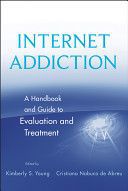
“Internet addiction is an emergent disorder in the psychiatric and psychological fields. This book provides a theoretical framework to understand how to define and conceptualize compulsive use of the Internet from a clinical perspective. With various theoretical models from the psychiatric, psychological, communication, and sociological fields, it explores the prevalence of the disorder and the most addictive or problematic online applications, such as online pornography, Internet gambling, and online games. Evidenced-based treatment approaches are provided as well. A must-have for every clinician”–Provided by publisher.
This major work of academic reference provides a comprehensive overview of the development of political thought from the late nineteenth to the end of the twentieth century. Written by a distinguished team of international contributors, this Cambridge History covers the rise of the welfare state and subsequent reactions to it, the fascist and communist critiques of and attempted alternatives to liberal democracy, the novel forms of political organization occasioned by the rise of the mass electorate and new social movements, the various intellectual traditions from positivism to post-modernism that have shaped the study of politics, the interaction between western and non-western traditions of political thought, and the challenge possed to the state by globalization. Every major theme in twentieth-century political thought is covered in a series of chapters at once scholarly and accessible, of interest and relevance to students and scholars of politics at all levels from beginning undergraduate upwards.
ما از اخلاق چه انتظاری داریم؟ این سوال شاید تاحدودی برای عموم مردم و یا متخصصان این رشته قابل پاسخ باشد؛ اینکه خوب بودن را به ما بیاموزد و در تنظیم روابط فردی م...

جشن کتاب تهران به ایستگاه سی و یکم رسیده است. حال و احوال نشر کتاب خوب نیست و باید فرهنگدوستان را به خرید و هدیه دادن کتاب ترغیب نمود. خانه اخلاقپژوهان جوان ب...

بنیاد کتابهای اخلاق اسلامی عمدتا پالایش جان از آلودگیها و آراستن آن به زیباییها است. اندیشه محوری این قبیل کتابها آن است که انسان فعلی آنی نیست که باید باشد...

-
0 Comments