Notice: تابع WP_Block_Type_Registry::register به طورنادرست فراخوانی شد. نامهای نوع بلوک نباید حروف بزرگ داشته باشند. لطفاً برای اطلاعات بیشتر، اشکال زدایی در وردپرس را مشاهده کنید. (این پیام در نگارش 5.0.0 افزوده شده است.) in /home/ethicsho/public_html/wp-includes/functions.php on line 5313
Warning: Use of undefined constant TDC_PATH_LEGACY - assumed 'TDC_PATH_LEGACY' (this will throw an Error in a future version of PHP) in /home/ethicsho/public_html/wp-content/plugins/td-composer/td-composer.php on line 109
Warning: Use of undefined constant TDSP_THEME_PATH - assumed 'TDSP_THEME_PATH' (this will throw an Error in a future version of PHP) in /home/ethicsho/public_html/wp-content/plugins/td-composer/td-composer.php on line 113 بایگانیهای Marian Stamp Dawkins - خانه اخلاق پژوهان جوان Notice: Trying to access array offset on value of type bool in /home/ethicsho/public_html/wp-content/plugins/wp-ulike/inc/general-functions.php on line 807
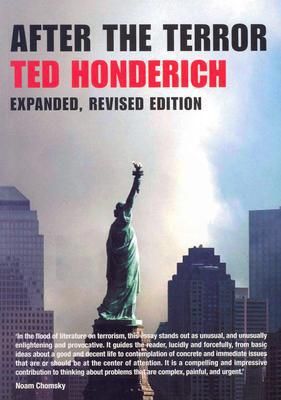
Ted Honderich investigates the morality of the September 11th attacks and what terrorism tells us about ourselves and our obligations. Did we have a responsibility for what took place? Did we respond to it as we should have? What are we to do now? After the Terrorinquires into the “natural fact” of morality and the worked-out moralities of philosophers. It reaches to the moral core of our lives.Honderich writes, “We can be held partly responsible for the 3,000 deaths at the twin towers and at the Pentagon. We are rightly to be held responsible along with the killers. We share the guilt. Those who condemn us have a reason to do so. Did we bring the killing at the twin towers on ourselves? Did we have it coming? Those offensive questions, and their offensive, but affirmative answer, do contain a truth.”
Centore’s work is an inquiry into the weaknesses and strengths of the two basic positions in ethics: the man-centered model and the God-centered model for deciding between right and wrong behavior. The philosophical paradigm for the man-centered approach is absolute relativism, while the paradigm for the God-centered approach is relative absolutism. Centore argues that the man-centered model in actual practice proves not to be realistic as an ethical guide, while the God-centered model, if properly understood, is the most useful approach. This work penetrates difficult ethical issues by examining human experience and reasoning in conjunction with actual choices of action. Although the God-centered approach is shown to be the most practical, Centore argues for a natural moral law that avoids any specific theology. Each chapter discusses the historical and theoretical background of the approaches and two possible compromises. The work is enlivened with examples of possible contexts in which moral decisions must take place. Various ethical dilemmas are presented with an examination of the potential consequences of applying either the atheistic or the theistic ethical approach. Centore’s argument is complex, but he explains the elements clearly and his conclusion is strengthened by real-life cases and an extensive Bibliography.
Nearly everyone has wronged another. Who among us has not longed to be forgiven? Nearly everyone has suffered the bitter injustice of wrongdoing. Who has not struggled to forgive? Charles Griswold has written the first comprehensive philosophical book on forgiveness in both its interpersonal and political contexts, as well as its relation to reconciliation. Having examined the place of forgiveness in ancient philosophy and in modern thought, he discusses what forgiveness is, what conditions the parties to it must meet, its relation to revenge and hatred, when it is permissible and whether it is obligatory, and why it is a virtue.
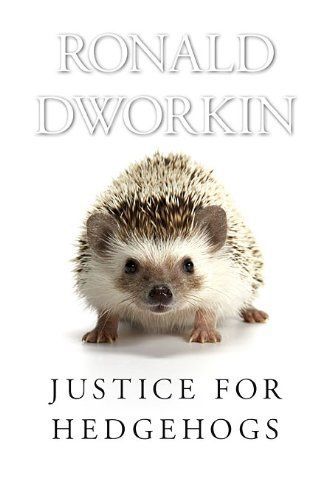
The fox knows many things, the Greeks said, but the hedgehog knows one big thing. In his most comprehensive work the author argues that value in all its forms is one big thing: that what truth is, life means, morality requires, and justice demands are different aspects of the same large question. He develops original theories on a great variety of issues very rarely considered in the same book: moral skepticism, literary, artistic, and historical interpretation, free will, ancient moral theory, being good and living well, liberty, equality, and law among many other topics. What we think about any one of these must stand up, eventually, to any argument we find compelling about the rest. Skepticism in all its forms, philosophical, cynical, or post-modern, threatens that unity. The Galilean revolution once made the theological world of value safe for science. But the new republic gradually became a new empire: the modern philosophers inflated the methods of physics into a totalitarian theory of everything. They invaded and occupied all the honorifics, reality, truth, fact, ground, meaning, knowledge, and being, and dictated the terms on which other bodies of thought might aspire to them, and skepticism has been the inevitable result. The author feels we need a new revolution, and that we must make the world of science safe for value.
ما از اخلاق چه انتظاری داریم؟ این سوال شاید تاحدودی برای عموم مردم و یا متخصصان این رشته قابل پاسخ باشد؛ اینکه خوب بودن را به ما بیاموزد و در تنظیم روابط فردی م...

جشن کتاب تهران به ایستگاه سی و یکم رسیده است. حال و احوال نشر کتاب خوب نیست و باید فرهنگدوستان را به خرید و هدیه دادن کتاب ترغیب نمود. خانه اخلاقپژوهان جوان ب...

بنیاد کتابهای اخلاق اسلامی عمدتا پالایش جان از آلودگیها و آراستن آن به زیباییها است. اندیشه محوری این قبیل کتابها آن است که انسان فعلی آنی نیست که باید باشد...

-
0 Comments