Notice: تابع WP_Block_Type_Registry::register به طورنادرست فراخوانی شد. نامهای نوع بلوک نباید حروف بزرگ داشته باشند. لطفاً برای اطلاعات بیشتر، اشکال زدایی در وردپرس را مشاهده کنید. (این پیام در نگارش 5.0.0 افزوده شده است.) in /home/ethicsho/public_html/wp-includes/functions.php on line 5313
Warning: Use of undefined constant TDC_PATH_LEGACY - assumed 'TDC_PATH_LEGACY' (this will throw an Error in a future version of PHP) in /home/ethicsho/public_html/wp-content/plugins/td-composer/td-composer.php on line 109
Warning: Use of undefined constant TDSP_THEME_PATH - assumed 'TDSP_THEME_PATH' (this will throw an Error in a future version of PHP) in /home/ethicsho/public_html/wp-content/plugins/td-composer/td-composer.php on line 113 بایگانیهای Maria Dimova-Cookson - خانه اخلاق پژوهان جوان Notice: Trying to access array offset on value of type bool in /home/ethicsho/public_html/wp-content/plugins/wp-ulike/inc/general-functions.php on line 807
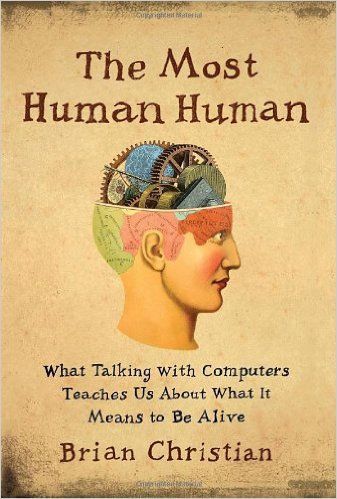
For the first time in history, we are interacting with computer programmes so sophisticated that we think they’re human beings . . .This is a remarkable feat of human ingenuity, but what does it say about our humanity? Are we really no better at being human than the machines we’ve created? In this brilliantly witty and inspiring investigation, Brian Christian explores first-hand the urgent moral and practical implications of this remarkable development. Drawing on science, philosophy, literature and the arts, and touching on aspects of life as diverse as language, work, school, chess, speed-dating, art, video games, psychiatry and the law, The Most Human Human shows that far from being a threat to our humanity, computers provide a better means than ever before of understanding what it is.In this book, you will discover . . . Why computers can fly planes but can’t ride bikes How Deep Blue beat Gary Kasparov but why it didn’t count Why arguments have in common with amnesia Why speaking to a computer is like a bad date What life is all about and how to live it better’A lively personable read and an empowering affirmation of our species.’ 4* Time Out ‘A fast-paced, witty and thoroughly winning style . . . fabulous.’ Publishers Weekly’An eye-opening inquest.’ David Eagleman, author’Strange, fertile and sometimes beautiful.’ Matthew Crawford, author
“It’s the animal in us,” we often hear when we’ve been bad. But why not when we’re good? Primates and Philosophers tackles this question by exploring the biological foundations of one of humanity’s most valued traits: morality. In this provocative book, primatologist Frans de Waal argues that modern-day evolutionary biology takes far too dim a view of the natural world, emphasizing our “selfish” genes. Science has thus exacerbated our reciprocal habits of blaming nature when we act badly and labeling the good things we do as “humane.” Seeking the origin of human morality not in evolution but in human culture, science insists that we are moral by choice, not by nature. Citing remarkable evidence based on his extensive research of primate behavior, de Waal attacks “Veneer Theory,” which posits morality as a thin overlay on an otherwise nasty nature. He explains how we evolved from a long line of animals that care for the weak and build cooperation with reciprocal transactions. Drawing on both Darwin and recent scientific advances, de Waal demonstrates a strong continuity between human and animal behavior. In the process, he also probes issues such as anthropomorphism and human responsibilities toward animals. Based on the Tanner Lectures de Waal delivered at Princeton University’s Center for Human Values in 2004, Primates and Philosophers includes responses by the philosophers Peter Singer, Christine M. Korsgaard, and Philip Kitcher and the science writer Robert Wright. They press de Waal to clarify the differences between humans and other animals, yielding a lively debate that will fascinate all those who wonder about the origins and reach of human goodness.
Wittgenstein and Levinasexamines the oft-neglected relationship between the philosophies of two of the most important and notoriously difficult thinkers of the twentieth century. By bringing the work of each philosopher to bear upon the other, Plant navigates between the antagonistic intellectual traditions that they helped to share. The central focus on the book is the complex yet illuminating interplay between a number of ethical-religious themes in both Wittgenstein’s mature thinking and Levinas’s distinctive account of ethical responsibility.
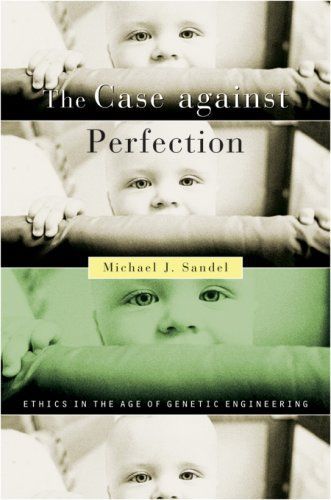
Producer: Heron & CraneBreakthroughs in genetics present us with a promise and a predicament. The promise is that we will soon be able to treat and prevent a host of debilitating diseases. The predicament is that our newfound genetic knowledge may enable us to manipulate our nature–to enhance our genetic traits and those of our children. Although most people find at least some forms of genetic engineering disquieting, it is not easy to articulate why. What is wrong with re-engineering our nature?The Case against Perfection explores these and other moral quandaries connected with the quest to perfect ourselves and our children. Michael Sandel argues that the pursuit of perfection is flawed for reasons that go beyond safety and fairness. The drive to enhance human nature through genetic technologies is objectionable because it represents a bid for mastery and dominion that fails to appreciate the gifted character of human powers and achievements. Carrying us beyond familiar terms of political discourse, this book contends that the genetic revolution will change the way philosophers discuss ethics and will force spiritual questions back onto the political agenda.In order to grapple with the ethics of enhancement, we need to confront questions largely lost from view in the modern world. Since these questions verge on theology, modern philosophers and political theorists tend to shrink from them. But our new powers of biotechnology make these questions unavoidable. Addressing them is the task of this book, by one of America’s preeminent moral and political thinkers.
ما از اخلاق چه انتظاری داریم؟ این سوال شاید تاحدودی برای عموم مردم و یا متخصصان این رشته قابل پاسخ باشد؛ اینکه خوب بودن را به ما بیاموزد و در تنظیم روابط فردی م...

جشن کتاب تهران به ایستگاه سی و یکم رسیده است. حال و احوال نشر کتاب خوب نیست و باید فرهنگدوستان را به خرید و هدیه دادن کتاب ترغیب نمود. خانه اخلاقپژوهان جوان ب...

بنیاد کتابهای اخلاق اسلامی عمدتا پالایش جان از آلودگیها و آراستن آن به زیباییها است. اندیشه محوری این قبیل کتابها آن است که انسان فعلی آنی نیست که باید باشد...

-
0 Comments