Notice: تابع WP_Block_Type_Registry::register به طورنادرست فراخوانی شد. نامهای نوع بلوک نباید حروف بزرگ داشته باشند. لطفاً برای اطلاعات بیشتر، اشکال زدایی در وردپرس را مشاهده کنید. (این پیام در نگارش 5.0.0 افزوده شده است.) in /home/ethicsho/public_html/wp-includes/functions.php on line 5313
Warning: Use of undefined constant TDC_PATH_LEGACY - assumed 'TDC_PATH_LEGACY' (this will throw an Error in a future version of PHP) in /home/ethicsho/public_html/wp-content/plugins/td-composer/td-composer.php on line 109
Warning: Use of undefined constant TDSP_THEME_PATH - assumed 'TDSP_THEME_PATH' (this will throw an Error in a future version of PHP) in /home/ethicsho/public_html/wp-content/plugins/td-composer/td-composer.php on line 113 بایگانیهای Lynelle Watts - خانه اخلاق پژوهان جوان Notice: Trying to access array offset on value of type bool in /home/ethicsho/public_html/wp-content/plugins/wp-ulike/inc/general-functions.php on line 807
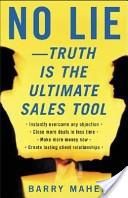
A top Fortune 500 sales trainer shows how to transform the ugly truth into beautiful sales No Lie–Truth Is the Ultimate Sales Tool introduces salespeople to a powerful new approach to winning customers’ trust instantly and selling more, more, more. Drawing upon his years of experience training sales forces at Xerox, American Express, PepsiCo, Verizon, and other top shops worldwide, guru Barry Maher explains why the most effective salespeople know how to transform their product or service’s negatives into positive selling points, or even bragging points. Using fascinating and instructive real-world examples, he describes six proven strategies that let readers: Win customer trust, instantly, by telling the whole truth about a product Use that trust to transform a negative into a powerful selling point Compare a product’s shortcomings with a competitor’s advantages and come out on top Convince potential customers that a product’s negatives translate into greater success and satisfaction
Ethical values in computing are essential for understanding and maintaining the relationship between computing professionals and researchers and the users of their applications and programs. While concerns about cyber ethics and cyber law are constantly changing as technology changes, the intersections of cyber ethics and cyber law are still underexplored.Investigating Cyber Law and Cyber Ethics: Issues, Impacts and Practices discusses the impact of cyber ethics and cyber law on information technologies and society. Featuring current research, theoretical frameworks, and case studies, the book will highlight the ethical and legal practices used in computing technologies, increase the effectiveness of computing students and professionals in applying ethical values and legal statues, and provide insight on ethical and legal discussions of real-world applications.
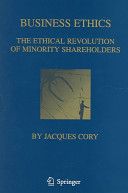
This monograph is based on qualitative and inductive research. All the cases treated in it are based on current events and try to find the common aspects and basic rules that govern the wrongdoing to the minority shareholders. In the four cases of US, French and Israeli companies, most of them in high tech, the minority shareholders lose almost all their investment. Those are not pervert cases but the norm in many companies, which is illustrated by qualitative cases, without being able of course to quantify them. Case studies are the preferred strategy when “how” and “why” questions are being posed. The purpose of this monograph is therefore to analyze why and how companies do not act ethically towards their minority shareholders, not how many, not which, not to what degree and not where.
Section I examines historical philosophical understandings of expertise in order to situate the current institution of bioethics. Section II focuses on philosophical analyses of the concept of expertise, asking, among other things, how it should be understood, how it can be acquired, and what such expertise warrants. Finally, section III addresses topics in bioethics and how ethics expertise should or should not be brought to bear in these areas, including expertise in the court room, in the hospital room, in the media, and in making policy. 2. A GUIDED HISTORICAL TOUR As Scott LaBarge points out, Plato’s dialogues can be viewed as an extended treatment of the concept of moral expertise, so it is fitting to begin the volume with an examination of “Socrates and Moral Expertise”. Given Socrates’ protestations (the Oracle at Delphi notwithstanding) that he knows nothing, LaBarge observes that it would be interesting to determine both what a Socratic theory of moral expertise might be and whether Socrates qualified as such an expert. Plato’s model of moral expertise is what LaBarge calls “demonstrable expertise”, which is concerned mainly with the ability to attain a goal and to explain how one did it. The problem with this account is that when one tries to solve the various problems in the model – for example, allowing that moral expertise is not an all-or-nothing skill – then one is immediately faced with the “credentials problem”. As LaBarge puts it, “. . .
ما از اخلاق چه انتظاری داریم؟ این سوال شاید تاحدودی برای عموم مردم و یا متخصصان این رشته قابل پاسخ باشد؛ اینکه خوب بودن را به ما بیاموزد و در تنظیم روابط فردی م...

جشن کتاب تهران به ایستگاه سی و یکم رسیده است. حال و احوال نشر کتاب خوب نیست و باید فرهنگدوستان را به خرید و هدیه دادن کتاب ترغیب نمود. خانه اخلاقپژوهان جوان ب...

بنیاد کتابهای اخلاق اسلامی عمدتا پالایش جان از آلودگیها و آراستن آن به زیباییها است. اندیشه محوری این قبیل کتابها آن است که انسان فعلی آنی نیست که باید باشد...

-
0 Comments